
30CrNiMo8 (1.6580) | Forged & Certified
30CrNiMo8 (1.6580) for heavy shafts, gears, and rings that must maintain high strength even in large cross-sections, custom forged and quenched and tempered (+QT).
About this Grade
What is 30CrNiMo8?
30CrNiMo8 is a low-alloy chromium-nickel-molybdenum heat-treatable steel with material number 1.6580, included in EN 10083-3 (since 2018 EN ISO 683-2) and for open-die forgings in EN 10250-3. In British specifications, the comparable grade is called 823M30, in France 30NCD8. Of the three commonly used heat-treatable steels 42CrMo4, 34CrNiMo6, and 30CrNiMo8, this is the most heavily alloyed, with approximately 2% chromium and 2% nickel, supplemented with 0.3 – 0.5% molybdenum.
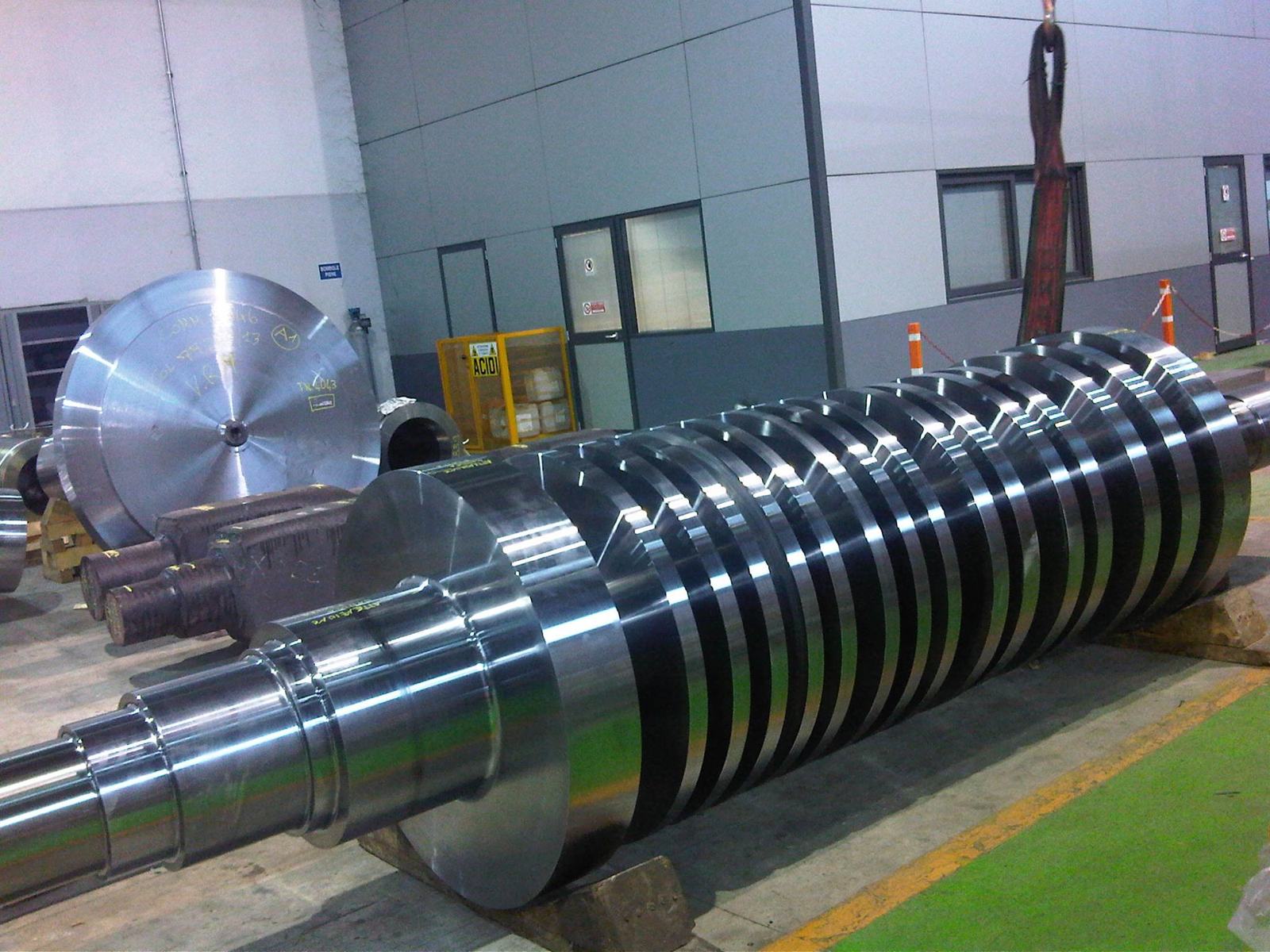
This higher alloying is reflected in its strength. In small cross-sections, 30CrNiMo8 achieves 1250 to 1450 MPa tensile strength after quenching and tempering, and high strength is guaranteed even in thick sections. This steel is chosen for heavily loaded parts with large cross-sections, such as shafts, gears, and pinions for gearboxes.
For aerospace forgings, there is a separate standard, EN 2476. We supply 30CrNiMo8 custom-made, from a single shaft to a small series of rings or discs, and tailor the delivery condition to the subsequent processing.
Applications
Applications of 30CrNiMo8
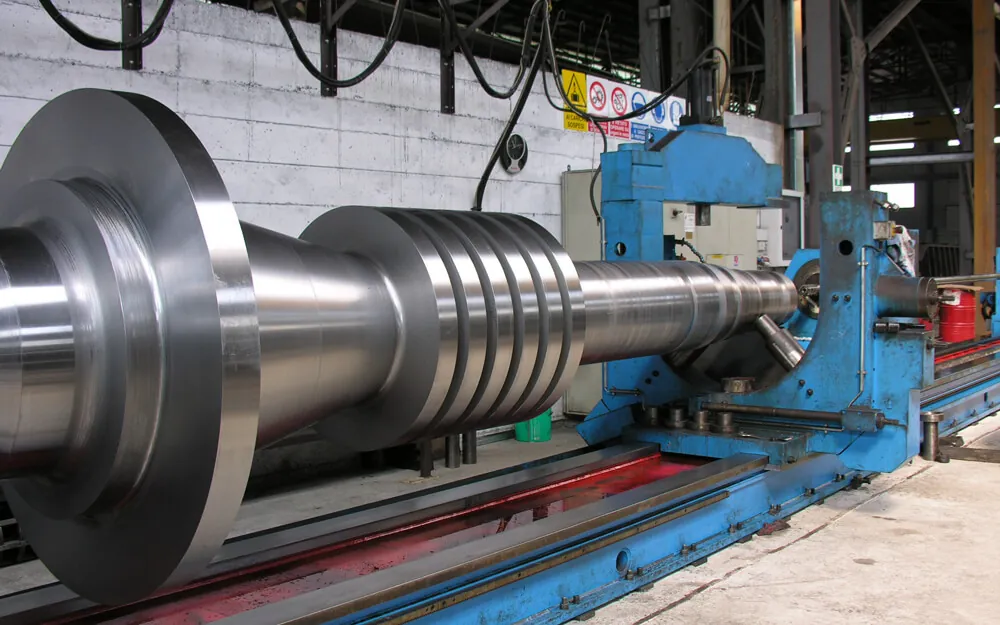
Shafts and Gear Shafts
Highly Stressed Bolts
Crankshafts and Camshafts
Pinions
Gears and Bevel Gears
Heavy Machine and Vehicle Parts
Composition and Properties
Composition and Properties of 30CrNiMo8 / 1.6580
Chemical Composition
Mechanical Properties after Quenching and Tempering (+QT)
Minimum values for the quenched and tempered condition (+QT), derived from EN 10083-3. The successor EN ISO 683-2 (2018) specifies 0.50 – 0.80% for manganese; which standard applies will be determined in the order. Larger cross-sections: according to EN 10250-3 or by agreement.
Heat Treatment and Processing
Soft Annealed (+A): maximum 248 HB
Forging from approximately 1050 – 1100 °C down to around 850 °C, then slow cooling in the furnace
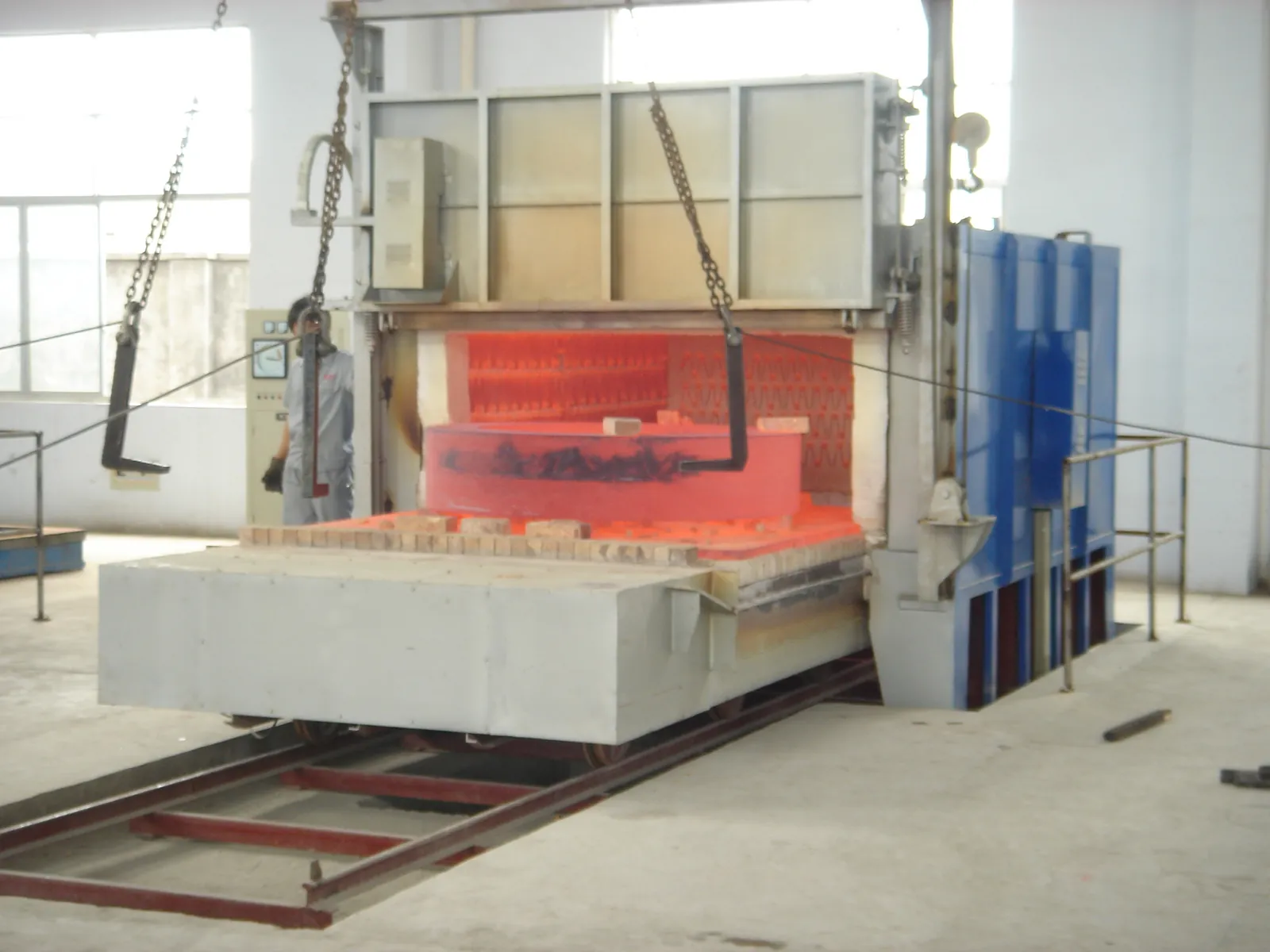
Hardening at 830 – 860 °C in oil or polymer
Tempering at 540 – 660 °C
Nitriding possible; hardness and nitriding depth by agreement
Difficult to weld, not intended for welded constructions
Our Approach
From Inquiry to Delivery
Inquiry & Specification
You specify the load the part must withstand and the required cross-section. Together, we determine whether 30CrNiMo8 is necessary or if 34CrNiMo6 suffices.
Forging Heavy Shafts and Rings
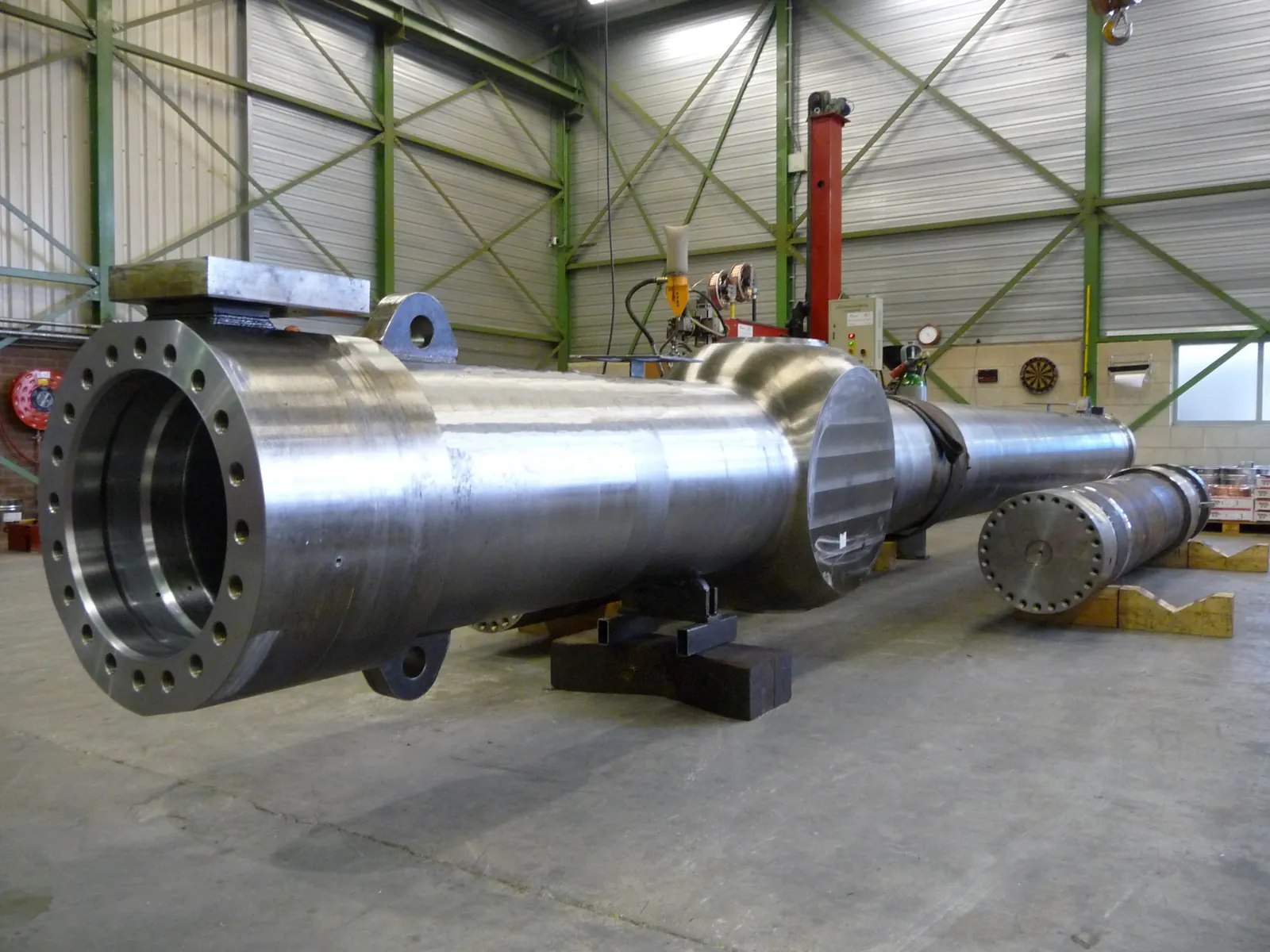
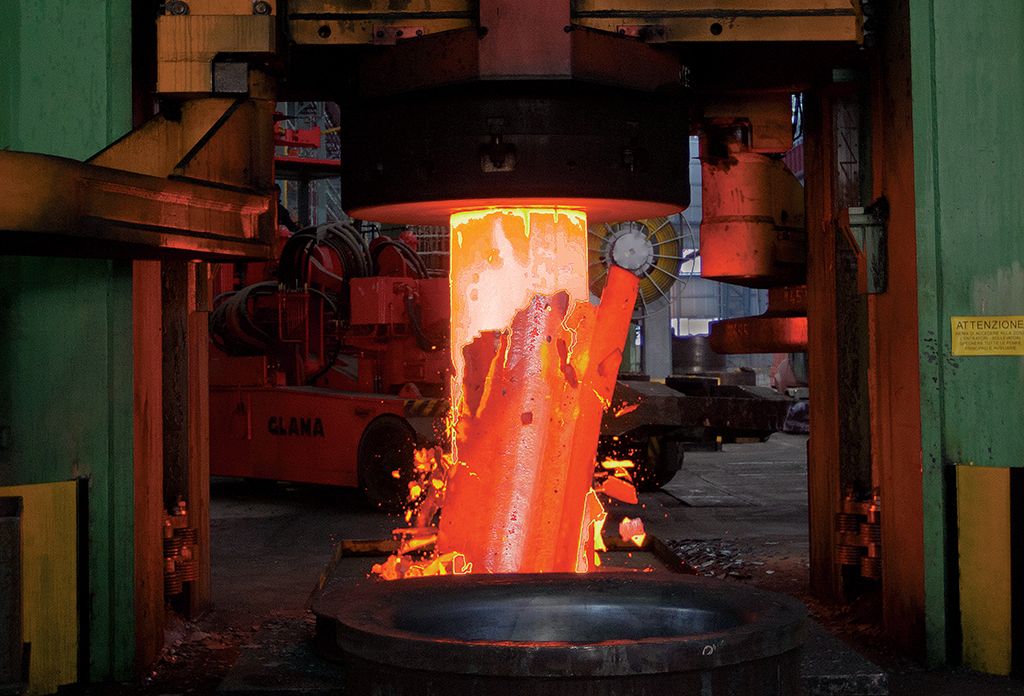
Heavy shafts and rings in 30CrNiMo8 require sufficient press capacity and appropriate quenching and tempering. We tailor these per order based on weight and cross-section.
Quality Control & Delivery
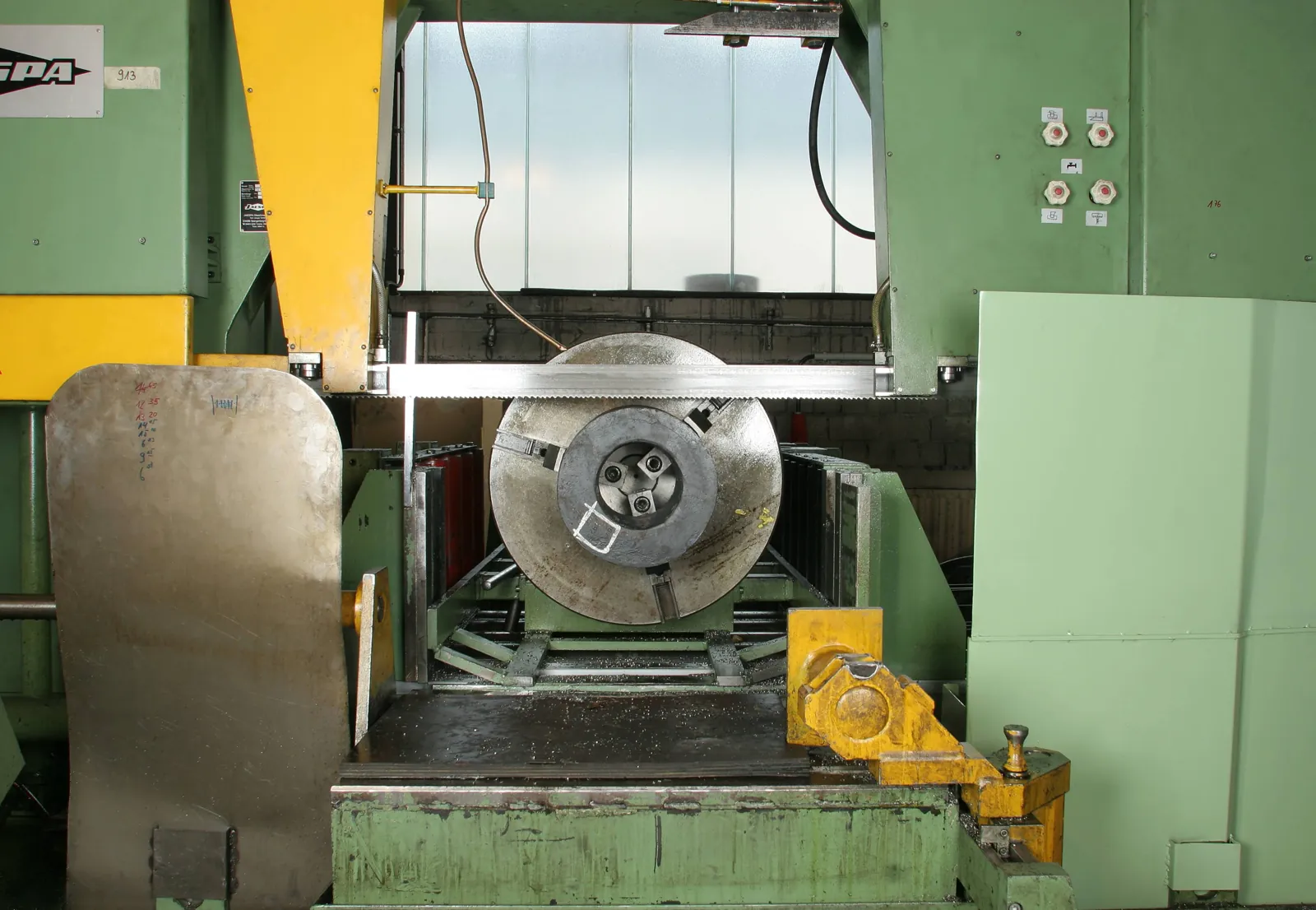
After heat treatment, test pieces are tested. If everything is satisfactory, we deliver the forging rough, pre-machined, or fully machined, with the agreed documentation.
Quality
Certification and Quality Assurance
For 30CrNiMo8, strength in large cross-sections is crucial, so the position of the test pieces is important. We agree in advance where and in which direction they will be taken, in accordance with EN 10250 or your own specification. Each forging is tested individually, pre-machined parts are ultrasonically tested at a minimum, ensuring full traceability. How we inspect and certify is described on the quality assurance page.
Available
30CrNiMo8 available as
We supply 30CrNiMo8 as single pieces or in small series, rough, pre-machined, or fully machined:
Frequently Asked Questions
Frequently Asked Questions about 30CrNiMo8
What is 30CrNiMo8 used for?
30CrNiMo8 is used for heavy shafts, gears, and pinions where a large cross-section is combined with high loads. This also includes bevel gears, crankshafts, and highly stressed bolts in machine and vehicle construction. The steel combines high strength with good toughness, even in thick sections. This makes it suitable for parts that must absorb both high static and alternating loads, for example, in large gearboxes.
What is the difference between 30CrNiMo8 and 34CrNiMo6?
30CrNiMo8 is more highly alloyed and therefore stronger in every diameter class. It contains 1.80 to 2.20% chromium and nickel and 0.30 to 0.50% molybdenum, compared to 1.30 to 1.70% and 0.15 to 0.30% for 34CrNiMo6. In the 160 to 250 mm class, the minimum yield strength of 30CrNiMo8 is 700 MPa, 100 MPa above that of 34CrNiMo6. If that extra margin is not needed, 34CrNiMo6 is often more economical.
What is the equivalent of 30CrNiMo8?
30CrNiMo8 has material number 1.6580; comparable grades include the British 823M30 and the French 30NCD8. Some manufacturers mention AISI 4340, but this is not an exact equivalent: that grade contains 0.38 – 0.43% carbon and only 0.70 – 0.90% chromium, compared to 1.80 – 2.20% for 30CrNiMo8. If 4340 or another foreign designation is on your drawing, we will agree in advance which standard is leading.
How strong is 30CrNiMo8 after quenching and tempering?
In the quenched and tempered condition, 30CrNiMo8 achieves a tensile strength of 1250 to 1450 MPa for diameters up to 40 mm, with a minimum yield strength of 1050 MPa. As the cross-section increases, the guaranteed strength decreases: for 40 to 100 mm it is 1100 to 1300 MPa, and for 160 to 250 mm it is still 900 to 1100 MPa. For comparison: 42CrMo4 in that heaviest class achieves 750 to 900 MPa tensile strength and a minimum of 500 MPa yield strength.
Can 30CrNiMo8 be nitrided?
Yes, 30CrNiMo8 can be nitrided for a hard, wear-resistant surface layer. The steel is first quenched and tempered above the nitriding temperature, so that the core retains its strength and toughness. This makes the combination interesting for gears and shafts with wear surfaces. The desired surface hardness and nitriding depth are determined in advance in the specification.
Is 30CrNiMo8 weldable?
30CrNiMo8 is difficult to weld and is not intended for welded constructions. With approximately 2% chromium and 2% nickel, the carbon equivalent (CEV) is around 1.0, which quickly makes the weld and the surrounding zone hard and susceptible to cracking. Parts made of 30CrNiMo8 are therefore preferably forged from a single piece. If welding is unavoidable, a qualified procedure with preheating and post-treatment is required.
What heat treatment does 30CrNiMo8 receive?
A 30CrNiMo8 forging is hardened at 830 to 860 °C in oil or polymer and then tempered between 540 and 660 °C. Tempering follows immediately after quenching to minimize the risk of cracking and brings the toughness to the desired level. If the part needs extensive machining first, it can be supplied soft annealed, with a maximum of 248 HB, and later quenched and tempered.
What impact strength does 30CrNiMo8 achieve?
According to EN 10083-3, 30CrNiMo8 in the quenched and tempered condition achieves a minimum of 30 J up to 40 mm, 35 J from 40 to 100 mm, and 45 J from 100 to 250 mm. If you have a requirement at low temperature, for example -20 or -40 °C, we will specify that requirement. The impact test will then be performed at that temperature and noted on the certificate.
With what certificate do you supply 30CrNiMo8?
We supply 30CrNiMo8 with a material certificate according to EN 10204 3.1, including melt analysis, heat treatment, and the results of mechanical tests. For projects requiring independent acceptance, a 3.2 certificate is possible, with inspection by an authority of your choice, such as DNV, TÜV, or Lloyd's Register. We agree in advance which tests will be included on the certificate.
What is the delivery time for 30CrNiMo8 forgings?
Delivery time primarily depends on weight, dimensions, and the requested machining. For certain pre-machined parts, 6 working weeks is achievable; for fully machined parts, expect 8 to 10 working weeks. Heavy shafts or rings with extensive inspection require more time. Our quote always includes a concrete delivery time, calculated based on your drawing and available forging capacity.
In Pictures
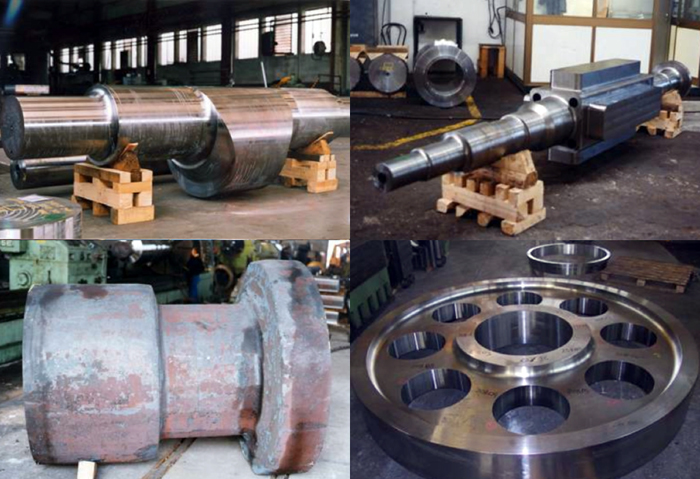
A Selection of Our Work
Related Grades
Request a Quote for 30CrNiMo8 / 1.6580
Send us your drawing with load, cross-section, and quantities. You will quickly hear which grade we recommend and what the possibilities are.
EN 10204 3.1 Certificate
Rp0.2 min. 700 MPa up to 250 mm
Single Pieces and Small Series
Rough, Pre-machined, or Fully Machined
Request a Quote
Leave your details, and we will contact you shortly.