
Cast Grades
Casting grades in stainless steel, duplex, super duplex, and nickel alloys.
Grades
Castings
Here you will find a list of the materials we can provide. If your material is not listed, please contact us.
Castings: Super-Austenitic Stainless Steel
Castings: Martensitic Stainless Steel
Castings: Austenitic-Ferritic Stainless Steel (Duplex)
Castings: Medium and Low Alloy Steel
Castings: Nickel-Based Alloys
Castings: Heat-Resistant Steel
Castings: Carbon Steel
Castings: Carbon Steel for Low Temperature
About Casting Grades
What are Casting Grades?
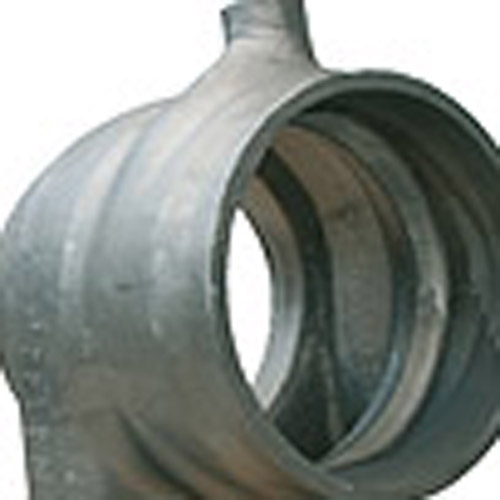
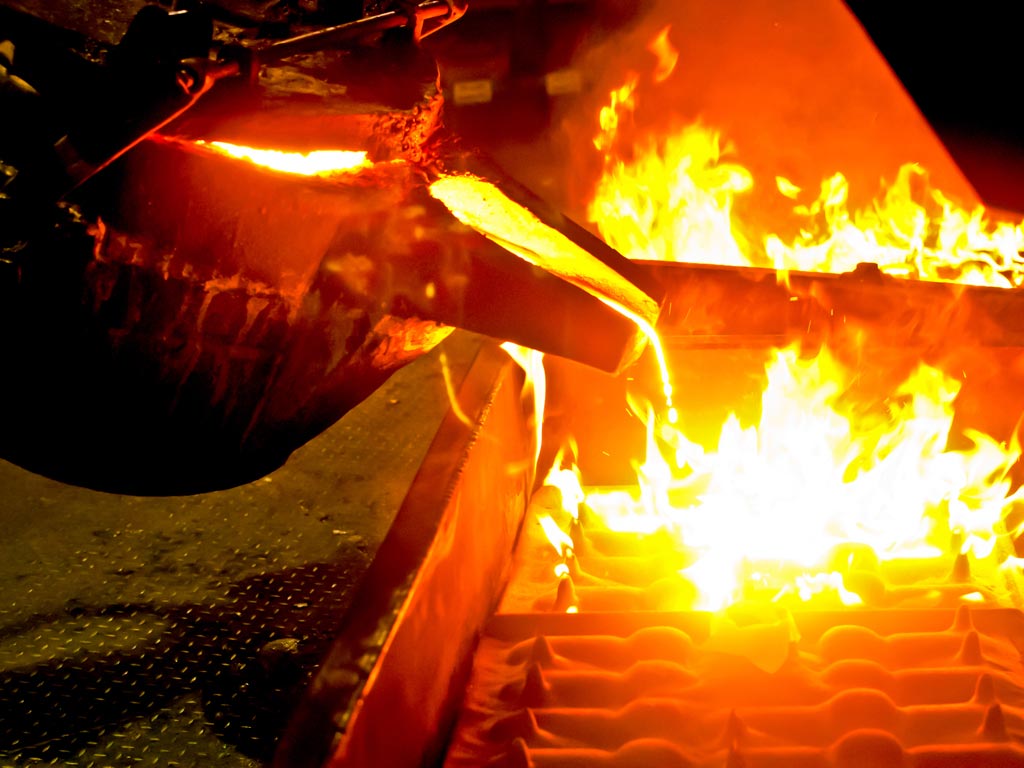
Casting grades are material types specifically standardized for castings. A cast part solidifies directly in its shape and therefore has a different structure than a forged part, so many forging grades have their own cast counterpart. For example, CF8M is the cast counterpart of AISI 316, and CA6NM is that of the forged 1.4313 (F6NM). Metal Service Europe supplies these cast steel grades as centrifugal castings and sand castings.
The ASTM standards in the tables are classified by material group and application. ASTM A351 applies to austenitic castings for pressure-containing parts such as valves, flanges, and fittings. A217 covers martensitic stainless and alloy cast steel for pressure-containing parts at high temperatures, A216 carbon steel, and A352 grades for low temperatures. A890 describes duplex cast steel, and A494 nickel and nickel alloy castings.
The codes themselves also have meaning. For stainless cast steel, the first letter indicates the application: C for corrosion-resistant, H for heat-resistant. The second letter indicates the chromium-nickel type. For C-grades, the number is the maximum carbon content in hundredths of a percent; for H-grades, it is the middle of the carbon range. CF8M is therefore corrosion-resistant, with a maximum of 0.08% carbon and molybdenum (M).
Austenitic stainless: CF8, CF8M, CF3M, and CF8C according to ASTM A351
Super austenitic: CN7M and CK3MCuN
Duplex and super duplex according to ASTM A890, such as grade 4A, 5A, and 6A
Nickel alloys according to ASTM A494, such as CW-6MC, the cast variant of Alloy 625 (Inconel® 625)
Carbon and low-temperature steel: A216 WCB and A352 LCB
Heat-resistant cast steel according to A297, such as HK and HP
Applications
Applications of Casting Grades
Valve bodies and valve components in A351 and A216 grades
Valves and pump parts for cold installations
Components for offshore and (petro)chemicals in duplex and nickel alloys
Furnace components and grates in heat-resistant cast steel
Pump casings and impellers, including in CA6NM
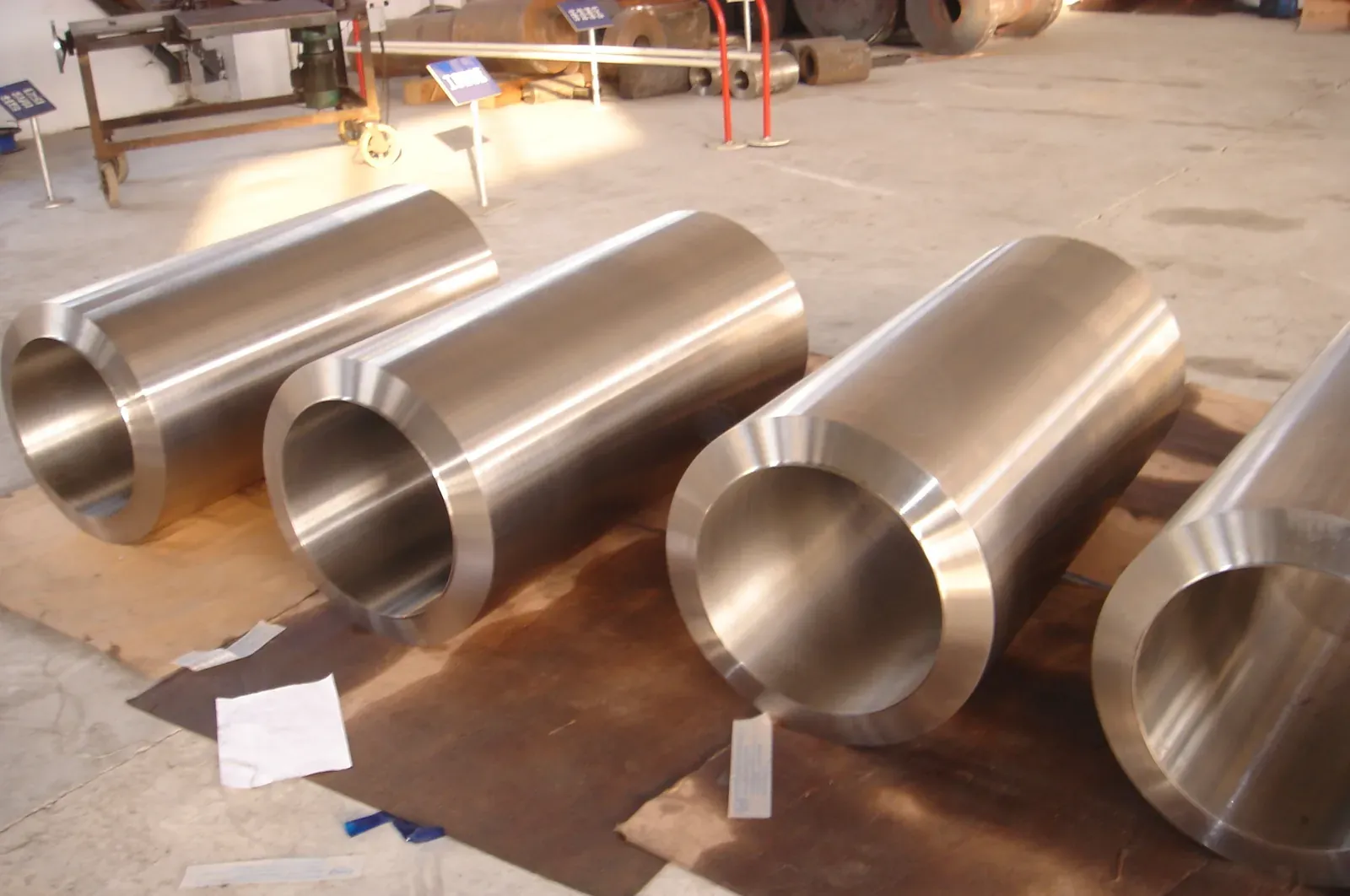
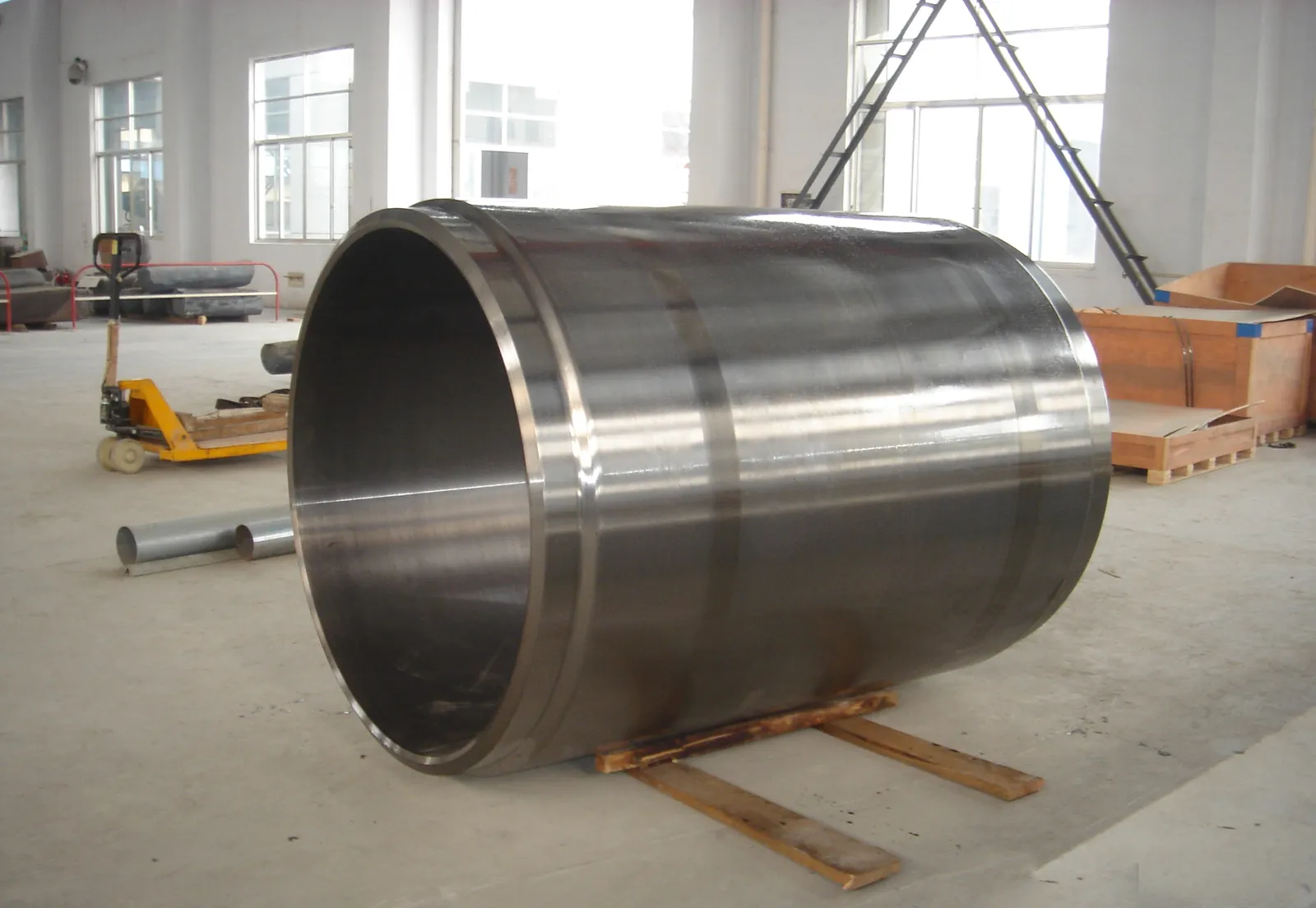
Seal rings, liners, and piston rings from centrifugally cast tubes
Our Approach
From Inquiry to Delivery
Inquiry & Specification
Please specify the ASTM grade or material number, dimensions, and required inspections. Together, we will determine whether centrifugal casting or sand casting is best suited for your part.
Casting and Testing
The part is cast, heat-treated, and tested with test pieces. We monitor planning and results, and will immediately discuss any deviations with you.
Quality Control & Delivery
After rough machining and the agreed-upon inspections, we deliver the casting rough machined or fully finished, with the certificate corresponding to your specification.
Quality
Certification and Quality Assurance
Each casting is tested individually: after heat treatment, test pieces are taken, and the rough-machined part undergoes ultrasonic testing. This ensures that every piece is 100% traceable. We supply castings according to ASTM, ASME, EN, or customer specifications, also under PED. Our castings are produced under an ISO 9001 quality system. An overview of our inspections and certificates can be found on the quality assurance page.
Available
Casting Grades Available as
Depending on shape, weight, and grade, we supply castings as:
Frequently Asked Questions
Frequently Asked Questions about Casting Grades
What is the difference between CF8M and CF3M?
The difference lies in the maximum carbon content: CF8M may contain up to 0.08% carbon, CF3M up to 0.03%. The lower carbon content of CF3M reduces the risk of intergranular corrosion after welding. Both contain molybdenum for improved resistance to pitting corrosion. CF3M is the cast variant of 316L, CF8M that of 316.
Why does cast steel have a different designation than forged steel?
A casting solidifies in its final shape and is no longer deformed. Therefore, its structure and requirements differ from those of forged or rolled material. Austenitic stainless cast steel, for example, deliberately contains some ferrite in its structure. For this reason, there are separate standards and designations, even if the basic composition resembles a known forging grade.
What is the cast counterpart of duplex 1.4462?
Duplex 1.4462 (F51) has ASTM A890 grade 4A (CD3MN) as its cast variant, with UNS J92205 and material number 1.4470 in our table. For super duplex, grades 5A (J93404) and 6A (J93380) are common choices; 6A is the cast counterpart of S32760. For pressure-containing parts, ASTM A995 is often prescribed, with comparable duplex grades.
What is the difference between CA6NM and CA-15?
Both are martensitic stainless cast steel with approximately 12 to 13% chromium, but CA6NM also contains about 4% nickel and some molybdenum. This gives CA6NM significantly higher impact toughness, better weldability, and more resistance to cavitation. Therefore, CA6NM has largely replaced the older CA-15 in pump and water turbine parts. CA-15 (A217, 1.4008) is the cast counterpart of AISI 410.
What is the European equivalent of A216 WCB?
The European counterpart of A216 WCB is usually GP240GH (1.0619) according to EN 10213. This is not an exact equivalence: EN 10213, for example, specifies the carbon content within a narrower range than A216. Both are weldable carbon cast steels for pressure-containing parts at elevated temperatures. If you need to interchange them, we will compare the requirements of both standards for you.
Which casting grade is suitable for high temperatures?
For pressure-containing parts at high temperatures, the chromium-molybdenum casting grades according to ASTM A217 are common, such as WC6, WC9, and C5. For even higher temperatures without pressure function, such as furnace components and grates, heat-resistant cast steel according to A297 is chosen, for example, HK or HP. These grades contain high chromium and nickel and are resistant to oxidation.
Which casting grade is suitable for low temperatures?
For low temperatures, the grades according to ASTM A352 are used, such as LCB and LCC. These are tested with an impact test at low temperatures, typically at -46 °C for LCB and LCC. This makes them suitable for valves and pump casings in cold-working installations. For even lower temperatures, there are nickel-containing A352 grades and austenitic grades such as CF3M.
Which casting grades can be centrifugally or sand cast?
Centrifugal casting can be done here in stainless steel, duplex, super duplex, and nickel alloys; the tube or ring then has a maximum diameter of 1,500 mm and a maximum length of 3,000 mm. For sand casting, a limited number of carbon grades are added, for parts up to 5,000 kg net. Which grade from the tables suits which process depends on shape, weight, and quantity; we confirm this per inquiry.
What inspections apply to castings?
We supply castings with a 3.1 or 3.2 certificate according to EN 10204, including analysis, mechanical values, and the results of non-destructive testing. Common methods include X-ray inspection, penetrant or magnetic surface inspection, and ultrasonic testing. For stainless grades, an intergranular corrosion test may be requested. Acceptance by DNV, Lloyd's Register, or Bureau Veritas is possible.
How long does the production of a casting take?
The delivery time of a casting depends on the casting technique, the grade, the weight, and whether a pattern or mold is already available. Centrifugal casting does not require cores; for sand casting, a pattern and possibly cores must first be made. This is followed by heat treatment, inspection, and any machining. We coordinate the planning and provide a concrete delivery date.
Related Grades
Didn't find your grade?
Send us the desired grade, standard, and certification. We will quickly let you know what is possible.