
Super Duplex (1.4410 / 1.4501) | Forged & Certified
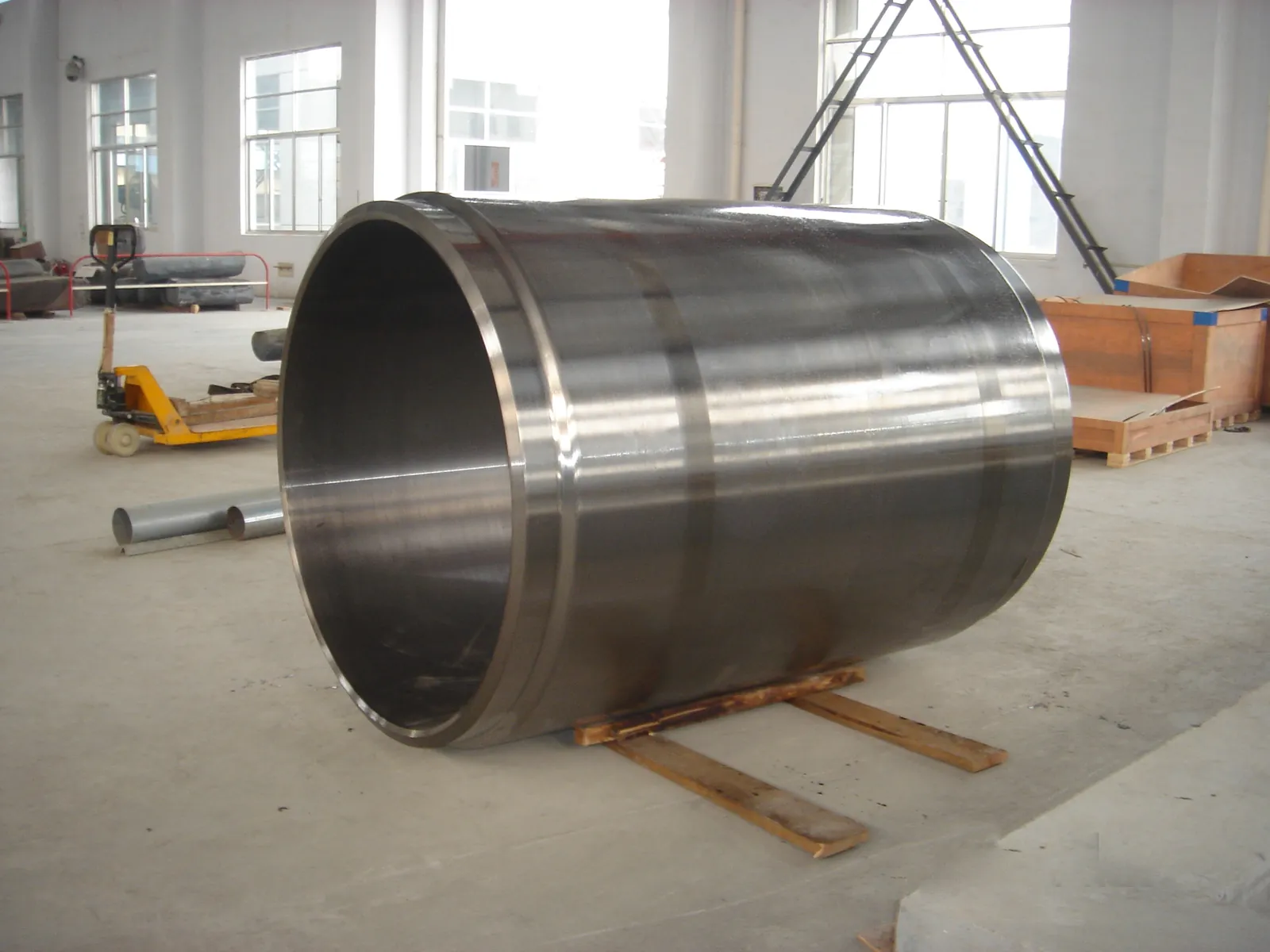
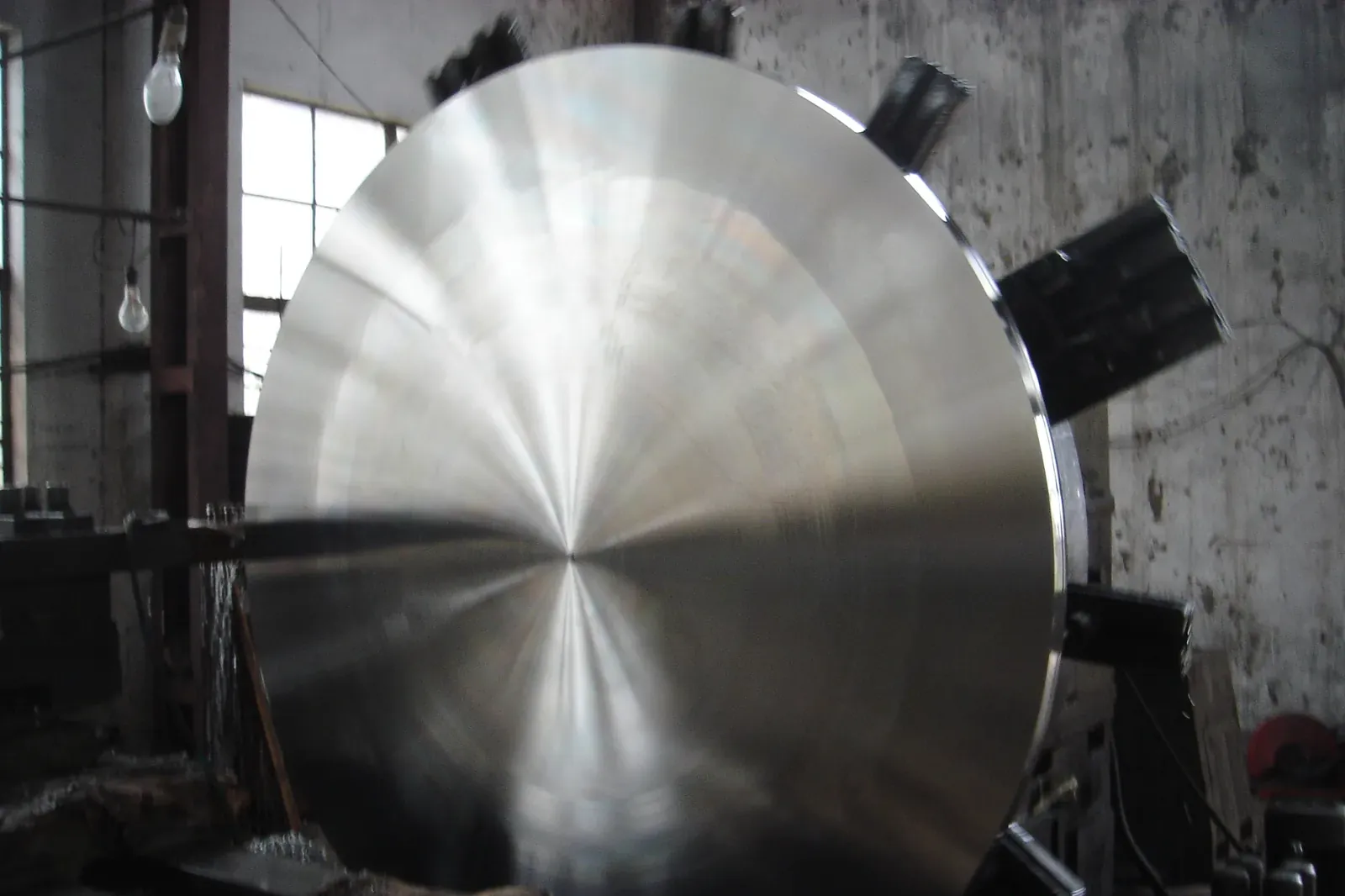
Super duplex 1.4410 (UNS S32750, F53) and 1.4501 (UNS S32760, F55) for seawater and acidic media, forged or cast and delivered with certification according to EN 10204.
About This Grade
What is super duplex?
Super duplex is the 25Cr grade within duplex stainless steel: approximately 25% chromium, 7% nickel, 3 to 4.5% molybdenum, and relatively high nitrogen content. Super duplex stainless steel, also written as superduplex, is typically ordered with a PREN of at least 40 and used where 22Cr duplex falls short in seawater, brine, or acidic media. Within this group, there are two main grades that are often confused.
1.4410 (X2CrNiMoN25-7-4, UNS S32750, ASTM A182 F53) is the grade known in the market as 2507. 1.4501 (X2CrNiMoCuWN25-7-4, UNS S32760, F55) additionally contains 0.5 to 1.0% copper and 0.5 to 1.0% tungsten; a well-known trade name is ZERON® 100. Therefore, 1.4501 is not 2507. The copper improves resistance in non-oxidizing acids such as sulfuric acid.
In EN 10088-3, both grades fall into the same strength class. In ASTM A182, they differ: for F53, the minimum values decrease above a 50 mm wall thickness, while F55 requires a higher minimum elongation. Metal Service Europe supplies both as forgings. We also supply super duplex as centrifugal castings or sand castings; the cast counterpart of 1.4501 is 1.4508.
Applications
Applications of Super Duplex
Defense and shipbuilding
Maritime fasteners
Reverse osmosis desalination
Pumps, valves, and chokes in oil and gas
Flue gas desulfurization
Subsea manifolds and piping
Xmas trees and connectors
Sulfuric acid plants
Composition and Properties
Composition and properties of super duplex 1.4410 and 1.4501
Chemical Composition
Mechanical properties (solution annealed)
EN values solution annealed, cross-section up to 160 mm, impact energy minimum 100 J. For F53 up to 50 mm wall thickness, ASTM A182 specifies higher minimums; the table shows values for thicker forgings. ZERON® 100 row: guaranteed minimums according to the manufacturer's datasheet. For pieces above 160 mm, EN 10250-4 or per-order agreements determine the requirements. ZERON® is a registered trademark of Rolled Alloys.
Heat Treatment and Processing
Hot forming of ZERON® 100 (1.4501) at 1100 – 1280 °C
Solution annealing F55 / 1.4501 at 1100 – 1140 °C, water quenching
Solution annealing F53 according to ASTM A182 at minimum 1025 °C, followed by quenching
Pickling or full machining after solution annealing
Relieve cold forming above 10 – 15% by re-solution annealing
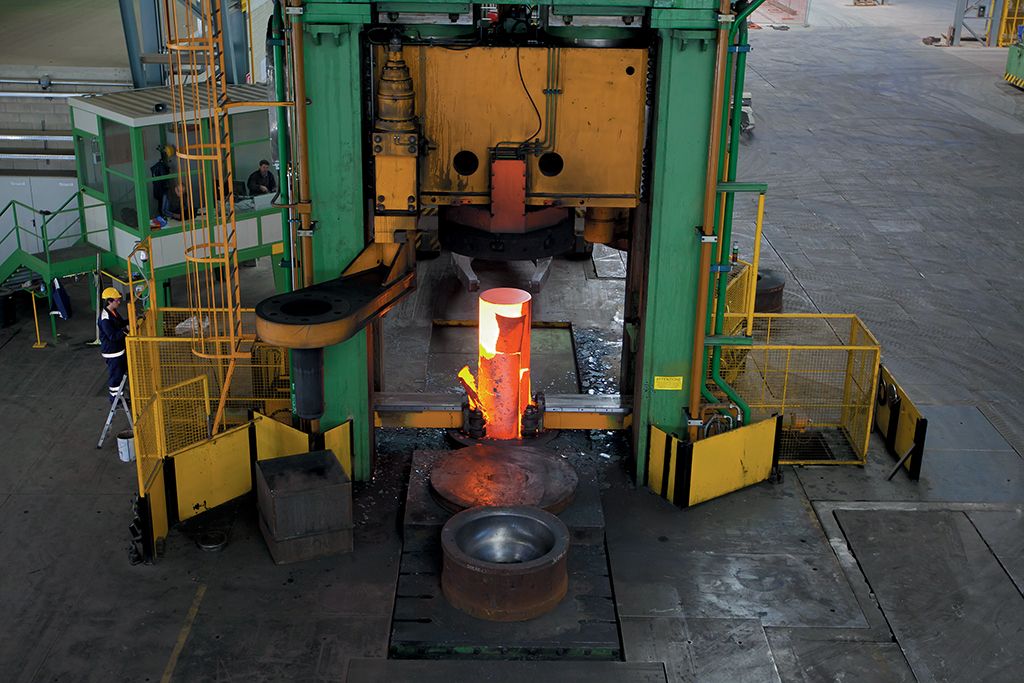
Forging properties depend on production route and forging ratio
Our Approach
From Inquiry to Delivery
Inquiry & Specification
Specify the exact grade: 1.4410/F53 or 1.4501/F55. We verify whether the drawing intends 2507 or S32760, and which hardness or CPT requirement applies.
Solution annealing and direct quenching
Thick super duplex parts are water quenched immediately after solution annealing. We record this for each piece and monitor the heat treatment.
Quality Control & Delivery
Ultrasonic testing and mechanical tests verify the structure and strength of each piece. Delivery is provided as rough, pre-turned, or fully machined, with the agreed EN 10204 certificate.
Quality
Certification and Quality Assurance
Because 1.4410 and 1.4501 are very similar, we confirm the variant with PMI or spectral analysis: copper and tungsten make the difference. Where requested, an intergranular corrosion test follows. Inspection by DNV, ABS, Lloyd's Register, or RINA is possible. The certificate, type 3.1 or 3.2, makes every piece fully traceable. You can read about how we organize inspections under quality assurance.
Available
Super Duplex available as
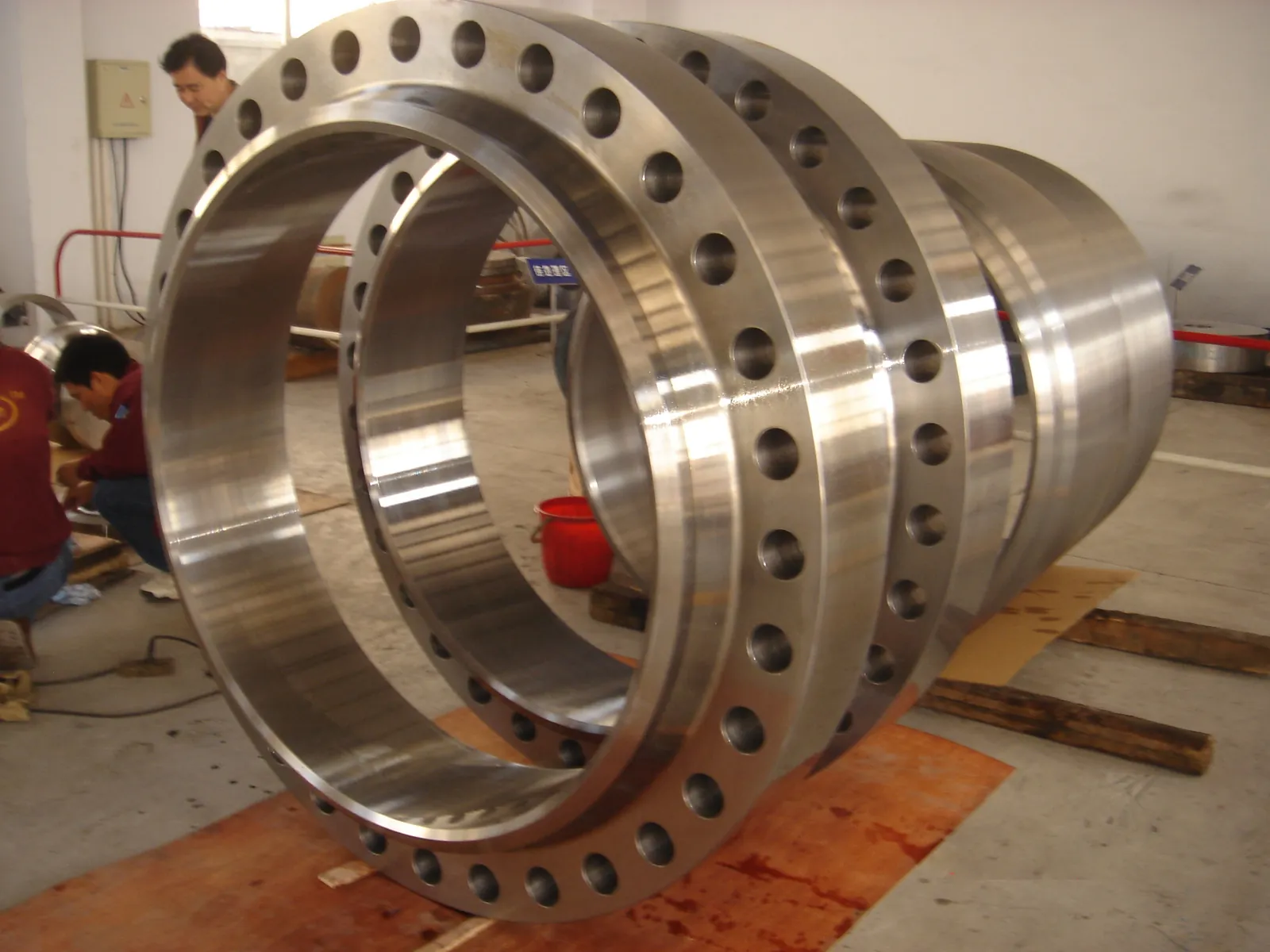
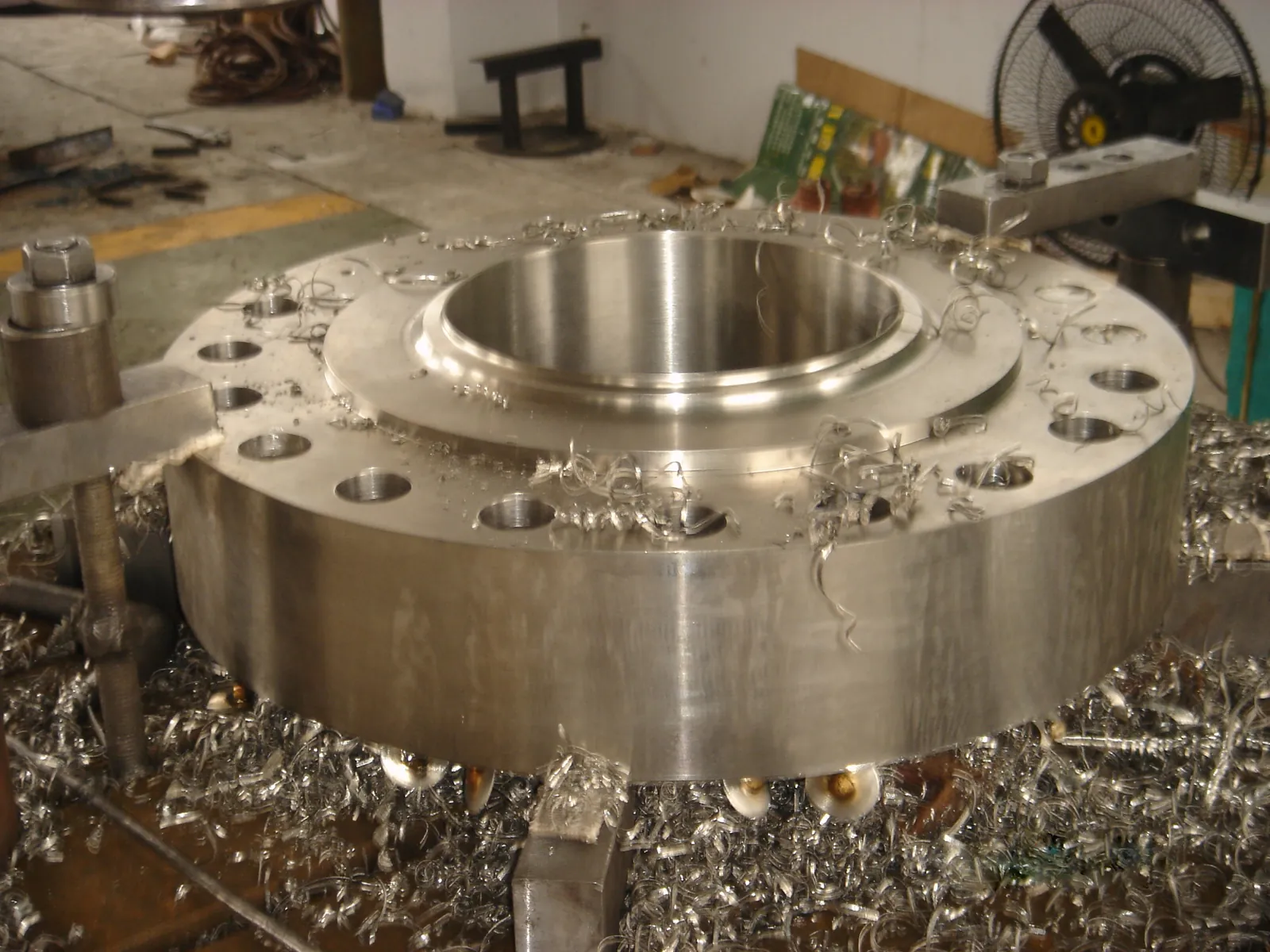
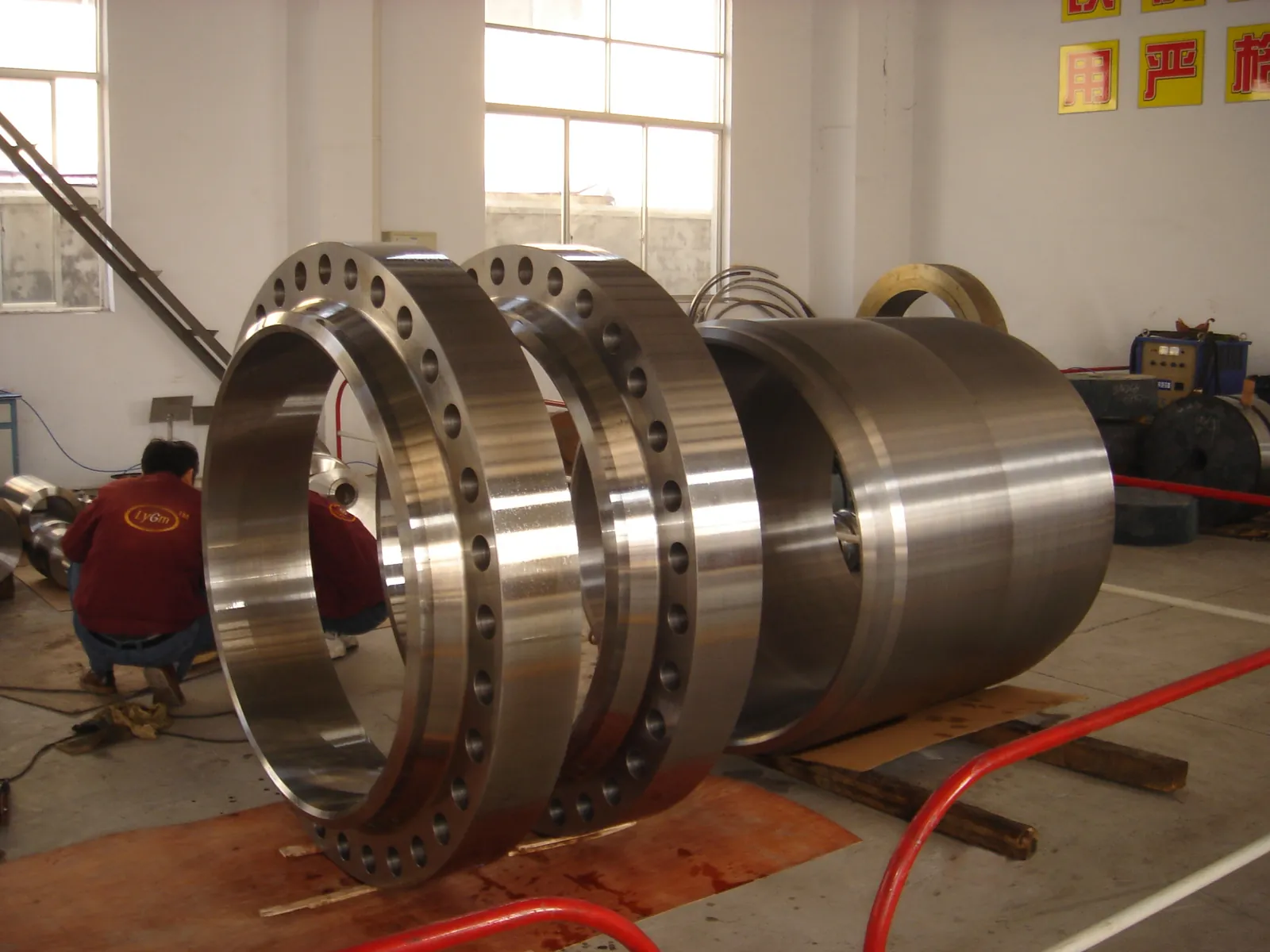
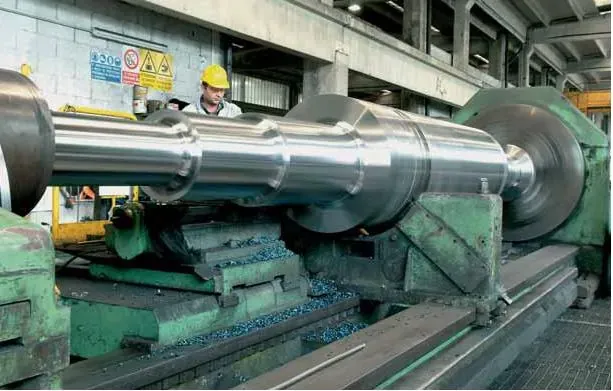
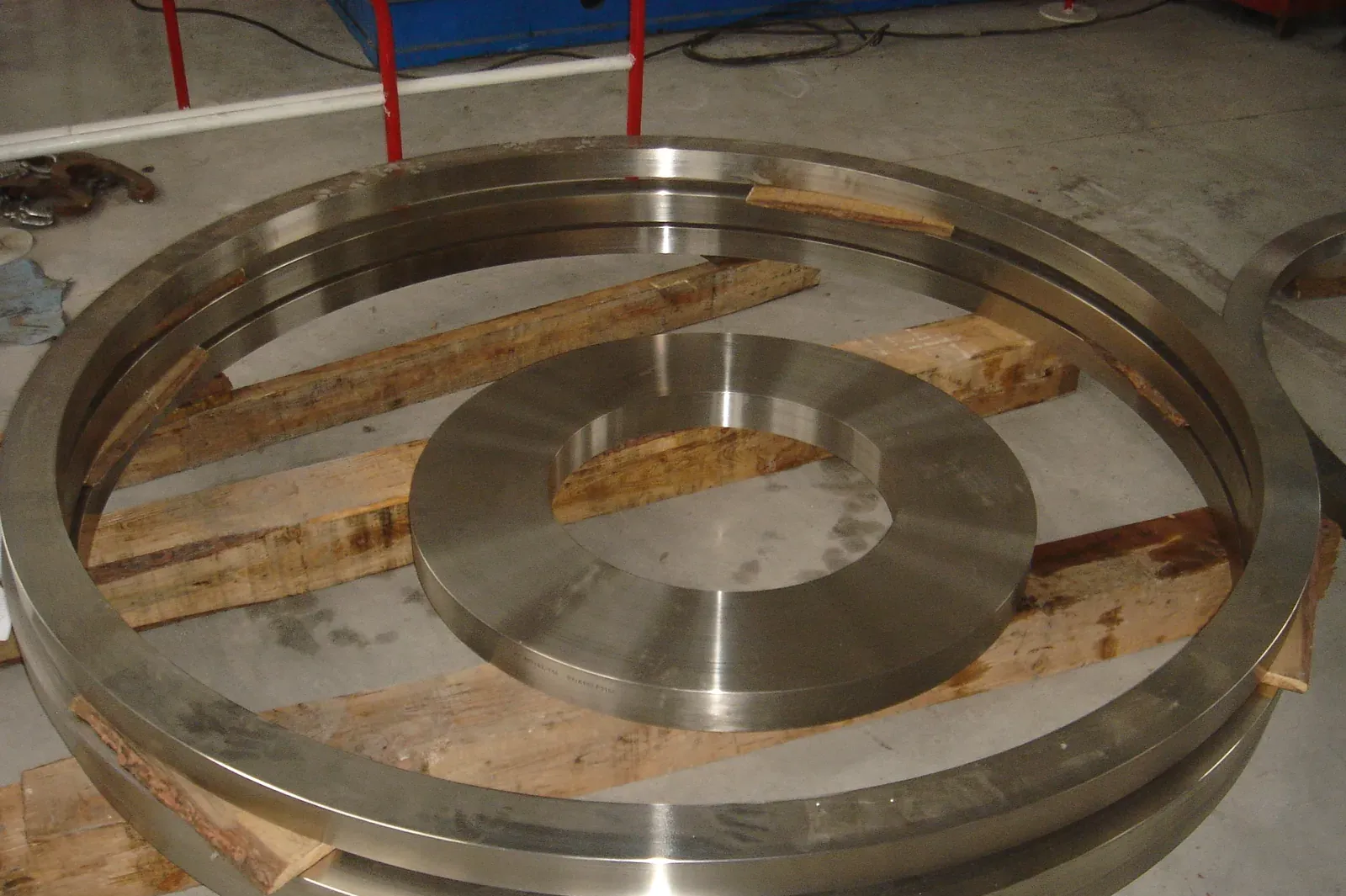
We supply super duplex forged or cast, rough, pre-turned, or fully machined:
Frequently Asked Questions
Frequently asked questions about Super Duplex
Is 1.4501 the same as 2507?
No. 2507 is 1.4410, also known as UNS S32750 and ASTM A182 F53. 1.4501 is UNS S32760 and F55, a different super duplex with added copper and tungsten. Both belong to the 25Cr group, but they are not interchangeable without the designer's approval. The two are frequently confused on drawings and in orders.
What is the difference between F53 and F55?
The difference lies in chemistry and ASTM minimum values. F53 (S32750) contains no tungsten and at most 0.50% copper; ASTM A182 requires a minimum tensile strength of 730 MPa, yield strength of 515 MPa, and 15% elongation above a 50 mm wall thickness, with higher strength values up to 50 mm. F55 (S32760) is alloyed with copper and tungsten and requires 750 to 895 MPa, a minimum yield strength of 550 MPa, and 25% elongation.
What is the PREN of super duplex?
For super duplex, a PREN of at least 40 is the common requirement, calculated as Cr + 3.3 Mo + 16 N. The standard analysis of 1.4410 does not guarantee this: at the lower limit, the calculation results in approximately 37.7. Therefore, include the requirement in the order. For 1.4501, ISO 15156 and BS 4515-2 also include tungsten: Cr + 3.3 (Mo + 0.5 W) + 16 N. ZERON® 100 thus exceeds 41.
What is the critical pitting temperature of super duplex?
For solution annealed ZERON® 100 (1.4501), the manufacturer reports a critical pitting temperature of 70 to 80 °C in the ASTM G48 test (Method A, 6% ferric chloride, 24 hours) for both forged and cast material. Welded joints with appropriate filler metal reach 35 to 60 °C.
Up to what temperature is super duplex usable?
Super duplex is intended for moderate operating temperatures, with an upper limit of approximately 300 °C. The manufacturer of ZERON® 100 advises against long-term exposure above this, as toughness decreases significantly. For pressure equipment, the limit from the design standard applies, which may be lower. On the cold side, ZERON® 100 remains tough: typically more than 70 J impact energy at -50 °C.
Is super duplex suitable for sour gas?
Yes, provided it is solution annealed and within the hardness limit. According to the manufacturer, ZERON® 100 (1.4501) is listed in ISO 15156-3 / NACE MR0175 as suitable for sour environments at an H2S partial pressure of 0.2 bar; at lower chloride levels, this limit is much higher. The hardness is guaranteed at a maximum of 28 HRC. Cold forming after solution annealing can increase the hardness above the NACE limit and must then be re-solution annealed.
How thick can a super duplex forging be?
There is no hard limit, but the guaranteed properties apply to limited cross-sections. EN 10088-3 provides values up to 160 mm. The manufacturer of ZERON® 100 cites typical forging values up to 300 mm solid, or 250 mm wall thickness for a ring with at least a 100 mm bore. For heavier pieces, we agree on requirements per order, as the route and forging ratio strongly determine the outcome.
What is the difference between duplex and super duplex?
Super duplex contains more chromium, molybdenum, and nitrogen than 22Cr duplex, with approximately 25% versus 22% chromium. Outokumpu cites typical PREN values of 43 for 2507 and 35 for 2205. In EN 10088-3, super duplex has a minimum yield strength of 530 MPa, compared to 450 MPa for 22Cr duplex. This makes super duplex more suitable for warm seawater and brine, but also more expensive. For less aggressive media, 1.4462 is often sufficient.
With which certificates do you supply super duplex?
We typically supply super duplex with certificate 3.1 according to EN 10204 and, for offshore and subsea applications, often with a 3.2 certificate after inspection by an independent body. This includes heat analysis, solution annealing temperature, and the results of tensile testing, impact testing, and hardness measurement. If the piece must comply with a NORSOK MDS sheet, such as D51 – D55, D57, or D58, we include the corresponding tests in advance.
What determines the lead time for super duplex?
Weight, dimensions, and the scope of inspection are decisive. As a guideline, certain pre-turned parts are ready within 6 business weeks, while fully machined parts usually require 8 to 10 business weeks. For super duplex, the availability of a suitable heat also plays a role, especially if the drawing prescribes a minimum PREN or 3.2 inspection. We will state a specific timeframe in the quote.
In Pictures
A Selection of Our Work
Request a quote for Super Duplex / 1.4410 and 1.4501
Send us your drawing with the exact grade, F53 or F55, and the required inspections. You will receive a suitable proposal with lead time shortly.
Minimum PREN established
1.4410 and 1.4501 available
Inspection by DNV, ABS, or LR
Forging or casting
Request a Quote
Leave your details, and we will contact you shortly.