
Inconel® (Alloy 718 and Alloy 625) | Forged & Certified
Custom Inconel® forgings: Alloy 718 (2.4668, UNS N07718) for high strength up to approx. 700 °C and Alloy 625 (2.4856, UNS N06625) for seawater and acids.
About this grade
What is Inconel?
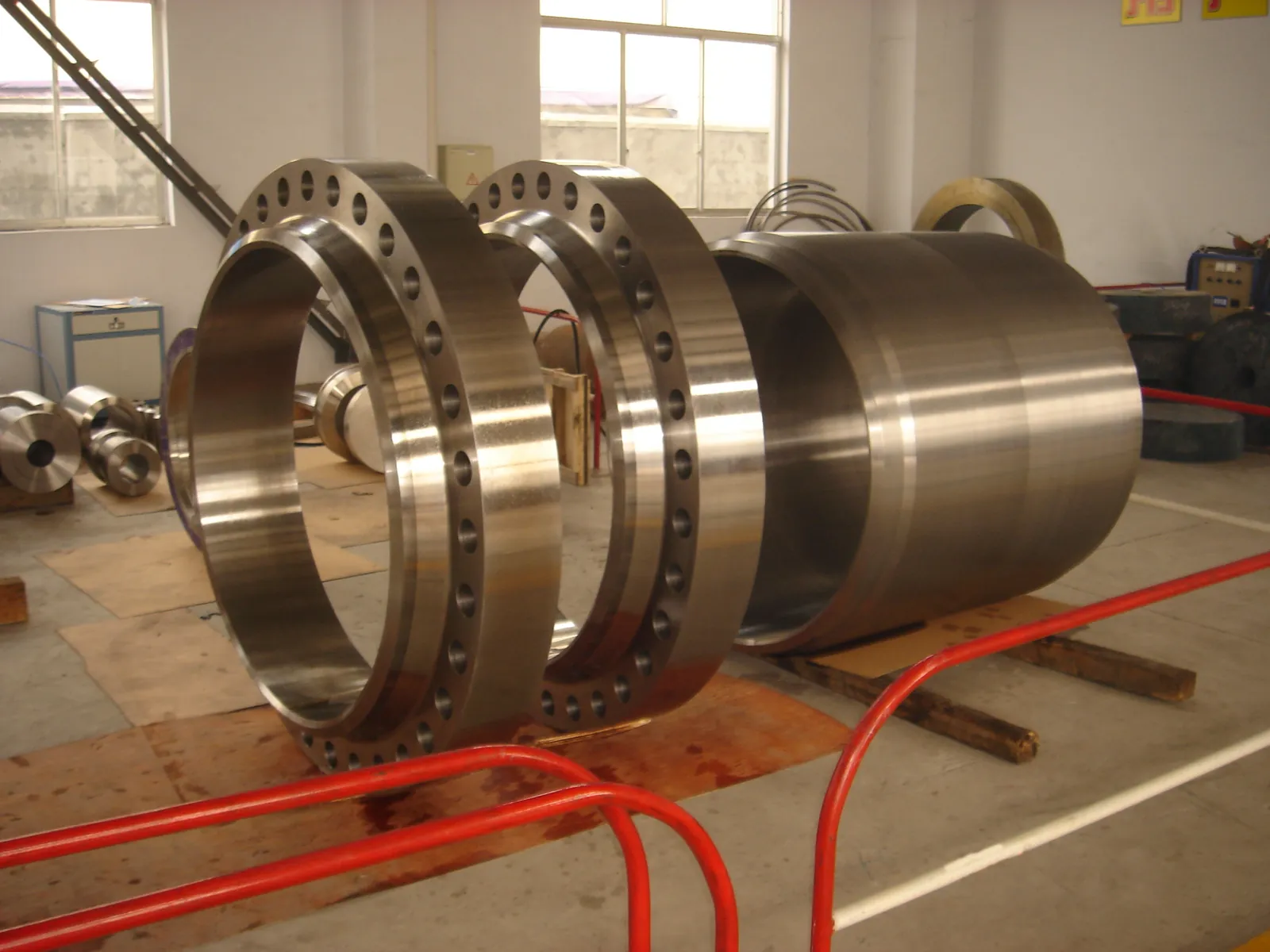
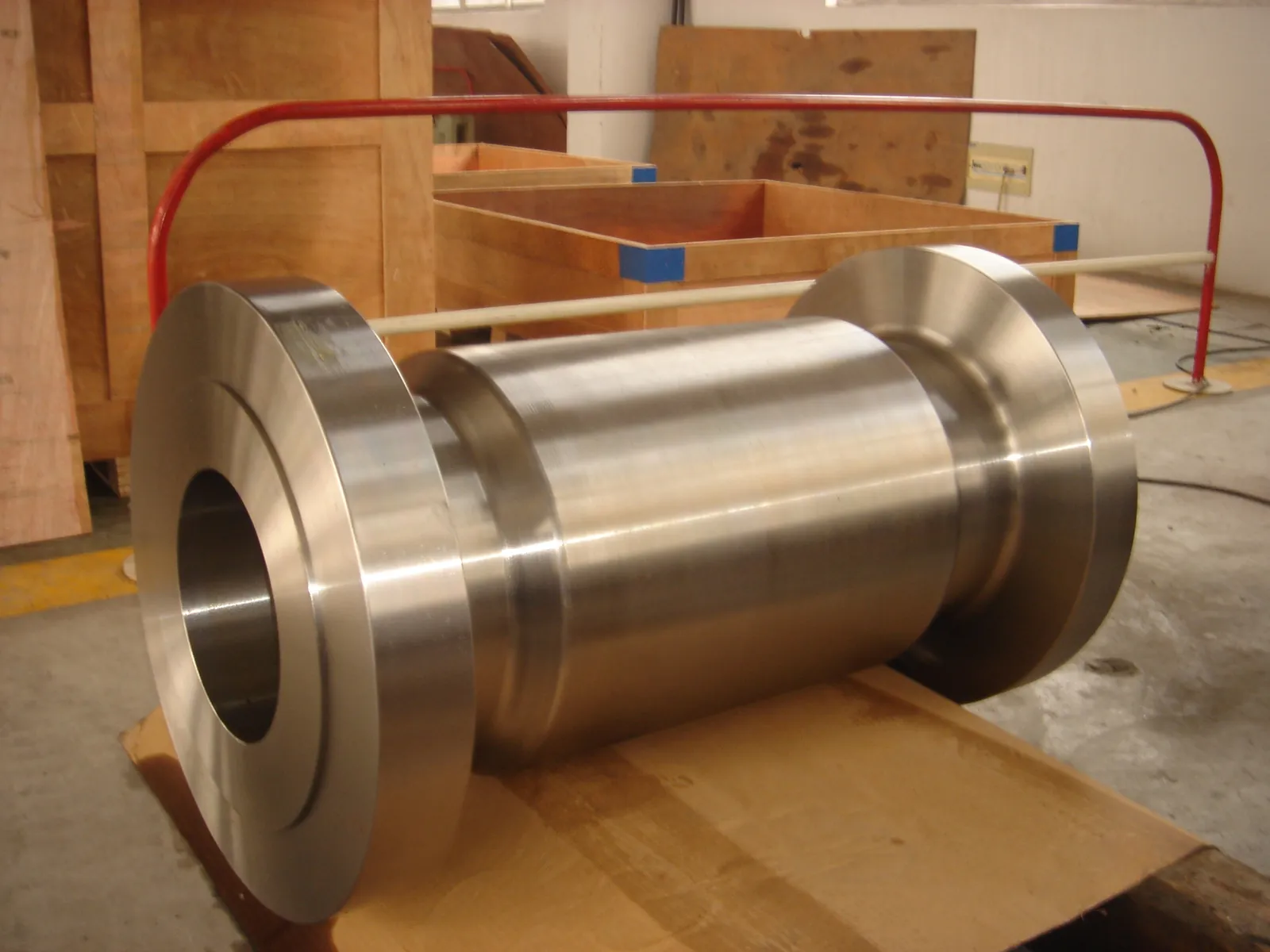
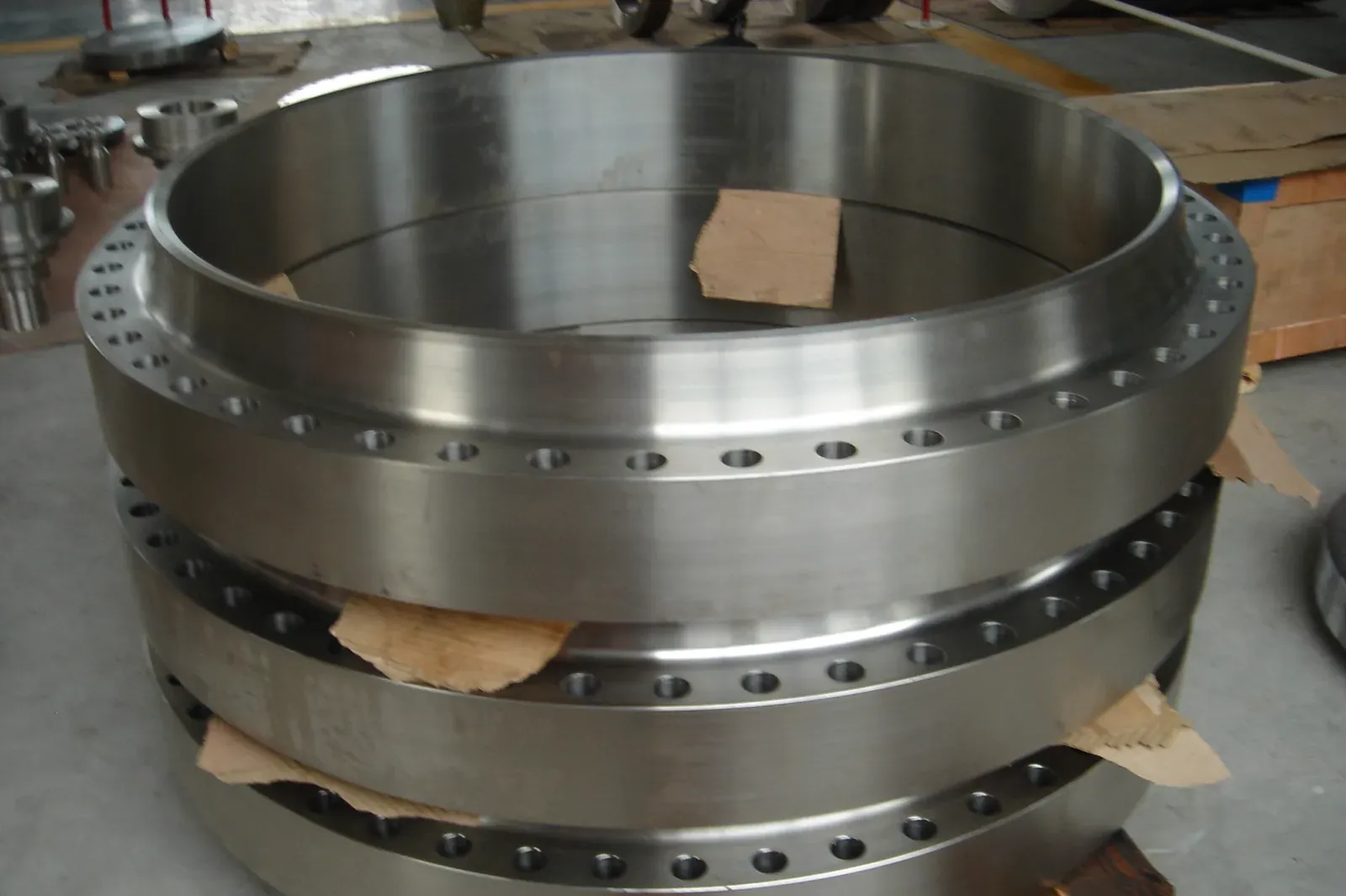
Inconel® is the brand name of Special Metals Corporation for a group of nickel alloys with chromium, which maintain their strength at high temperatures and are resistant to corrosion. This page covers two commonly used grades: Alloy 718 (Inconel® 718), with material number 2.4668, UNS N07718 and EN short name NiCr19Fe19Nb5Mo3, and Alloy 625 (Inconel® 625), with W.nr. 2.4856 and UNS N06625. Metal Service Europe supplies both forged, as rings, discs, shafts, or parts according to drawing.
Alloy 718 owes its strength to precipitation hardening. After solution annealing and aging, fine gamma prime and gamma double prime particles form in the nickel matrix. This hardening process starts slowly, which means the material hardly cracks after welding. The alloy is used from cryogenic temperatures up to approx. 700 °C, including in gas turbine rings and housings and in oil and gas drilling equipment.
For seawater and aggressive chemicals, Alloy 625 is often the better choice. This alloy, with a minimum of 58% nickel and 8 to 10% molybdenum, derives its strength from the composition itself and does not need to be aged. It resists pitting, crevice corrosion, and chloride stress corrosion cracking. In addition, we supply other nickel alloys, such as 600, 617, X-750, and C-276.
Applications
Applications of Inconel
Drilling equipment, pump shafts, and wellhead components for sour gas
Flare systems at refineries and platforms
High-strength bolts and springs
Valves, reaction vessels, and heat exchangers in the chemical industry
Offshore and seawater equipment, such as propeller blades and fittings
Components for rocket propulsion and cryogenic storage
Rings and housings for aircraft and industrial gas turbines
Turbine discs and fasteners
Composition and properties
Composition and properties of Inconel® 718 / 2.4668 and 625 / 2.4856
Chemical composition
Mechanical properties per alloy and condition
Composition according to Special Metals (conforming to AMS). Values for 718 are minimum values at room temperature as stated by Special Metals for AMS 5662/5663 and for oilfield material; MPa converted from ksi. Values for 625 are typical values from Special Metals and are not intended for specification. For heavy forgings, the requirements of ASTM B637, ASTM B564, or AMS 5666 apply, or as agreed upon. Inconel® is a registered trademark of Special Metals Corporation; the use of the name does not imply that the material originated from the trademark holder.
Heat treatment and processing
Hot work 718 between approx. 899 and 1121 °C; reheat as soon as a part falls below 899 °C
718 final reduction minimum 20% for open-die forging (10% for closed-die forging) for a duplex grain
Solution anneal 718 at 927 – 1010 °C, age at 718 °C and 621 °C, for a total of 18 hours
Hot work 625 between 1150 and 900 °C, with a final reduction of 15 – 20% for open-die forging
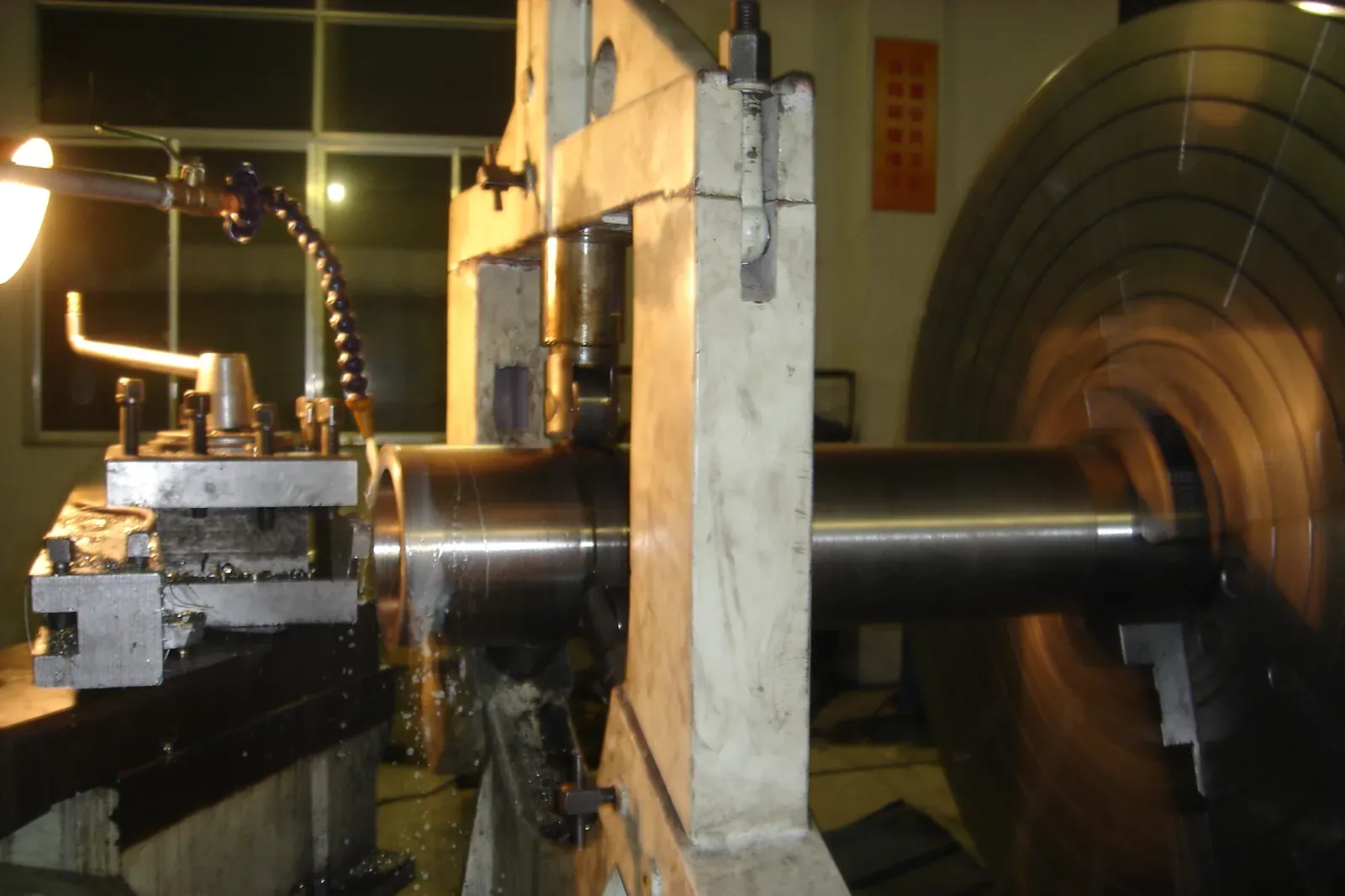
Machining preferred in the annealed condition; both alloys work-harden significantly during processing
625 weldable with all common processes; niobium prevents sensitization during welding
Our Approach
From inquiry to delivery
Inquiry & specification
You specify the alloy, standard, and condition, for example 718 according to AMS 5663 or 625 Grade 1. We verify whether those requirements suit the cross-section and the application.
Forging, annealing, and aging
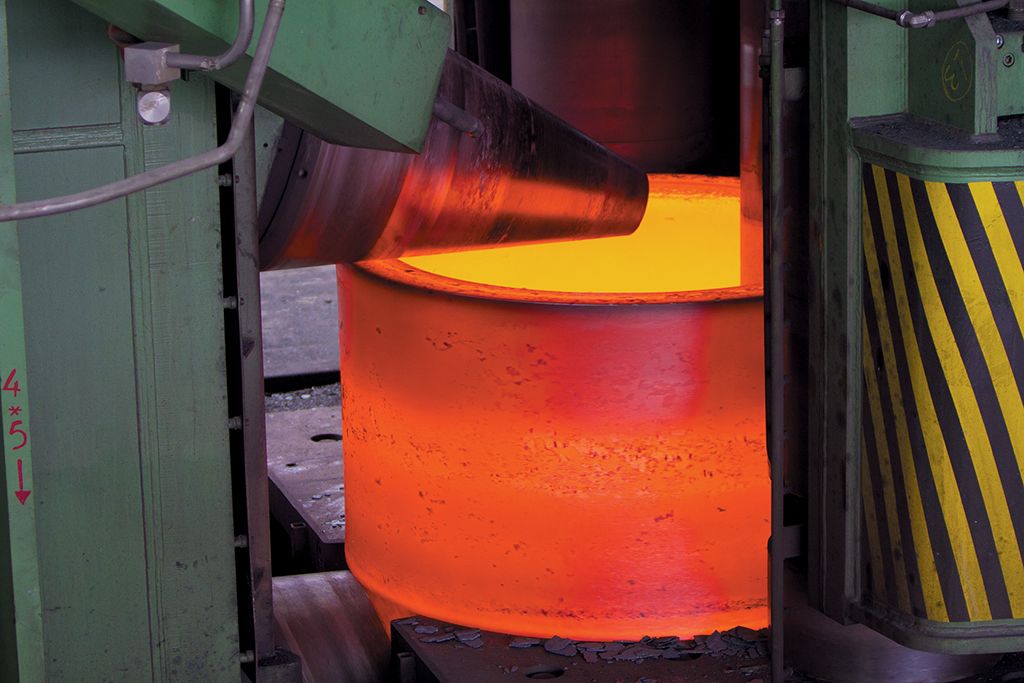
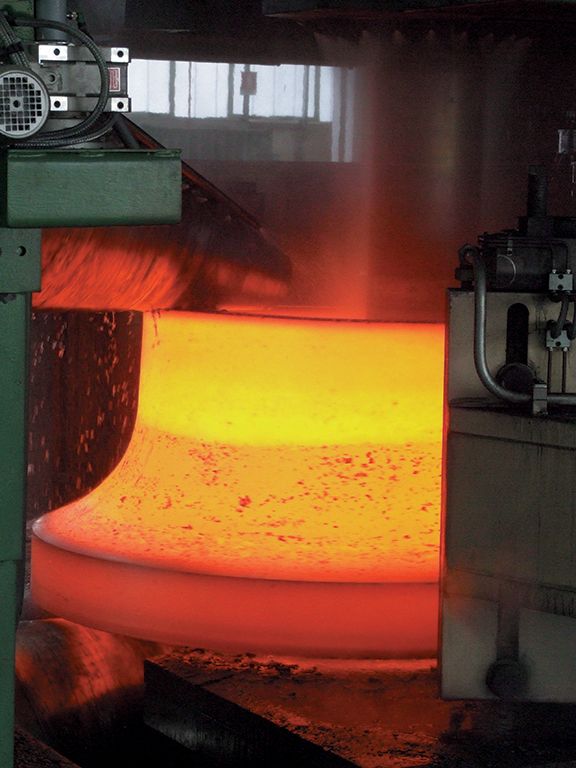
Nickel alloys resist deformation and require heavy presses and a narrow forging temperature range. We monitor forging, annealing, and aging from start to finish.
Quality control & delivery
After final inspection, the part is sent to you in the agreed-upon finish, together with the certificates and traceability going back to the melt.
Quality
Certification and quality assurance
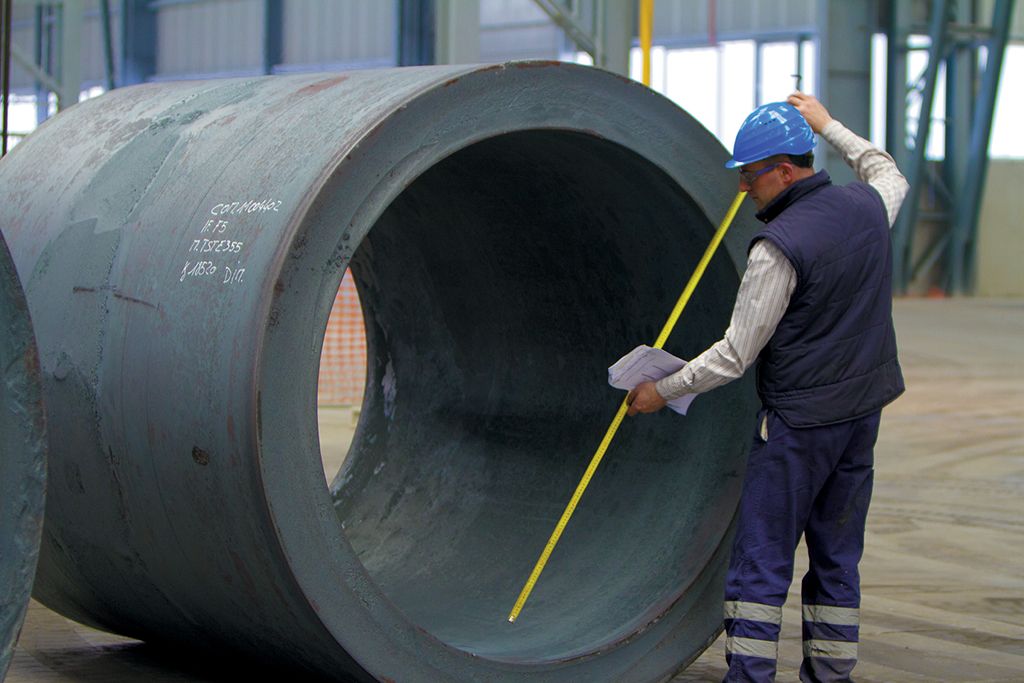
For Inconel forgings, we look beyond tensile strength. Grain size and heat treatment determine high-temperature behavior, so these are established in the specification beforehand. Every rough-machined piece undergoes ultrasonic testing; upon request, liquid penetrant testing, hardness measurement, PMI, and microscopic examination follow. You can read about how we safeguard and document this per order on our quality assurance page.
Available
Inconel® available as
Alloy 718 and Alloy 625 are available from us starting from a single piece, in these product forms:
Frequently asked questions
Frequently asked questions about Inconel
Is Alloy 718 the same as Inconel 718?
Yes, Alloy 718 and Inconel® 718 are the same alloy, with W.nr. 2.4668 and UNS N07718. Inconel is only the trade name used by Special Metals; other producers supply the same alloy as Nicrofer 5219 Nb (VDM) or ATI 718. The requirements for composition and strength come from standards such as AMS 5662 and ASTM B637, not from the brand name. Note: some suppliers incorrectly list the material number as 2.4688.
Is Inconel steel?
No, Inconel® is not steel, nor is it stainless steel, but a nickel alloy. According to the European definition in EN 10020, steel contains more iron than any other element. Alloy 625 has a minimum of 58% nickel and a maximum of 5% iron; in Alloy 718 as well, nickel (together with cobalt at 50 to 55%) is the main component. Therefore, the forging standards fall under ASTM B, the series for non-ferrous metals, and the material numbers start with 2 instead of 1.
Which standards apply to forged Inconel 718?
For forgings in Inconel® 718, ASTM B637 and the aerospace standards AMS 5662, 5663, and 5664 are most commonly used. AMS 5662 describes solution-annealed material, AMS 5663 solution-annealed and aged, and AMS 5664 a variant with a higher solution annealing temperature. In addition, DIN 17754 and ISO 9725 exist. In oil and gas, API 6A718 often applies along with NACE MR0175. We supply according to the standard on your drawing.
Up to what temperature is Inconel 718 usable?
Special Metals specifies an operating range for Inconel® 718 from -253 to approx. 704 °C (-423 to 1300 °F). According to VDM, the alloy is creep-resistant up to 700 °C, while oxidation resistance reaches approximately 1000 °C. At the cold end, the material remains ductile, making it suitable for cryogenic storage and liquid rocket fuel components. If your operating temperature is higher, we can look at another alloy together.
What is the difference between Inconel 718 and Inconel 625?
The main difference is the strengthening mechanism. Alloy 718 is hardened by aging and achieves a minimum yield strength of 1034 MPa according to AMS 5663. Alloy 625 is solid-solution strengthened and typically reaches 414 to 655 MPa in the annealed condition. On the other hand, 625, with about three times as much molybdenum, is more resistant to pitting in seawater. Choose 718 for strength and 625 for corrosion resistance.
What is the difference between Alloy 625 Grade 1 and Grade 2?
Grade 1 is soft-annealed at 950 to 1050 °C and intended for wet corrosion; VDM mentions a TÜV approval for pressure vessels from -196 to 450 °C. Grade 2 is solution-annealed at 1080 to 1160 °C and intended for use above approx. 600 °C, where creep strength matters. ASME recognizes both conditions. Therefore, always state the desired grade in your inquiry, as the heat treatment determines the behavior in operation.
What hardness requirement applies to Inconel 718 in oil and gas?
For sour gas applications, NACE MR0175 limits the hardness to a maximum of 40 HRC. Special Metals describes a separate oilfield grade for this: solution-annealed and aged, with a minimum yield strength of 827 MPa and 30 to 40 HRC. Producers also supply their own oilfield variants, such as VDM Alloy 718 CTP with a minimum yield strength of 120 ksi (827 MPa). We establish the required class and hardness beforehand and measure it on every piece.
What other nickel alloys do you supply besides 718 and 625?
We also supply Alloy 600 (2.4816), Alloy 617 (2.4663), Alloy X-750 (2.4669), and Alloy C-276 (2.4819). Alloy 600 is a nickel-chromium-iron alloy without molybdenum, strong against oxidation and caustic corrosion. Alloy 617 combines cobalt and molybdenum for high-temperature strength. X-750 is age-hardenable like 718, but via titanium and aluminum. C-276 is designed for wet chemistry and chlorides, not for high temperatures.
With which certificate do you supply Inconel forgings?
Typically, you receive an EN 10204 3.1 certificate with an Inconel forging, which states the melt analysis, heat treatment cycle, and measured strength values. If your client requires an independent inspector, a 3.2 certificate follows, issued by, for example, TÜV, Bureau Veritas, or DNV. We coordinate which tests are included beforehand based on your specification, such as the AMS or ASTM standard or your end customer's requirements.
How long is the lead time for an Inconel 718 forging?
For a completely machined part in Alloy 718, generally count on 8 to 10 business weeks; for a rough-machined piece, this can be 6 business weeks in certain cases. Weight, dimensions, and heat treatment determine the actual lead time, as aging alone for 718 takes about 18 hours in the furnace. If suitable material is in stock, it can be faster. A specific delivery week will be stated in the quote.
In pictures
A selection of our work
Request a quote for Inconel® 718 / 2.4668 or 625 / 2.4856
Please state the alloy, the standard, the desired condition, and the number of pieces in your inquiry. You will hear from us soon regarding how we can manufacture and inspect Alloy 718 or Alloy 625 for you.
Certificate 3.1 or 3.2
Forging according to AMS and ASTM
From a single piece
PMI and ultrasonic testing
Request a quote
Leave your details, and we will contact you shortly.