
17-4PH (UNS S17400) | Forged & Certified
17-4PH (UNS S17400) according to ASTM A564 and A705, forged and aged in the condition you choose: H900 for maximum strength or H1150D for sour gas.
About this grade
What is 17-4PH?
17-4PH (also written as 17-4 PH) is a martensitic, precipitation-hardening stainless steel with chromium, nickel, copper, and niobium. In American specifications, 17-4PH is usually listed as UNS S17400 or Type 630, with ASTM A564 for bars and shapes and ASTM A705 for forgings; the European material number is 1.4542. Metal Service Europe supplies the alloy as shafts, rings, or discs, or fully machined to your drawing.
The unique feature of this steel is that you choose the properties yourself. After solution annealing, referred to as Condition A in ASTM terms, aging follows at a set temperature which strengthens the steel through precipitation. ASTM standards define a range of conditions for this, from H900 for the highest strength to H1150 and the double-aged H1150D for greater toughness at a lower hardness.
This combination of strength and corrosion resistance sets it apart from other hardenable grades. Its corrosion resistance is superior to that of chromium steels like 410 and approaches that of types 302 and 304 in most media. If your organization works with European standards and P-conditions instead of H-conditions, please see our page on AISI 630 / 1.4542.
Applications
Applications of 17-4PH
Components for offshore oil and gas
High-pressure parts
Valve stems and valve spindles
Aerospace and defense components
Pump shafts and motor shafts
Gears
Composition and properties
Composition and properties of 17-4PH / UNS S17400
Chemical composition
Mechanical properties per aging condition
Minimum values according to ASTM A564, longitudinal, for cross-sections up to 8 inches (203.2 mm) (H1150M and H1150D: all sizes), as shown in manufacturer data sheets. For forgings according to ASTM A705 and for larger cross-sections, we agree on requirements in consultation.
Heat treatment and processing
Condition A: solution annealing at 1025 – 1055 °C and cooling to 32 °C or lower; maximum 363 HB
Single aging: from 1 hour at 480 °C (H900) to 4 hours at 620 °C (H1150)
Double aging: H1150M 2 hours at 760 °C plus 4 hours at 620 °C, H1150D twice 4 hours at 620 °C
Forging after preheating to 1150 – 1180 °C; the lower limit varies by manufacturer (950 or 1010 °C), always followed by solution annealing
Machining is easier in the overaged state than in Condition A
Our approach
From inquiry to delivery
Inquiry & specification
You specify the standard (A564 or A705), the H-condition, and any NACE requirements. We verify whether that condition achieves the required strength and toughness for your cross-section in 17-4PH.
Achieving the ordered H-condition
Precipitation-hardening steel requires strictly controlled solution annealing and aging. We monitor both steps to ensure the ordered H-condition is demonstrably achieved.
Quality control & delivery
Tensile testing and hardness measurement confirm the H-condition for each piece; ultrasonic testing follows on the rough-turned surface. We only release the component for delivery after these checks.
Quality
Certification and quality assurance
For 17-4PH, the condition is the most important data point on the certificate, as the same heat yields completely different values in H900 and H1150. Our EN 10204 3.1 certificate therefore lists the solution annealing and aging cycle alongside analysis, tensile test, and hardness. How we monitor testing, documentation, and traceability is described under quality assurance.
Availability
17-4PH available as
Whether it is a single piece or a small series, we provide 17-4PH in the condition you prescribe:
Frequently asked questions
Frequently asked questions about 17-4PH
What do H900 and H1150 mean for 17-4PH?
The number after the H is the aging temperature in degrees Fahrenheit. H900 stands for 1 hour of aging at 480 °C, H1150 for 4 hours at 620 °C, each followed by air cooling. The lower the temperature, the stronger the result: H900 achieves a minimum tensile strength of 1310 MPa, H1150 a minimum of 930 MPa. Between these two lie H925, H1025, H1075, and H1100.
Which condition of 17-4PH is right for my application?
The load on your component determines the choice: the more toughness required, the higher the aging temperature must be. H900 is unsuitable where toughness is required. According to manufacturer data, H925 is usable down to −18 °C, H1150 down to −79 °C, and H1150M even down to −196 °C. If you have impact requirements, we advise against aging below 550 °C. For sour gas, only the double-aged conditions are considered.
What is H1150D and when is this condition needed?
H1150D is a double aging at 620 °C, after which the hardness must lie within a narrow band of 255 to 311 HB. ASTM A564 requires a minimum tensile strength of 860 MPa and a yield strength of 725 MPa. This condition is chosen for components in oil and gas extraction involving sour gas. NACE MR0175 / ISO 15156-3 limits 17-4 PH to 33 HRC; we adopt the requirement from your specification.
Can 17-4PH be used in Condition A?
No, for most applications, Condition A (the solution-annealed state) is unsuitable as a service condition. In this state, the steel consists of untempered martensite with low fracture toughness and moderate resistance to stress corrosion cracking. Condition A is a common delivery state if you perform aging yourself after machining; the component shrinks only slightly during this process. Otherwise, we deliver in the H-condition you prescribe.
What is the difference between ASTM A564 and ASTM A705?
Both standards cover precipitation-hardening stainless steel, but for different product forms. ASTM A564 describes bars and shapes, while ASTM A705 describes forgings. For a forged shaft, ring, or disc in 17-4 PH, A705 is therefore often the appropriate standard. Please state which standard and edition apply to your inquiry; we will align the tests and condition accordingly.
Is 17-4PH the same as AISI 630?
Yes. 17-4PH and AISI 630 are two names for the same alloy, with UNS number S17400 and European material number 1.4542. You will encounter both names in procurement specifications, sometimes even on the same drawing. There are minor differences in analysis limits between the ASTM and EN standards. You can read more about European designations and P-conditions on our AISI 630 page.
Up to what temperature can 17-4PH be used?
Manufacturer data sheets mention a maximum operating temperature of approximately 315 °C, with some suggesting 350 °C. Short-term use is possible up to 50 °C below the aging temperature of the chosen condition. For components that are continuously hotter, a creep-resistant steel such as 1.4923 or a nickel alloy is more suitable. We would be happy to discuss which material fits your operating temperature.
What is the density of 17-4PH?
The density of 17-4PH is approximately 7.8 g/cm³ (7800 kg/m³). Carpenter provides slightly different values per condition: 7750 kg/m³ in Condition A, 7800 kg/m³ in H900, and 7820 kg/m³ in H1150. For weight calculations, 7.8 is sufficient. For a forging, we calculate using the input weight: the final weight plus the machining allowance and material for test pieces.
What inspections and certificates are possible for 17-4PH?
The baseline is an EN 10204 3.1 certificate, with inspection according to ASTM A564 or A705, or according to ASME SA-564 or SA-705 if your pressure equipment requires it. If your project requires independent inspection, an agency such as ABS, Lloyd's Register, or DNV will co-inspect, and you will receive a 3.2 certificate. For offshore projects, acceptance can also follow NORSOK. Additional options include impact testing, penetrant testing, and PMI.
What is the lead time for 17-4PH forgings?
For a rough-turned forging, expect 6 working weeks in certain cases; for a fully machined part, it is typically 8 to 10 working weeks. The exact schedule depends on weight, dimensions, and the chosen condition, as solution annealing and aging are separate steps in the heat treatment. You will receive a specific timeframe for your drawing with the quote.
Gallery
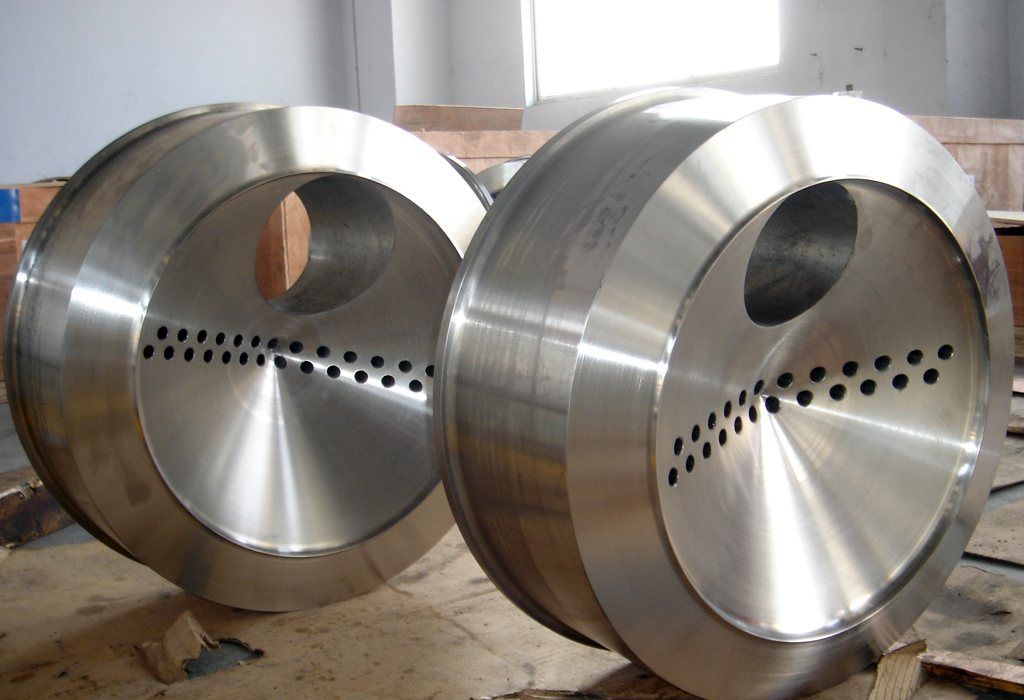
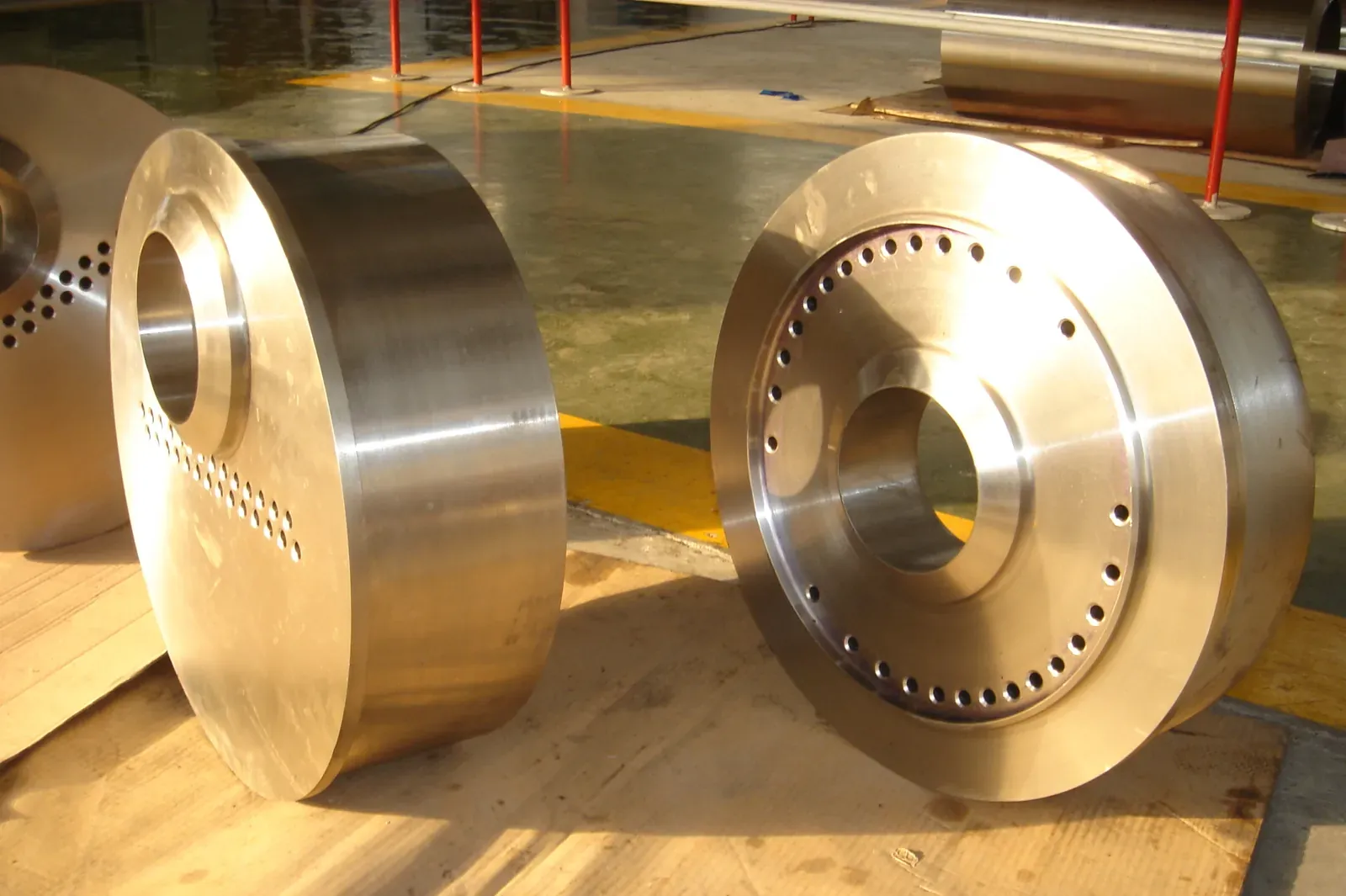
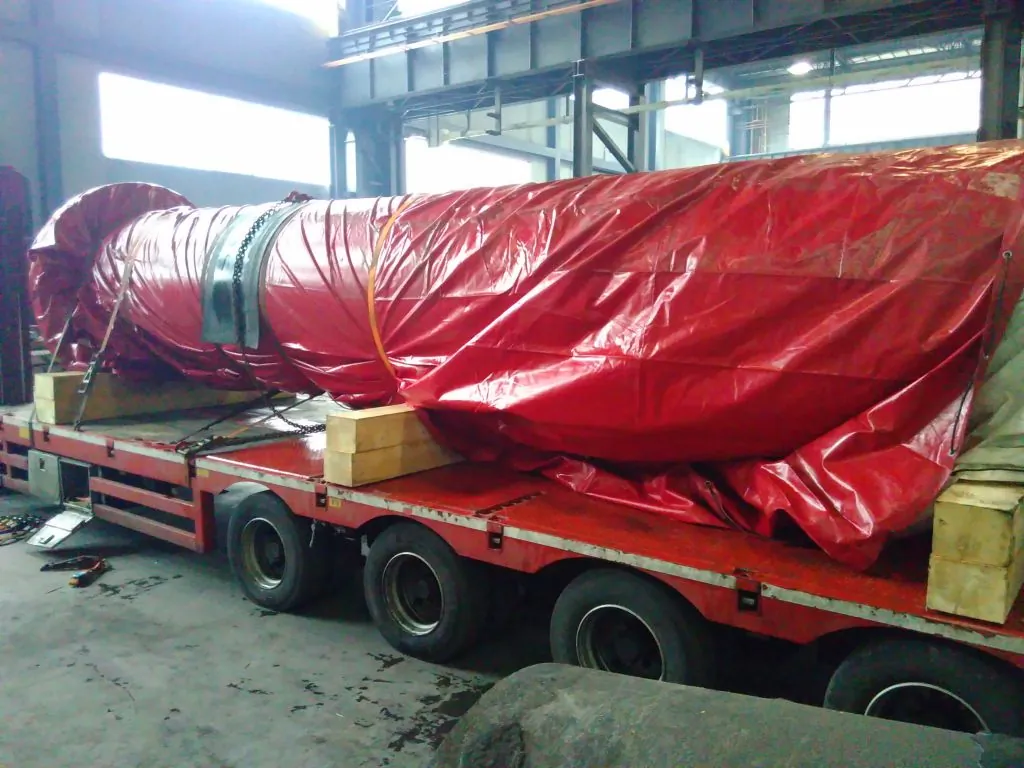
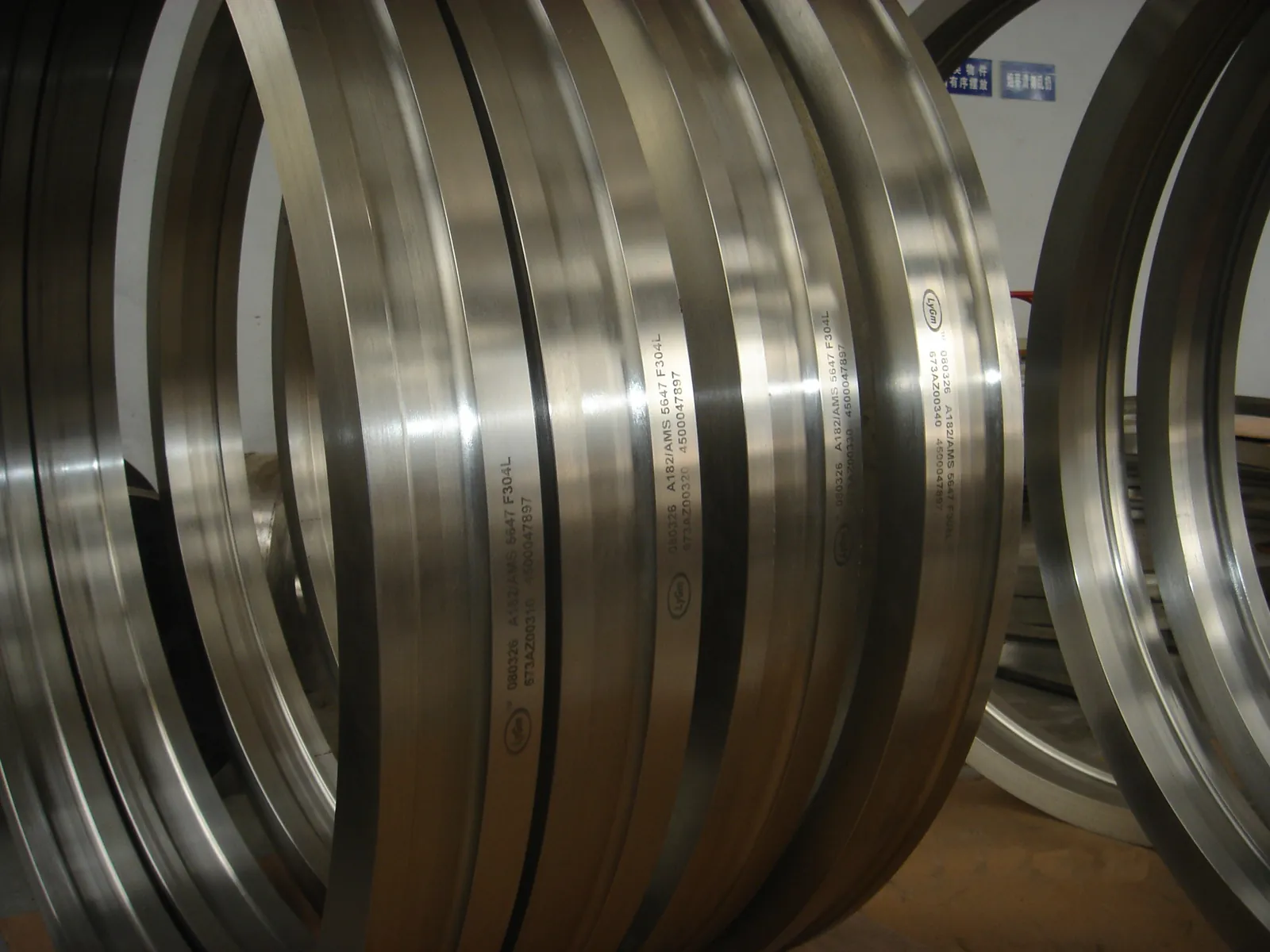
A selection of our work
Related grades
Request a quote for 17-4PH / 1.4542
Send us your drawing and quantities. We will quickly let you know in which execution and condition we can supply your 17-4PH component.
H900 through H1150D
ASTM A564 / A705
Certificate 3.1 or 3.2
Single pieces and small series
Request a quote
Leave your details, and we will contact you shortly.