
AISI 630 (1.4542) | Forged & Certified
AISI 630, in Europe material number 1.4542 (X5CrNiCuNb16-4), forged according to EN 10088-3 in P800 to P1070 and also available as remelted 1.4548.
About this grade
What is AISI 630?
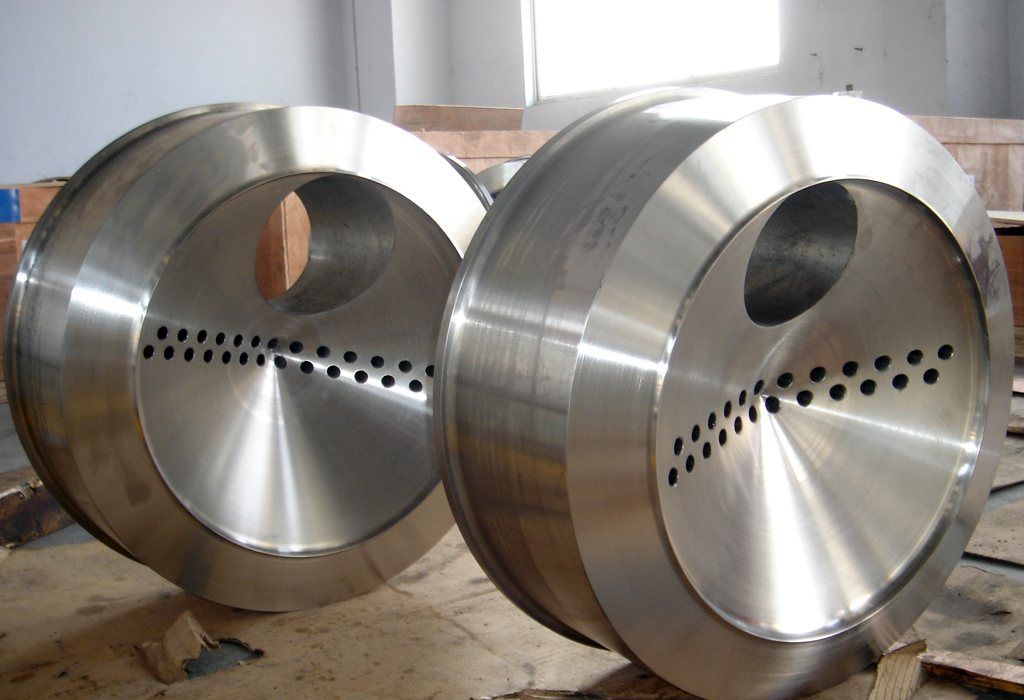
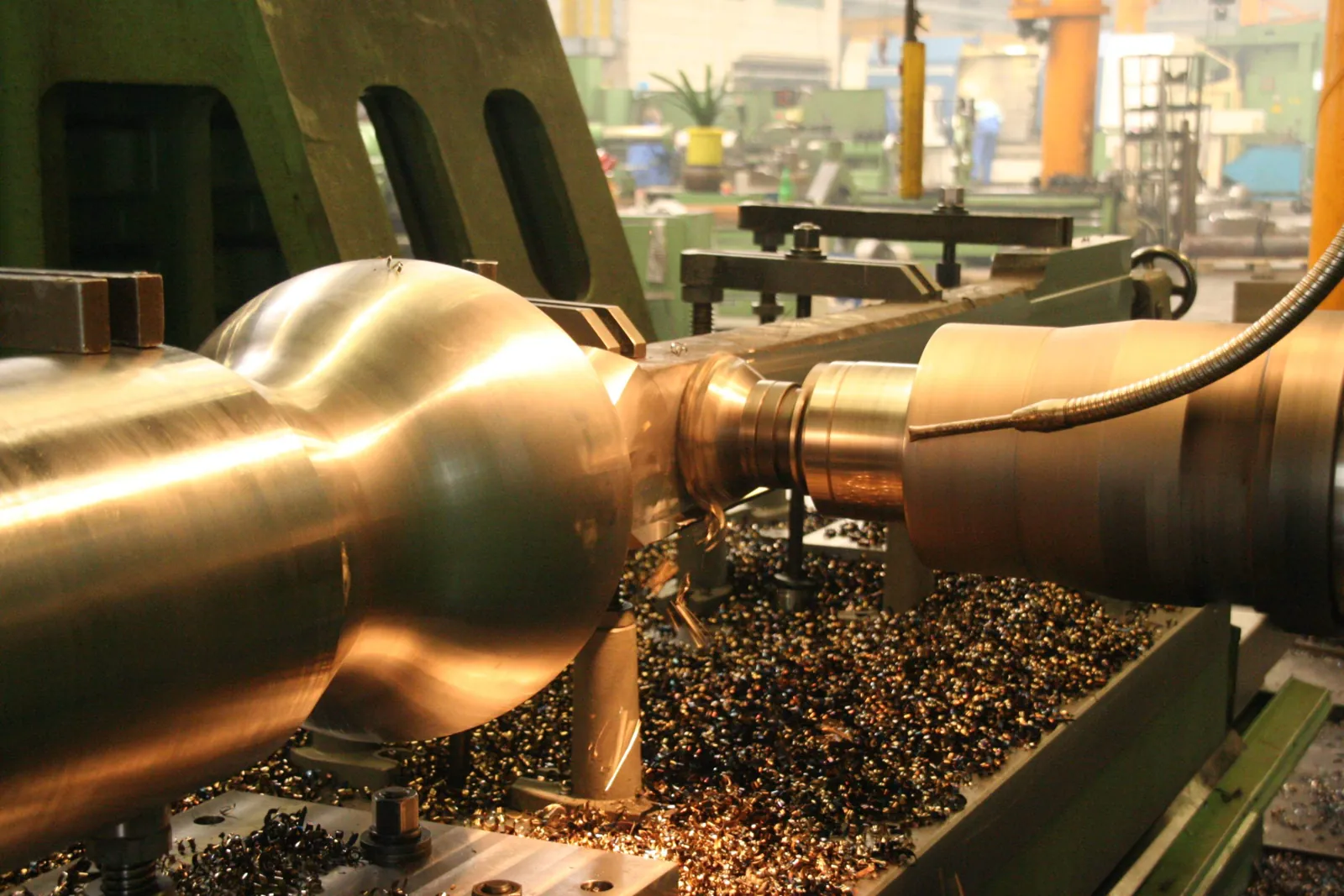
AISI 630 is the type designation for a precipitation-hardening stainless steel known in Europe under material number 1.4542 and in the American trade as 17-4 PH (UNS S17400). If you order AISI 630 according to a European standard, you use the designation X5CrNiCuNb16-4 from EN 10088-3. That designation summarizes the alloy: low carbon, plus the elements Cr, Ni, Cu, and Nb. Metal Service Europe supplies material 1.4542 as forged bars, discs, flanges, or parts according to drawing.
Chemically, it is the same alloy as 17-4PH, but the analysis limits differ. EN 10088-3 allows a maximum of 17.0% chromium, while ASTM A564 allows 17.5%. For silicon, the EN standard is stricter (0.7 vs. 1.0%), whereas for manganese, the ASTM standard is stricter (1.0 vs. 1.5%). If a forging must comply with both standards, the melt must remain within the strictest limit for each element.
European specifications work with P-conditions, from P800 to P1070, instead of the American H-conditions. Furthermore, for aerospace applications, there is 1.4548 (X5CrNiCuNb17-4-4), a remelted version with nearly the same composition. You can read about the benefits of remelting in the frequently asked questions.
Applications
Applications of AISI 630
Chemical industry
Energy technology
Aerospace
Mechanical and plant engineering
Oil industry
Paper and wood industry
Shipbuilding
Composition and properties
Composition and properties of AISI 630 / 1.4542
Chemical composition
Mechanical properties per condition
Values according to EN 10088-3, longitudinal direction, for diameters up to 100 mm, as shown in manufacturer data sheets. In solution annealed condition (+AT) maximum 360 HB and 1200 MPa. For larger cross-sections, properties are agreed upon by consultation.
Heat treatment and processing
Solution annealing (+AT) at 1030 – 1050 °C, cooling in air or oil
P930: 4 hours aging at 620 °C
P960: 4 hours aging at 590 °C
P1070: 4 hours aging at 550 °C
Hot forming between 1150 and 900 °C; open-die and closed-die forging are well possible
Machinability according to the manufacturer is poor to moderate
Our approach
From inquiry to delivery
Inquiry & specification
You provide the material number, P-condition, and application. For aerospace requirements or other critical specifications, we discuss whether the remelted variant 1.4548 is required.
Solution annealing and aging
For 1.4542, solution annealing and aging are precisely controlled. We monitor the heat treatment of each piece until the final inspection.
Quality control & delivery
Tensile and impact tests confirm the P-condition, while spectral analysis or PMI rules out material mix-ups. After that, the forging is sent to you rough, pre-turned, or finished.
Quality
Certification and quality assurance
The certificate for material 1.4542 states the EN condition, for example P930, along with the chemical analysis and mechanical results. You receive it as EN 10204 3.1 or, with an external inspector present, as 3.2. An overview of the tests we perform as standard and upon request can be found under quality assurance.
Availability
AISI 630 available as
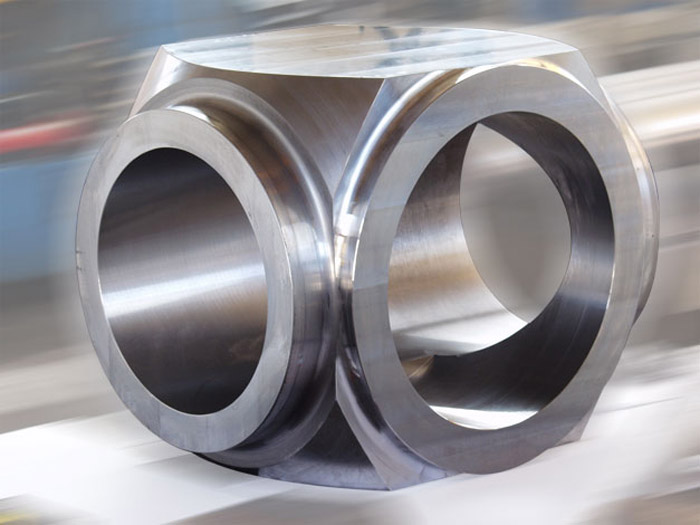
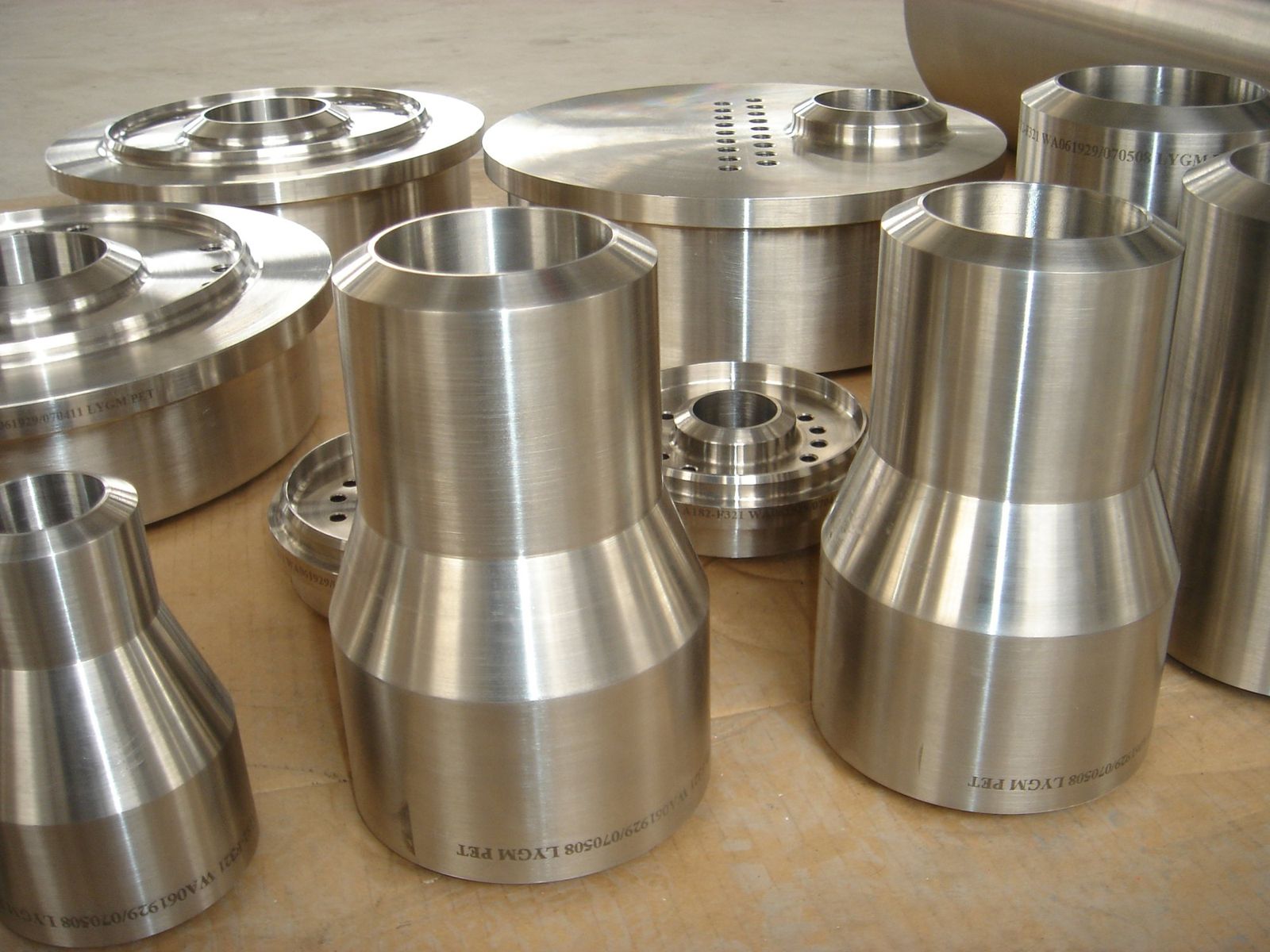
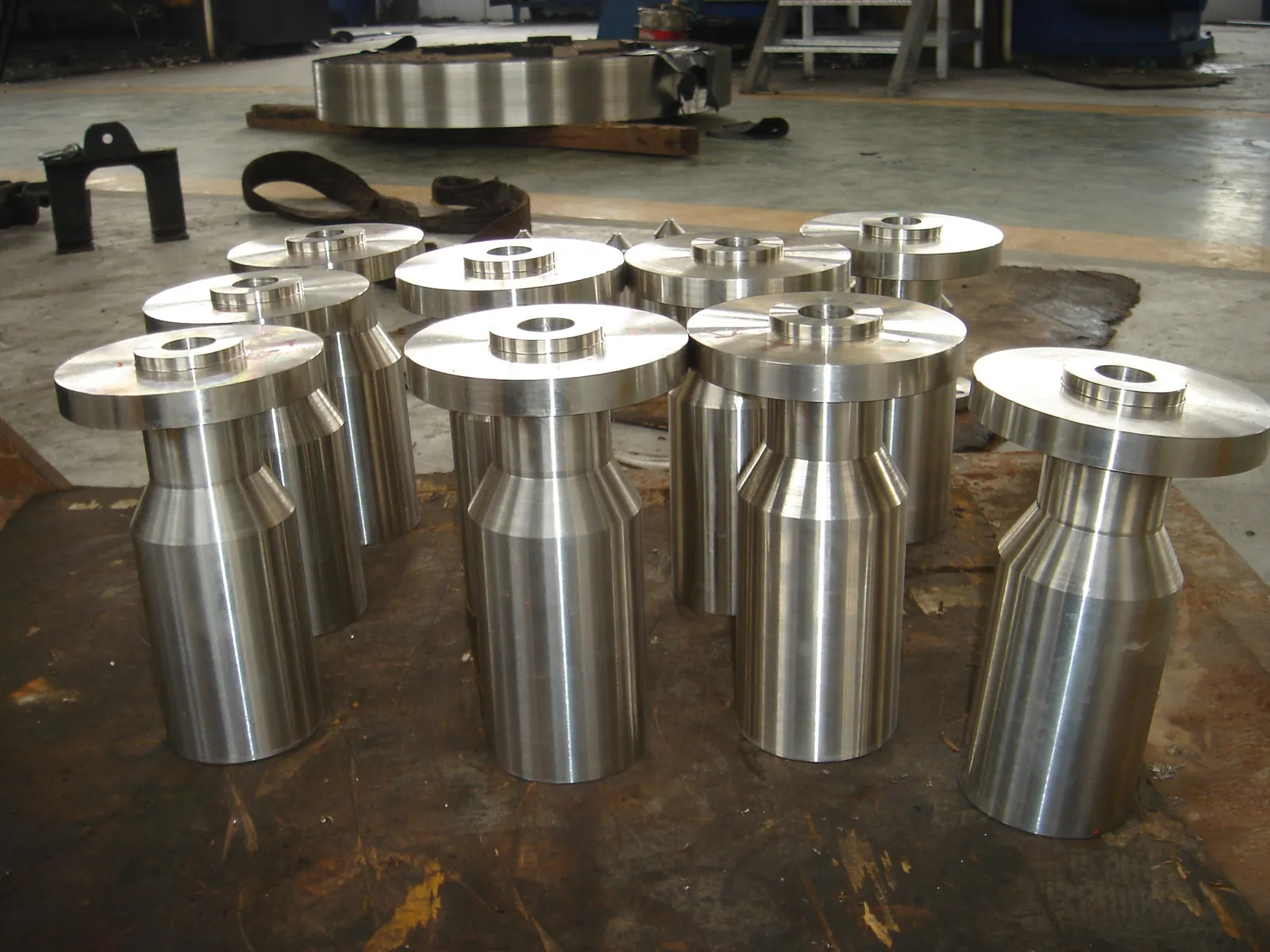
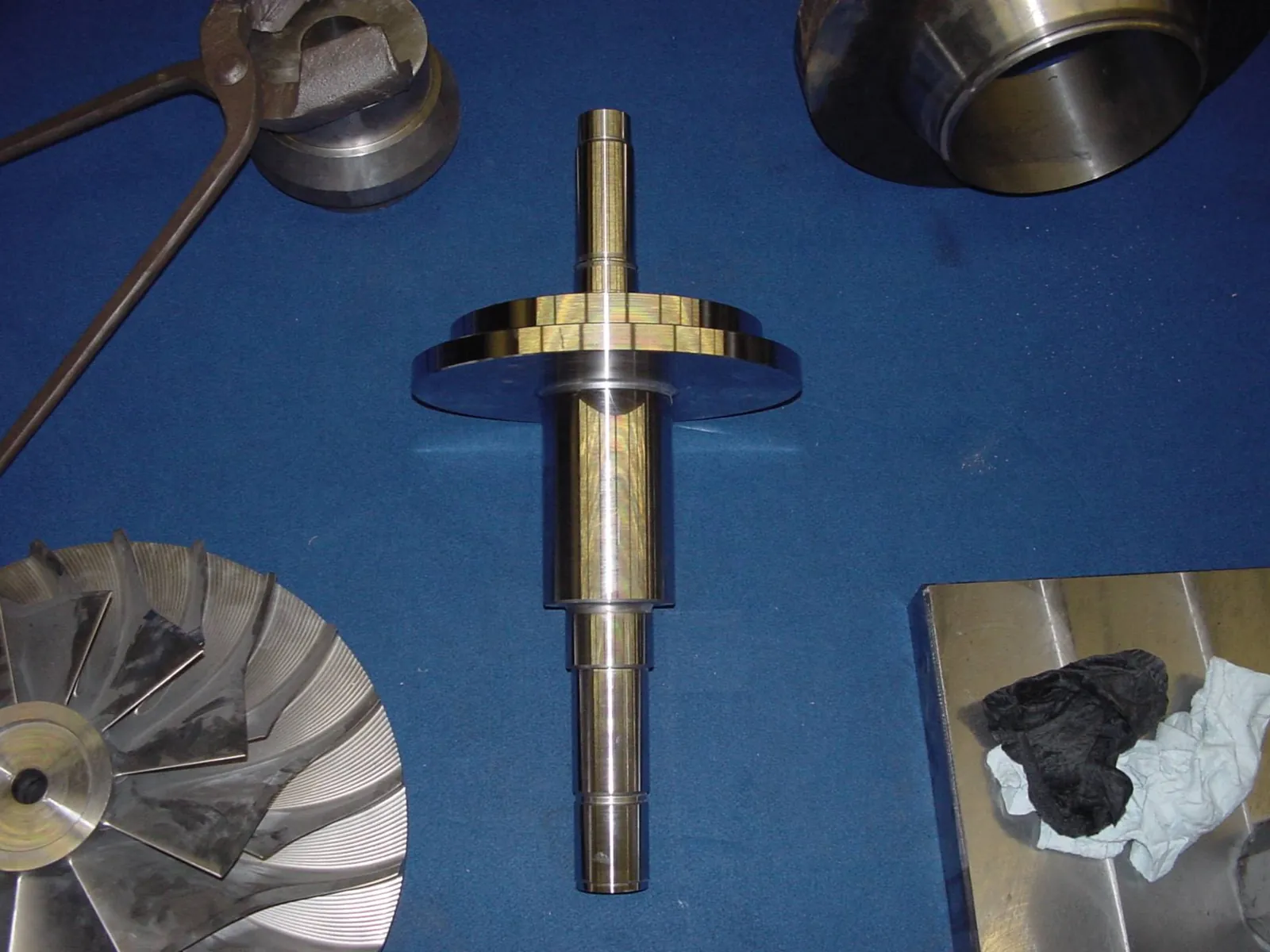
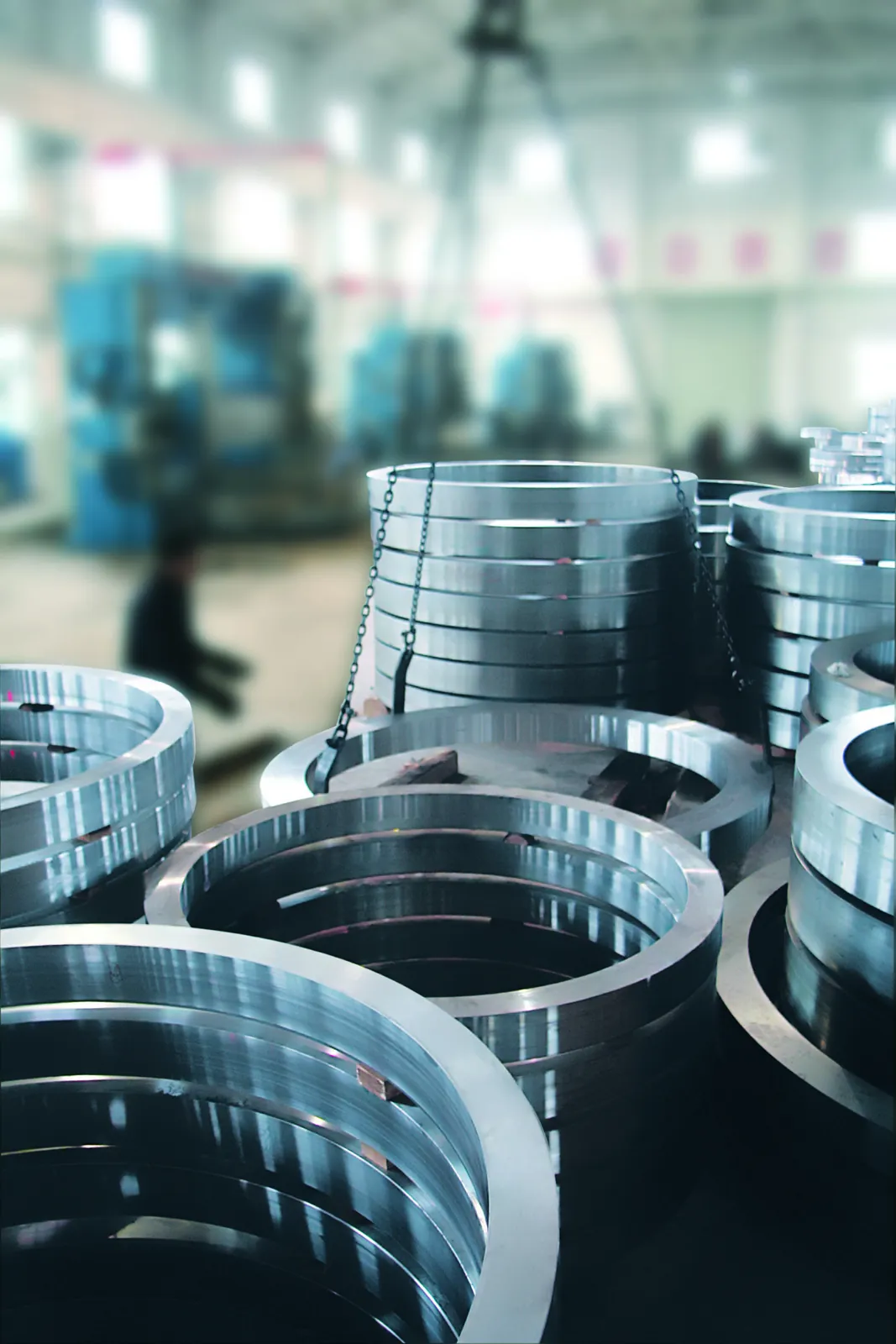
Material 1.4542 is available from us as a rough, pre-turned, or completely machined forging:
Frequently asked questions
Frequently asked questions about AISI 630
Is AISI 630 the same as 17-4PH and 1.4542?
Yes, AISI 630, 17-4PH, and 1.4542 are names for one and the same alloy. In addition, there is the UNS number S17400, the Japanese designation SUS630, and the French Z6CNU17-04; in the Netherlands, you also hear "RVS 630". Which name appears on your drawing usually depends on the standards your organization works with. For ASTM conditions H900 to H1150D, we refer to our page on 17-4PH.
Is 1.4542 magnetic?
Yes, 1.4542 is magnetizable (ferromagnetic), unlike annealed austenitic stainless steel. This is due to the martensitic structure; DEW and Breitenfeld mention the magnetizability in their data sheets. For a forging, this has a practical advantage: in addition to ultrasonic testing, magnetic particle inspection (MPI) of the surface is also possible. However, a magnet says nothing about the correct grade; the chemical analysis serves that purpose.
What is the difference between 1.4542 and 1.4548?
1.4548 is the remelted version of 1.4542. After melting, the steel is remelted again using electroslag (ESR) or in a vacuum arc remelting furnace (VAR), which results in fewer non-metallic inclusions and a more homogeneous structure. This variant is mainly used in aerospace, under a WL designation. Suppliers often list both numbers for the same product. Choose 1.4548 if your specification requires remelted material.
What do P800, P930, P960, and P1070 mean?
The number after the P is the minimum tensile strength in MPa provided by the condition. Thus, P800 guarantees at least 800 MPa, and P1070 at least 1070 MPa. The conditions are created by aging the solution-annealed steel at different temperatures: the lower the temperature, the higher the strength. P800 is the only one that receives a double aging, first for 2 hours at 760 °C and then for 4 hours at 620 °C.
Which P-condition should you choose for AISI 630?
Choose the condition based on the toughness required alongside the strength. P800 has the lowest strength, but also at least 18% elongation and 75 J impact value. P930 combines a minimum yield strength of 720 MPa with 40 J. P960 and P1070 are stronger, with 12 and 10% elongation, but the manufacturer data sheet does not specify an impact minimum for those. For impact or cyclic loading, P800 and P930 are therefore the obvious choices.
How do the P-conditions relate to the ASTM conditions?
Three P-conditions use the same aging cycle as an ASTM condition. P930 and H1150 are both aged for 4 hours at 620 °C, P1070 and H1025 are both aged for 4 hours at 550 °C, and P800 follows the same two-stage cycle as H1150M. The guaranteed values do differ, however, because EN and ASTM each maintain their own minimums. Therefore, always state according to which standard the material must be inspected.
Why do the EN values for 1.4542 only apply up to 100 mm?
The mechanical minimums in EN 10088-3 for 1.4542 are established for diameters up to 100 mm. Above that, the buyer and supplier agree on the properties together. This is relevant for forgings, as they are often much thicker. For larger cross-sections, we determine in advance which values apply and where and in which direction the test pieces are taken, so that the inspection matches the actual load.
How corrosion-resistant is 1.4542?
1.4542 has a PREN of 15.0 to 18.9. The steel is suitable for marine environments, but in stagnant seawater, there is a risk of crevice corrosion. Extra protection is needed there, such as a coating. If a component is in seawater for a long time and the high strength of 1.4542 is not required, a duplex or super duplex grade is often the better choice.
Can AISI 630 be supplied with a 3.2 certificate?
Yes. In addition to the usual 3.1 certificate according to EN 10204, a 3.2 certificate is also possible for 1.4542. An external inspector is then present during the tests, such as the tensile and impact tests, and co-signs the document. Inspection by TÜV, Bureau Veritas, RINA, or Lloyd's Register is possible. Please specify the desired agency with your inquiry so that we can include the inspection directly in the planning.
How quickly can a forging in 1.4542 be delivered?
In certain cases, we can deliver pre-turned forgings in 1.4542 within 6 working weeks; for completely machined work, 8 to 10 working weeks usually apply. Exactly how long it takes depends on the weight, dimensions, and the desired P-condition. For the remelted variant 1.4548, we discuss the schedule separately. Occasionally, a size is available directly from stock.
In pictures
A selection of our work
Request a quote for AISI 630 / 1.4542
Please state the material number, P-condition, and dimensions with your inquiry. We will respond quickly with the possibilities in AISI 630 / 1.4542.
EN 10088-3, P800 to P1070
Also available as remelted 1.4548
3.1 or 3.2 certificate
Rough, pre-turned, or machined
Request a quote
Leave your details, and we will contact you shortly.