
Forged Shafts
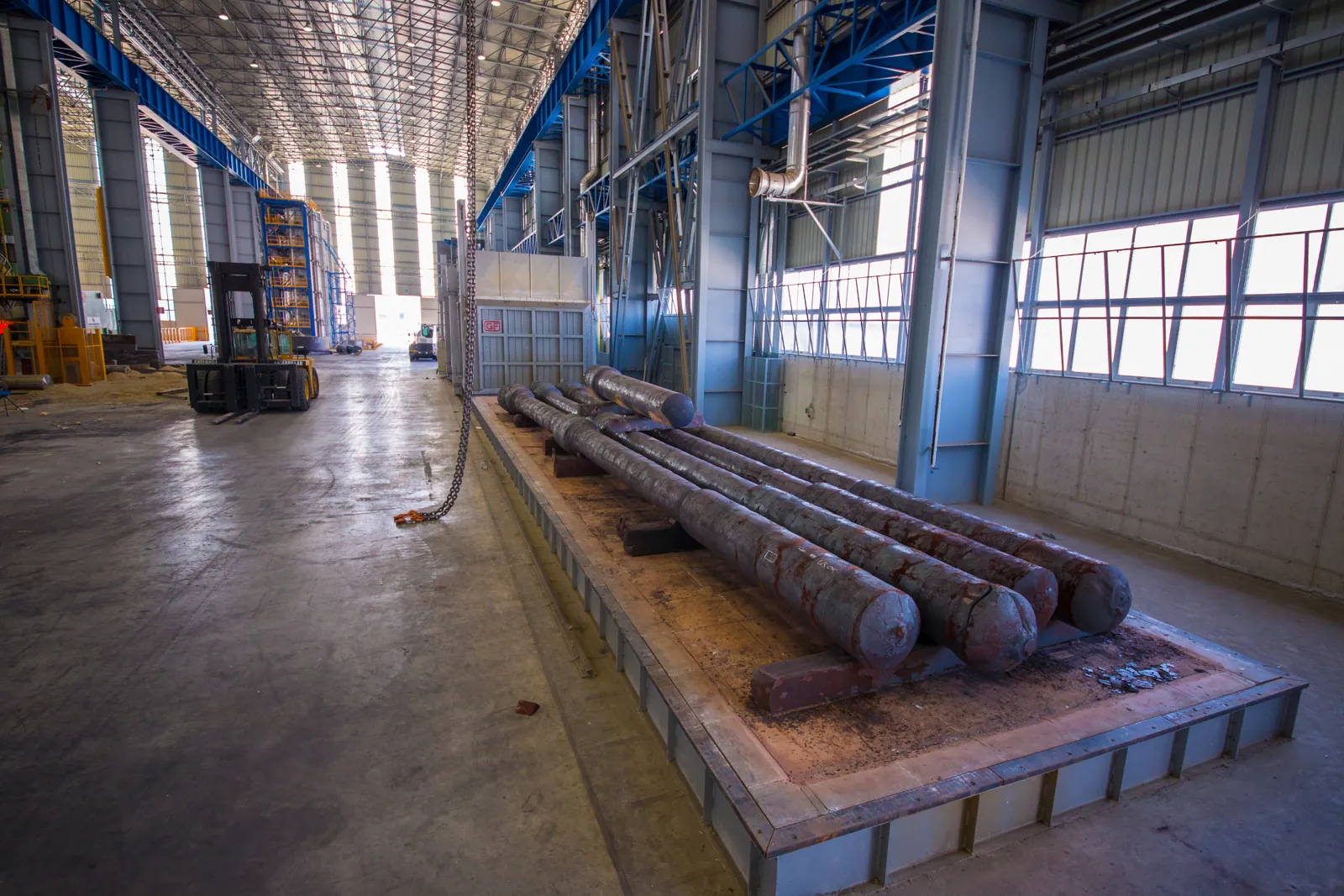
Forged shafts are custom open-die forged machine shafts, such as drive, turbine, propeller, and pump shafts. Lengths up to 26 meters, unit weight up to 180 tons, always with certification.
Forged Shafts
The Right Shaft, in the Right Quality
Forged shafts are load-bearing machine components that must withstand torsion, bending, and alternating loads. Therefore, Metal Service Europe supplies forged shafts as open-die forgings: the forging process refines the structure, closes cavities in the ingot, and aligns the grain flow in the longitudinal direction of the shaft.
While forged bar stock is a semi-finished product with a single diameter, here you receive a shaft according to your drawing, per piece or in small quantities.
Execution
From Rough Forged to Fully Machined
Rough Forged
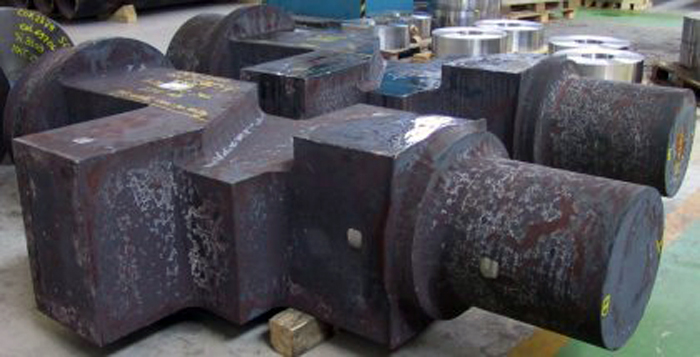
After forging and heat treatment, the shaft comes with machining allowance on all diameters and bearing seats. Convenient if you prefer to keep the final machining and keyway milling in-house.
Rough Turned
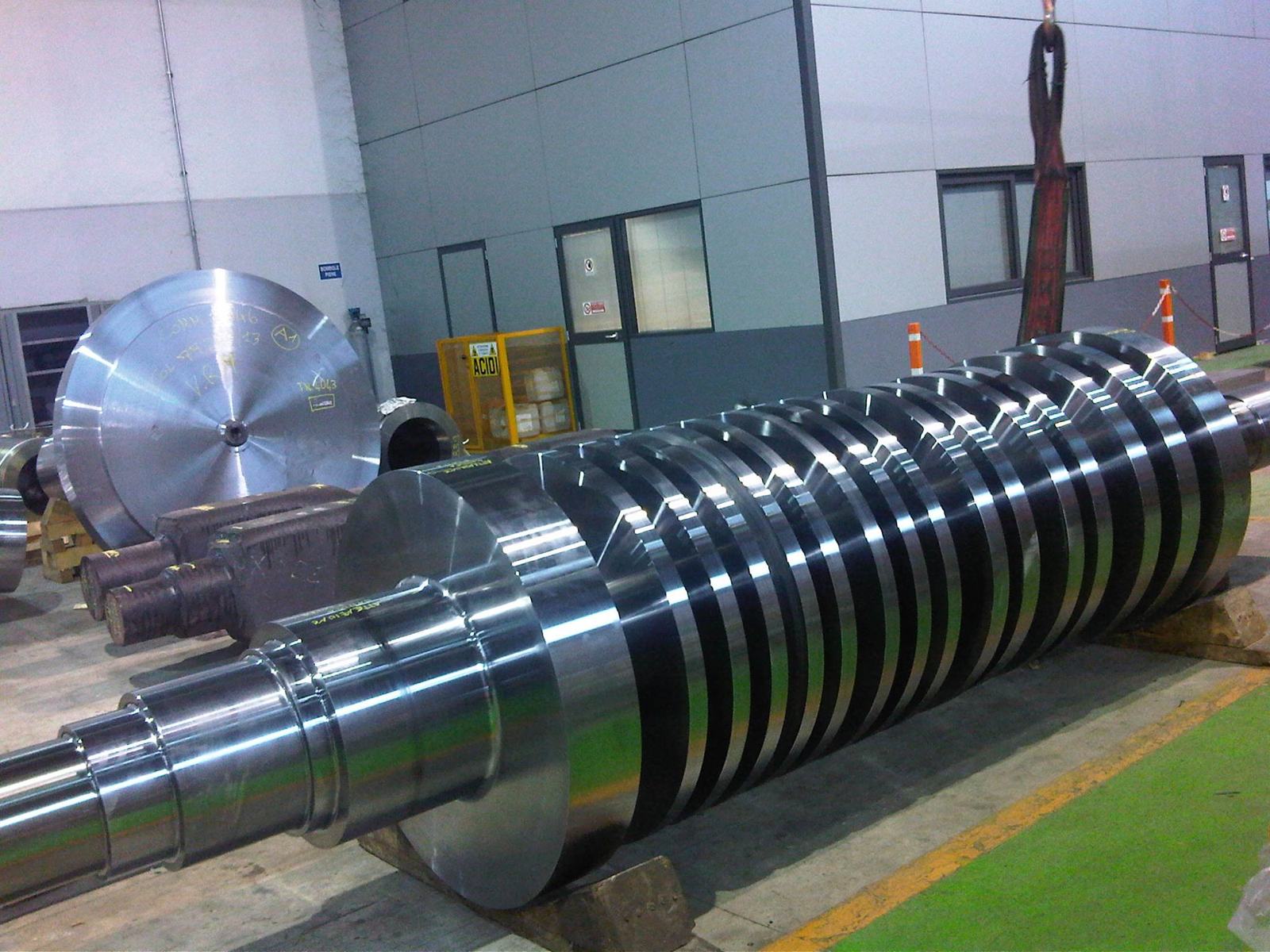
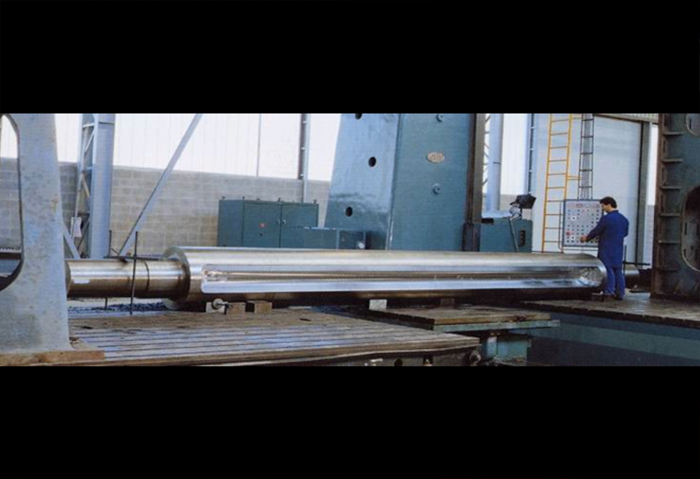
Rough turned all around to a smooth surface, allowing the entire shaft to be ultrasonically inspected. Any internal imperfections are thus revealed before your own machining.
Fully Machined
Turned and milled according to your drawing, with steps, flange, keyways, and threads where necessary. After dimensional inspection and testing, you receive the shaft with certification, ready for assembly.
Process
How a Forged Shaft is Made
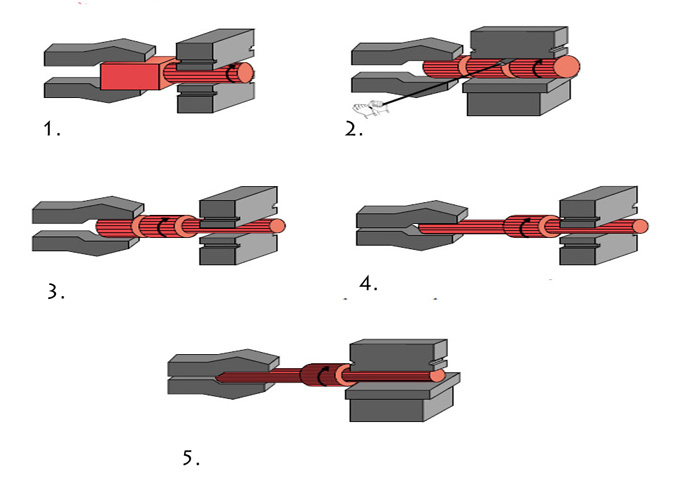
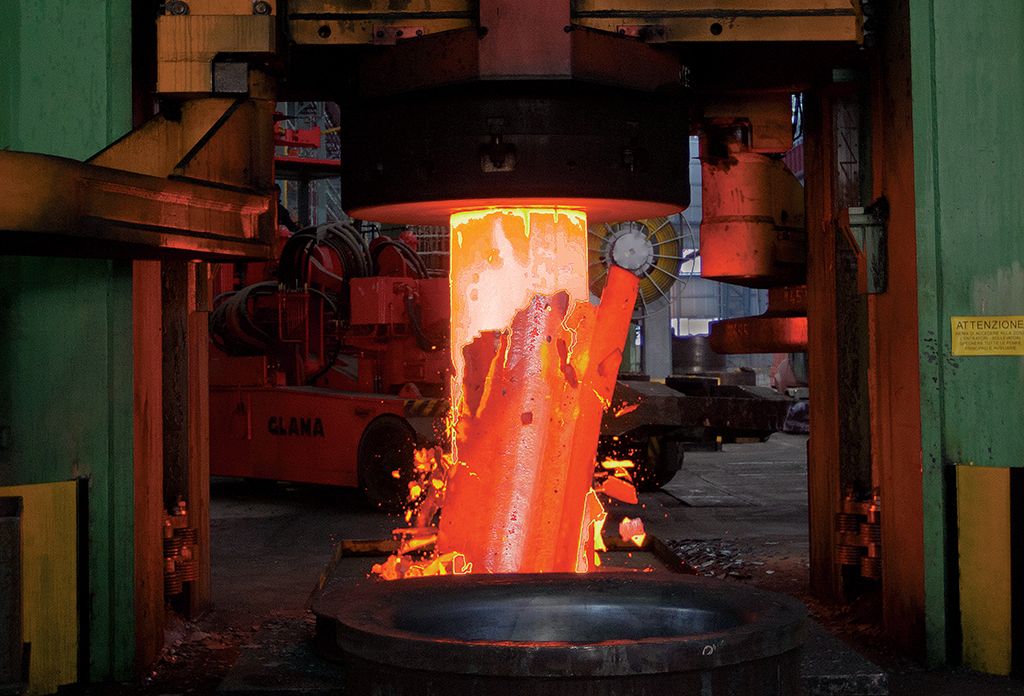
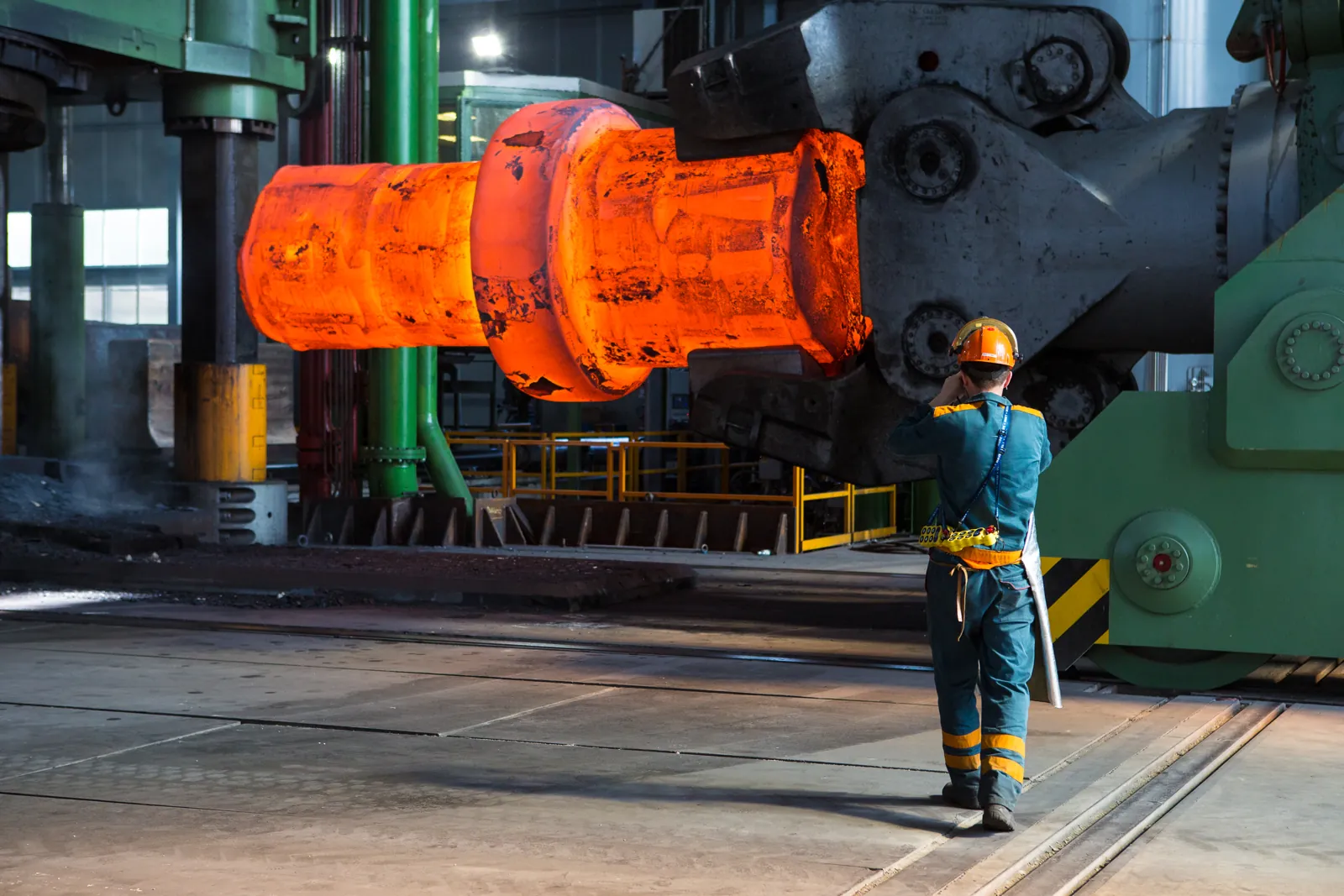
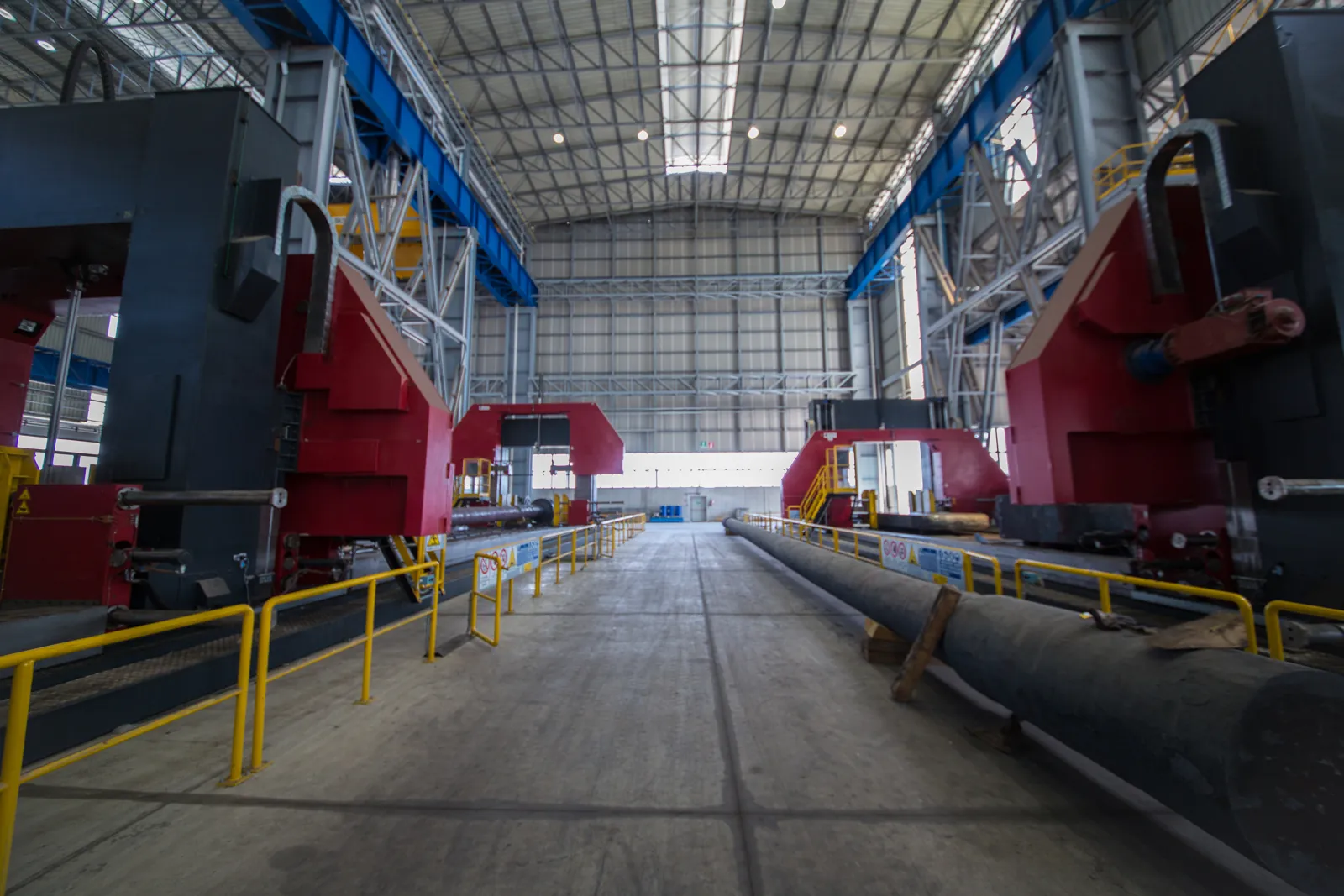
First, we determine the block weight, including machining allowance, after which that portion is sawn from an ingot or billet. After heating, the block is open-die forged under the press to its largest diameter. Then, the steps are forged, or a collar for the flange is upset. Finally, heat treatment, sampling, rough turning, and ultrasonic inspection follow.
Applications
For the Most Demanding Industries
Drive shafts for gearboxes
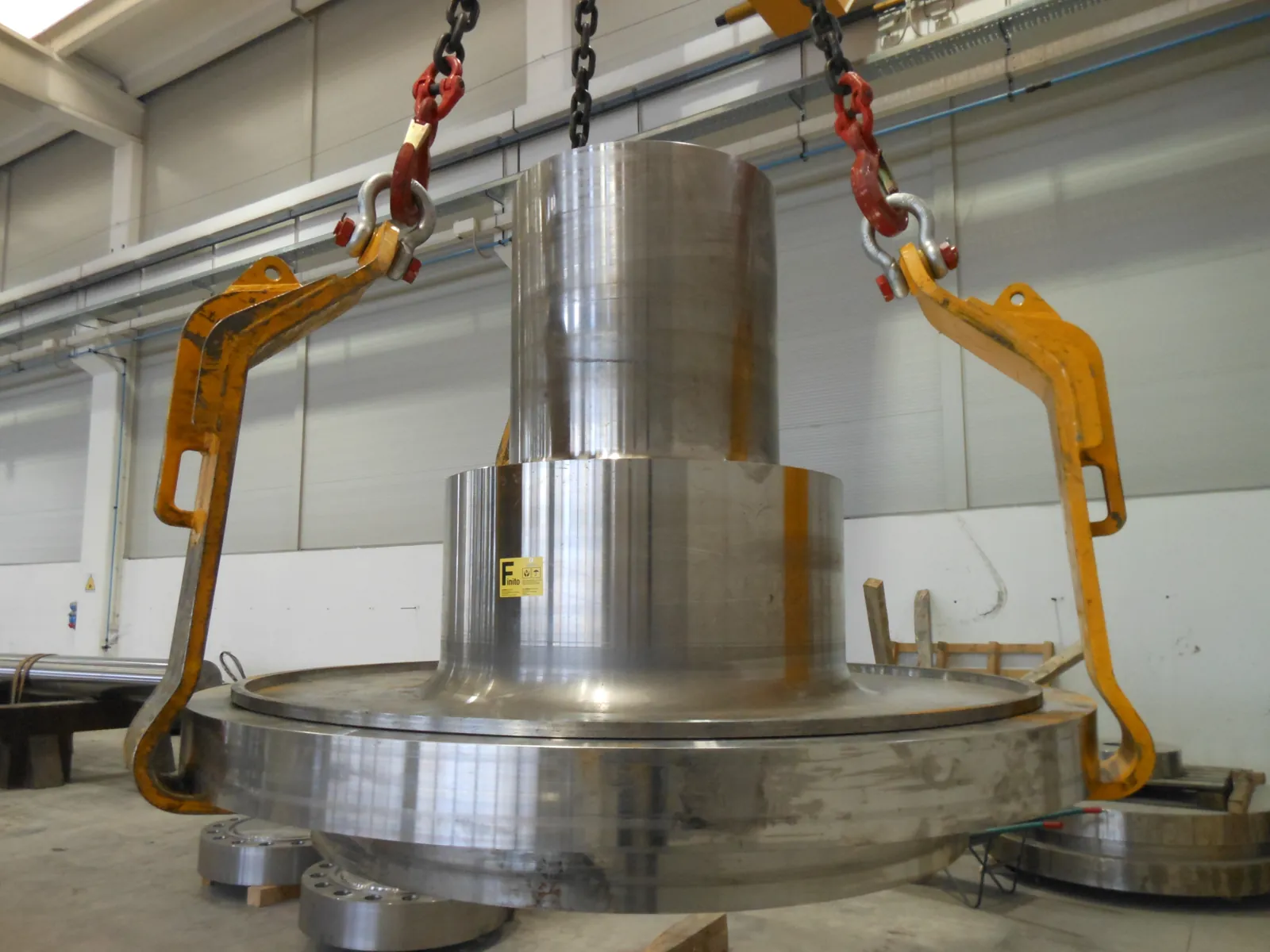
Shafts with integral flanges
Stepped shafts
Winch and crane shafts
Pump shafts
Propeller and stern shafts
Turbine and generator shafts
Our Approach
Your Partner in Forged Shafts
Inquiry & Advice
We discuss the load, rotational speed, and environment of the shaft with you, ensuring that the quality and forging shape match what the shaft needs to do in practice.
Specification & Selection
We agree with you on diameters per step, length, heat treatment, inspection class, and certification. Based on this, we align the press and furnace length with your shaft.
Quotation & Alignment
Our quote specifies the execution, inspections, and a realistic delivery time. We resolve any questions about your drawing before forging begins.
Order & Delivery
During production, we closely monitor forging, heat treatment, and inspection. You will receive the shaft with certification and inspection reports at the agreed location.
Material Grades
Forged Shafts in Almost Any Quality
Which quality is suitable primarily depends on the shaft's diameter and its operating environment. A selection; other qualities are available upon request:
Frequently Asked Questions
All About Forged Shafts
To what length and weight can a shaft be forged?
A forged shaft can be up to 26 meters long with us, in one piece and with a unit weight of up to 180 tons. Whether this maximum is achievable depends on the diameter, quality, and furnace length for heat treatment. The unit weight starts at 500 kg. For very long or heavy shafts, we also discuss transport and lifting work in advance.
When do you choose a forged shaft instead of a shaft made from rolled bar stock?
A forged shaft is the logical choice as soon as the diameter exceeds the range of rolled bar stock, or if the shaft has large step differences. We supply rolled bar stock up to 300 mm in diameter. Above that, or when you would turn away a lot of material around a flange or collar, we forge the shaft closer to the final dimensions. This saves machining time and material costs.
Can stepped shafts and shafts with flanges be forged?
Yes, stepped shafts and shafts with an integral flange are typical open-die forgings. On the drawing, specify the diameter and length for each step; this determines the machining allowance and how closely the forging shape can follow the contour. For a flange, the end is upset to form a collar, so that the flange and shaft consist of one piece, without a weld seam or shrink fit.
Which steel type do you choose for a large diameter shaft?
For thick shafts, hardenability is particularly important: to what depth the steel hardens during heat treatment. 42CrMo4 hardens through to approximately Ø 60 mm after oil quenching, 34CrNiMo6 to approximately Ø 100 mm. For larger diameters, a nickel-containing steel like 34CrNiMo6 or 30CrNiMo8 retains more strength in the core. We determine the properties for heavy sections according to EN 10250 or in consultation.
How do you prevent a long shaft from warping during heat treatment?
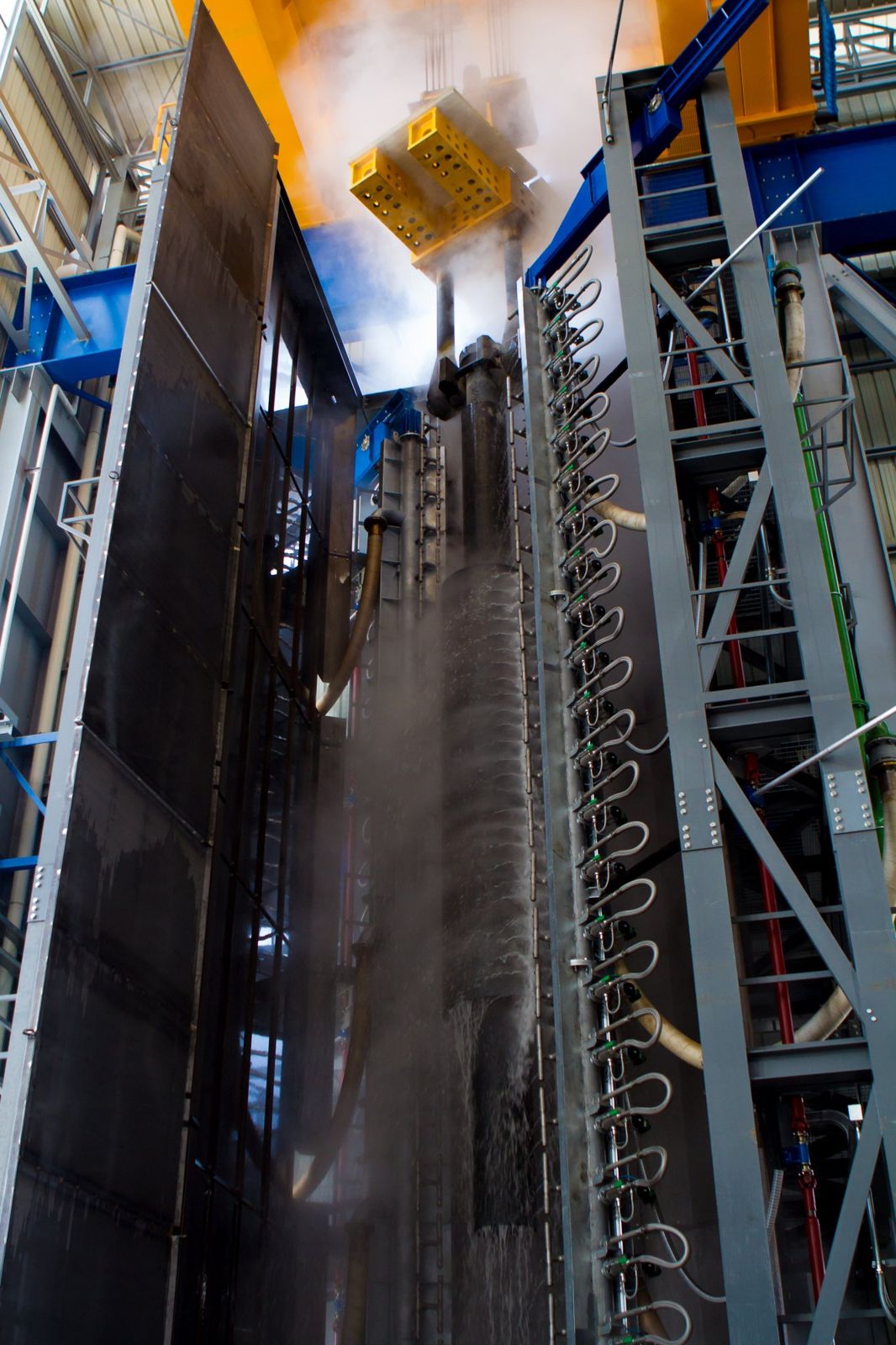
Long shafts are preferably vertically heat-treated, suspended in the furnace. The shaft's own weight then does not act as a bending force during heating and cooling. Shafts can be treated both horizontally and vertically. The method we choose depends on the length, diameter, and the straightness required by your drawing. After treatment, a 3D inspection can record the dimensions.
What requirements apply to a forged marine shaft?
For a marine shaft, such as a propeller shaft or intermediate shaft, the material rules of the classification society apply, internationally aligned in IACS UR W7 for forgings. According to IACS Recommendation 68, such shafts from Ø 100 mm typically undergo magnetic particle or penetrant testing, and from Ø 200 mm also ultrasonic testing. Repair welding is generally not permitted for propeller shafts. We schedule the acceptance with the inspector from, for example, DNV, Lloyd's Register, or BV in advance.
What inspections does a forged shaft undergo?
A rough-turned shaft is at least ultrasonically tested (UT) for internal defects. Additionally, magnetic particle inspection (MPI) for surface cracks, hardness measurements along the length, tensile and impact tests on taken test pieces, and a 3D dimensional inspection are possible. Which tests are necessary follows from your specification or from the standard of the chosen quality.
With what certificate is a forged shaft supplied?
Every forged shaft comes with a material certificate according to EN 10204, of the type you specify. A 3.1 certificate shows the test results of the supplied shaft or the associated test pieces, confirmed by an inspector independent of production. For 3.2, your own inspector or a designated body, such as TÜV or RINA, also signs. Type 2.2, a test report without specific inspection of your shaft, is also possible.
How quickly can a forged shaft be ready?
Certain rough-turned shafts can be ready within 6 working weeks. If the shaft needs to be fully machined, 8 to 10 working weeks is the usual timeframe. Large diameters, long shafts, and third-party acceptance require extra planning. If you are in a hurry, ask about our stock: certain qualities and diameters are sometimes quickly available.
Can you replicate an existing shaft as a spare part?
Yes, based on your drawing or a dimensional sketch of the old shaft, we forge a replacement shaft as a single piece. Because open-die forging does not require a mold, there are no tooling costs. If material data is missing, we advise on which quality suits the shaft's load. We align delivery time and execution with your downtime schedule.
Request Your Non-Binding Quote
Email us your shaft drawing with quality, quantities, and desired execution. We will align the forging shape and you will receive a price quote with delivery time.
Certificate EN 10204 3.1 or 3.2
Shafts up to 26 meters
From a single piece
Ultrasonically inspected