
Seamless rolled
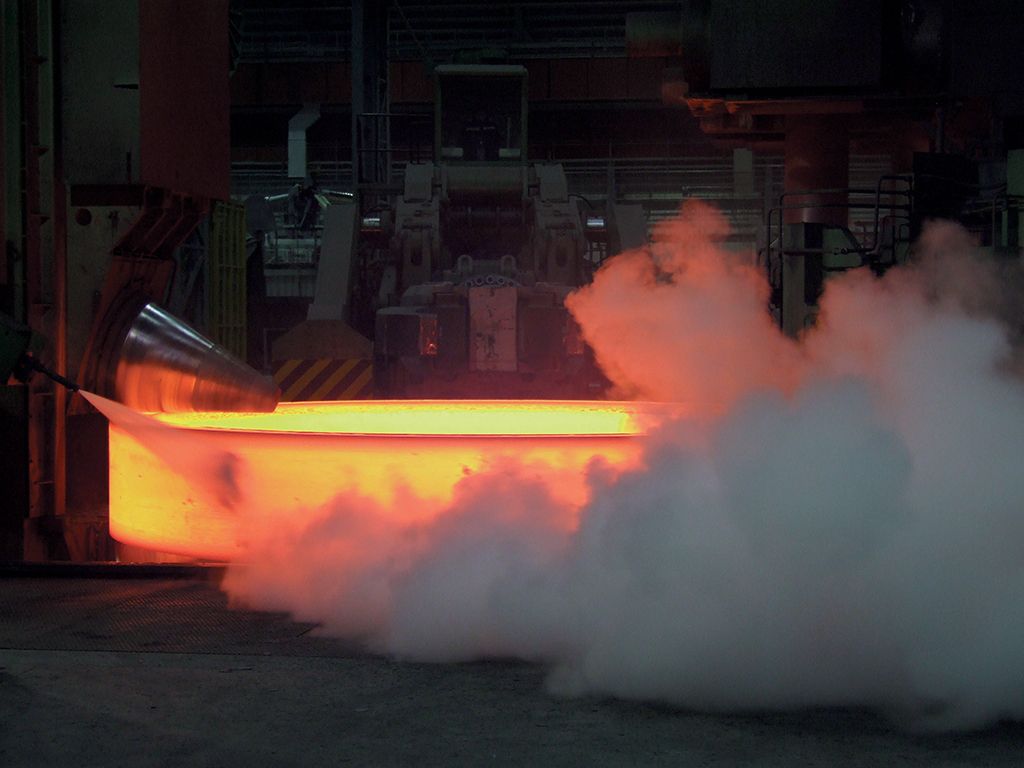
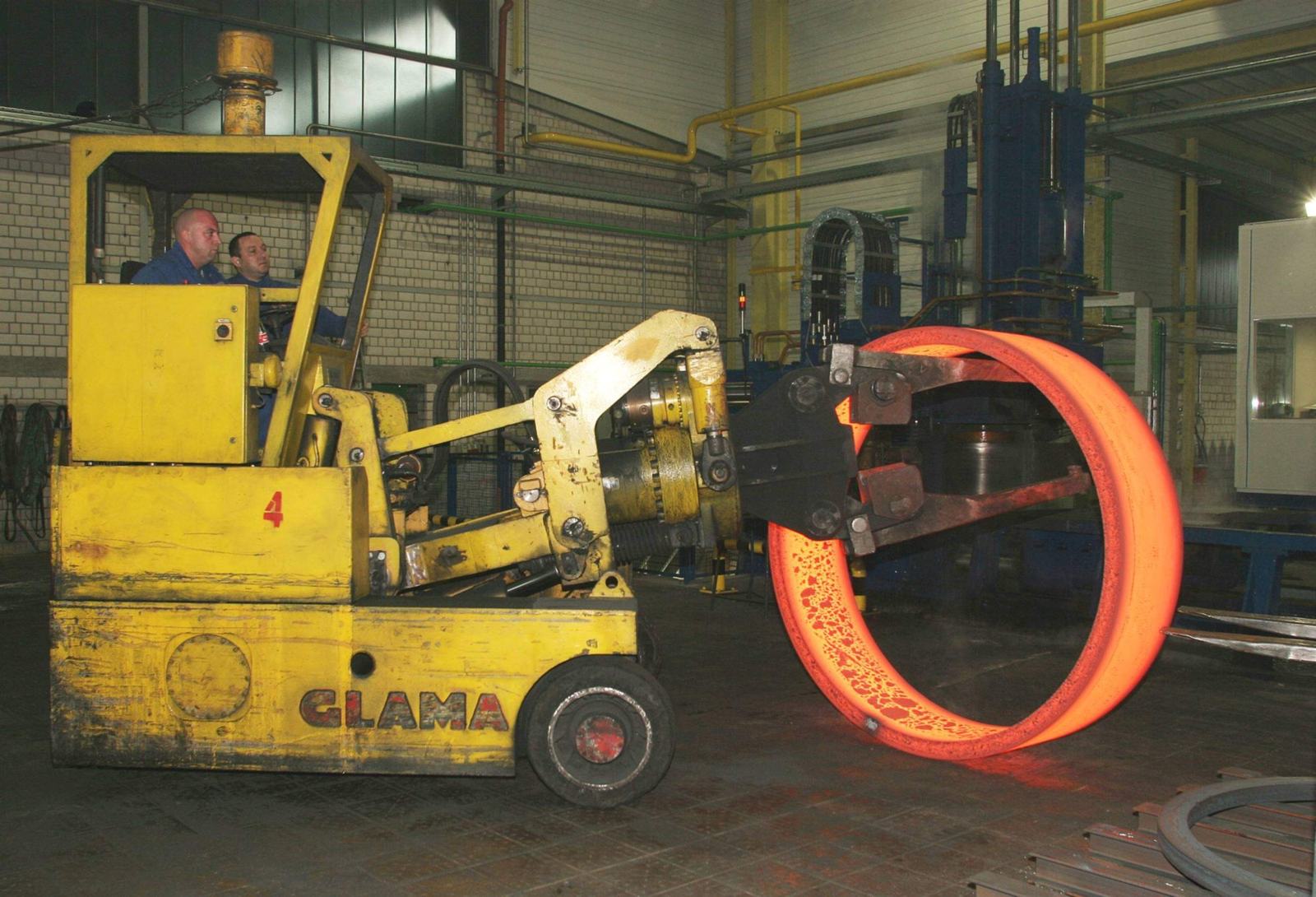
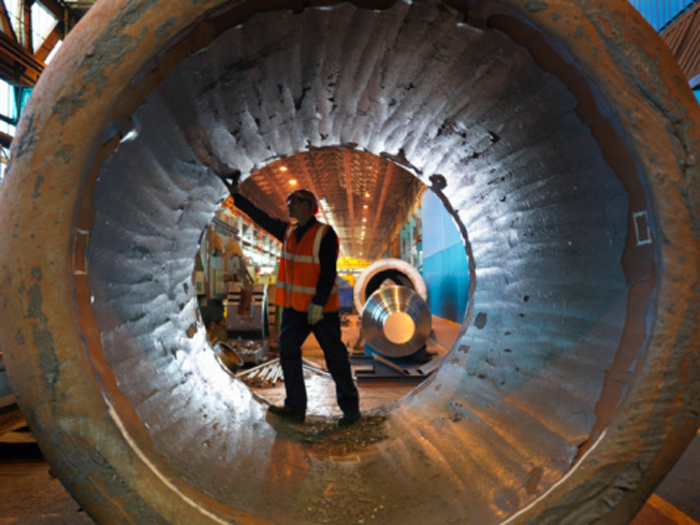
Seamless rolled means: a ring without a weld seam, formed in one piece on the ring mill. We supply rings and bushings from 20 kg to 65 tons, up to 10 meters in diameter.
Seamless rolled
The right rolled ring, in the right grade
Seamless rolled is chosen when a ring must consist of a single piece and material loss must be minimized. Ring rolling is the forging process that forms such rings and bushings.
This is required by industries such as pump, valve, turbine, and crane construction. Here you can read how the rolling process works and when it is cost-effective; dimensions and finishes of the final product can be found under seamless rolled rings.
Execution
From rough forged to fully machined
Rough forged
The ring is delivered to you immediately after rolling and heat treatment, with a machining allowance. Rectangular in cross-section, or with a profile when purchasing a series of identical rings.
Rough machined
The inner diameter, outer diameter, and both faces are rough machined so that the ring can undergo ultrasonic testing. You then finish it yourself into a flange, bushing, or gear ring.
Fully machined
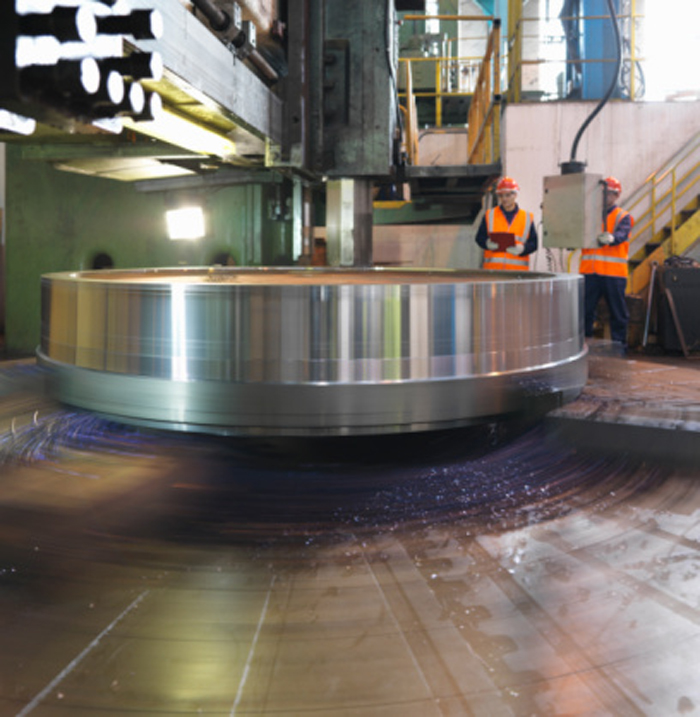
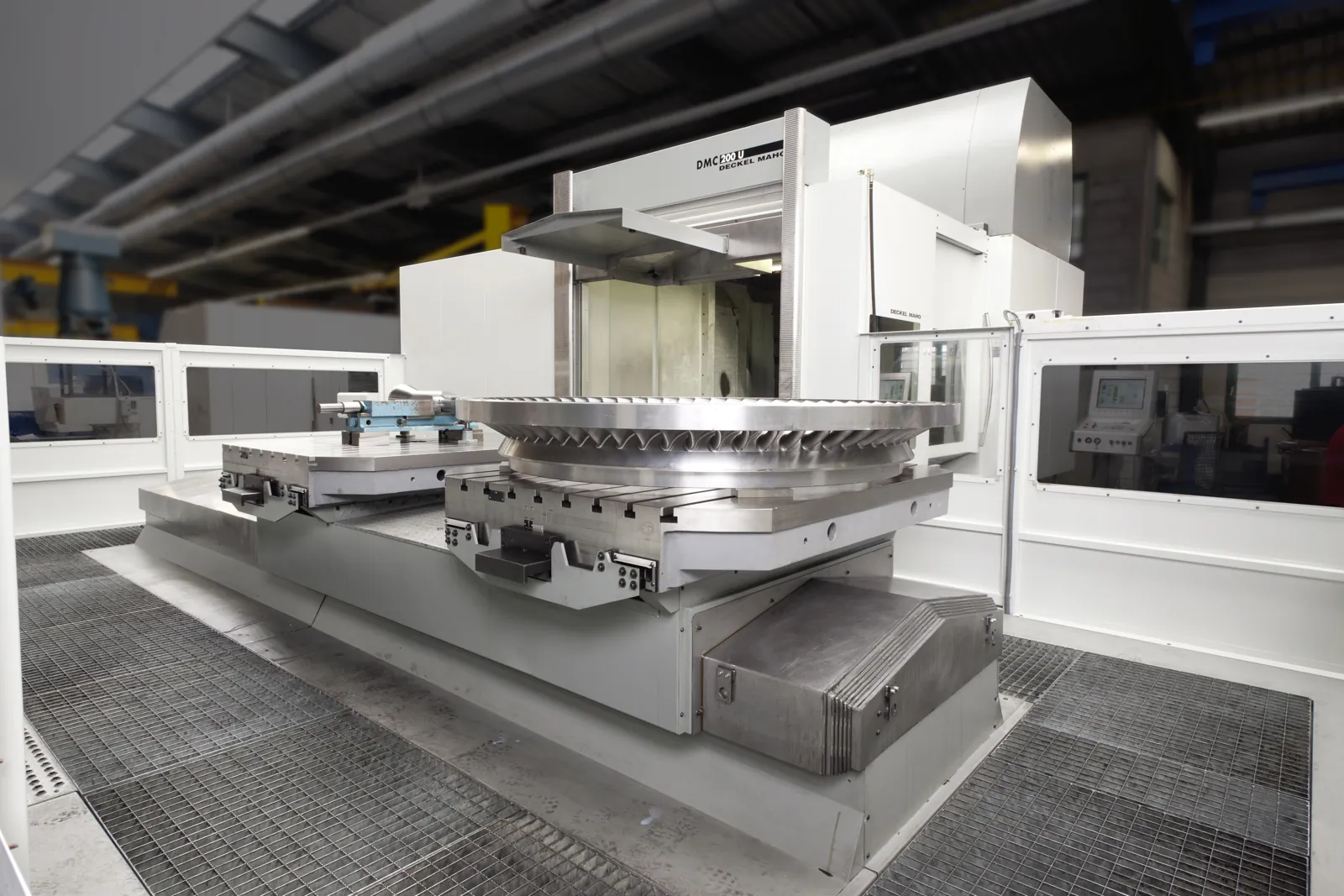
The ring is fully machined according to your drawing, including holes, grooves, and tolerances. This provides you with a component that is ready for assembly, complete with certificate and test reports.
Process
How a rolled ring is created
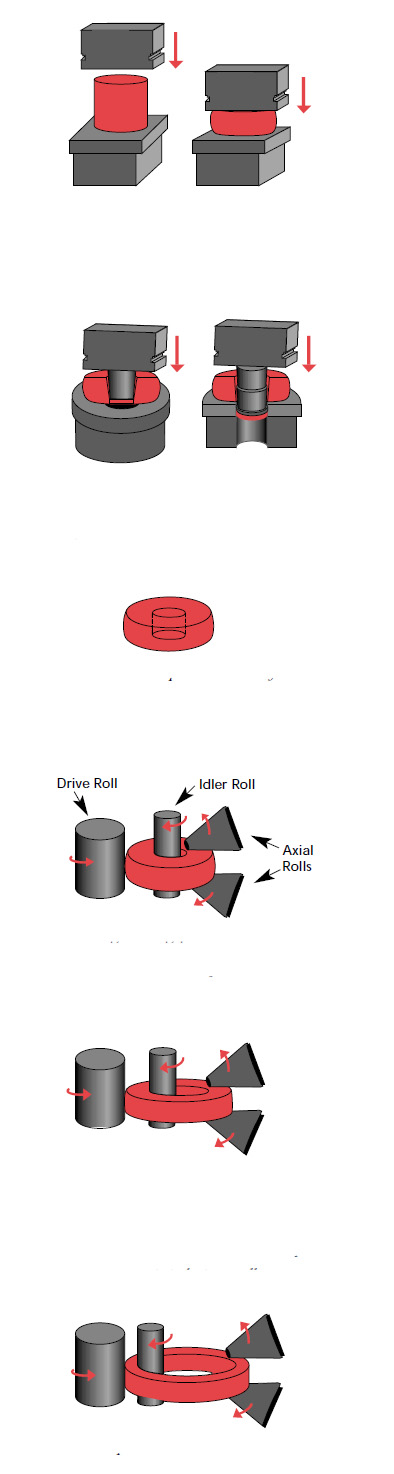
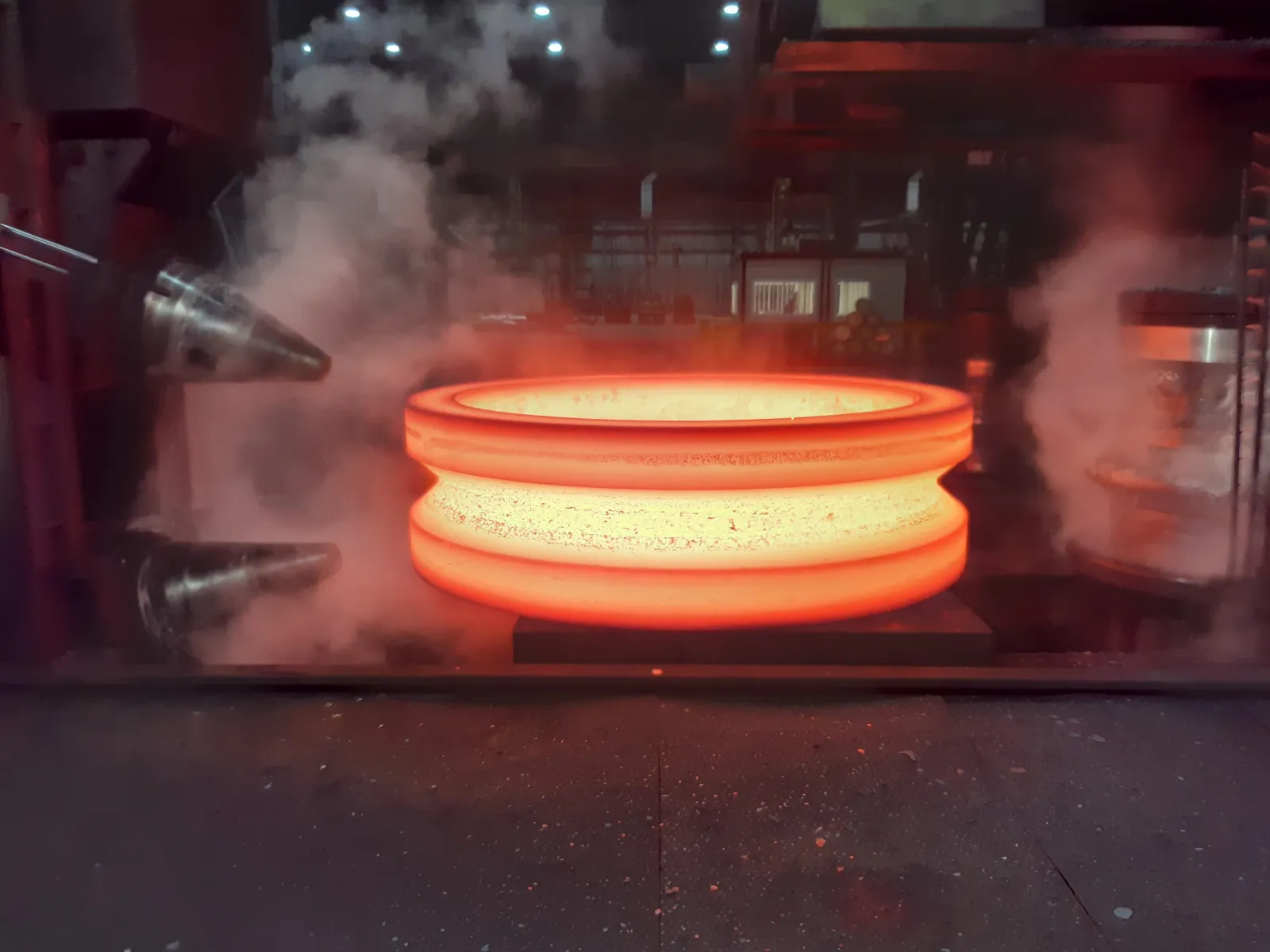
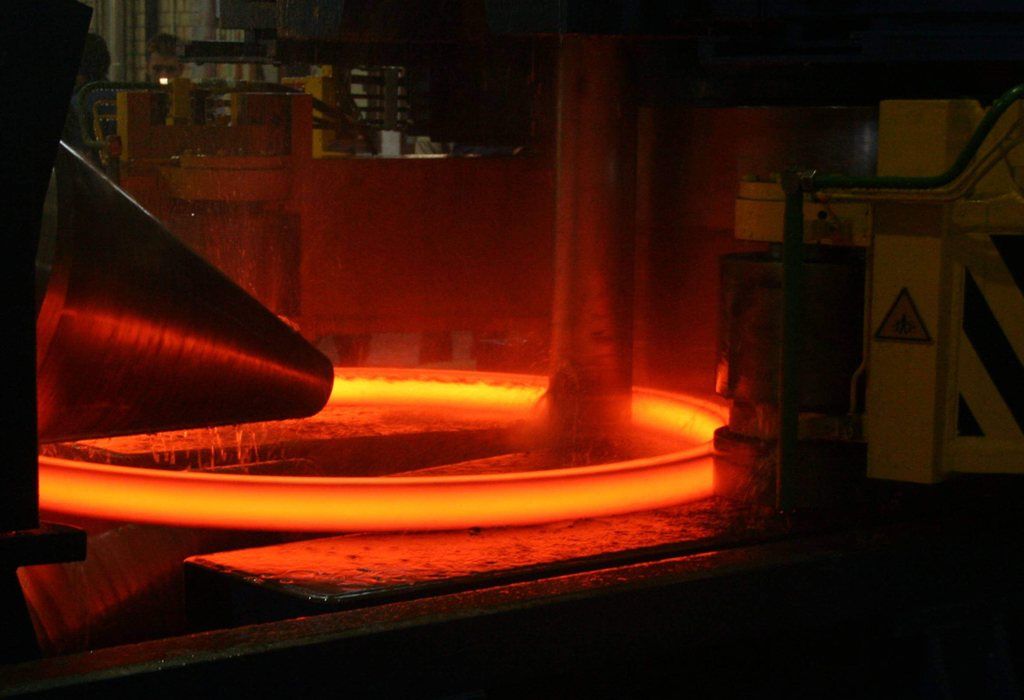
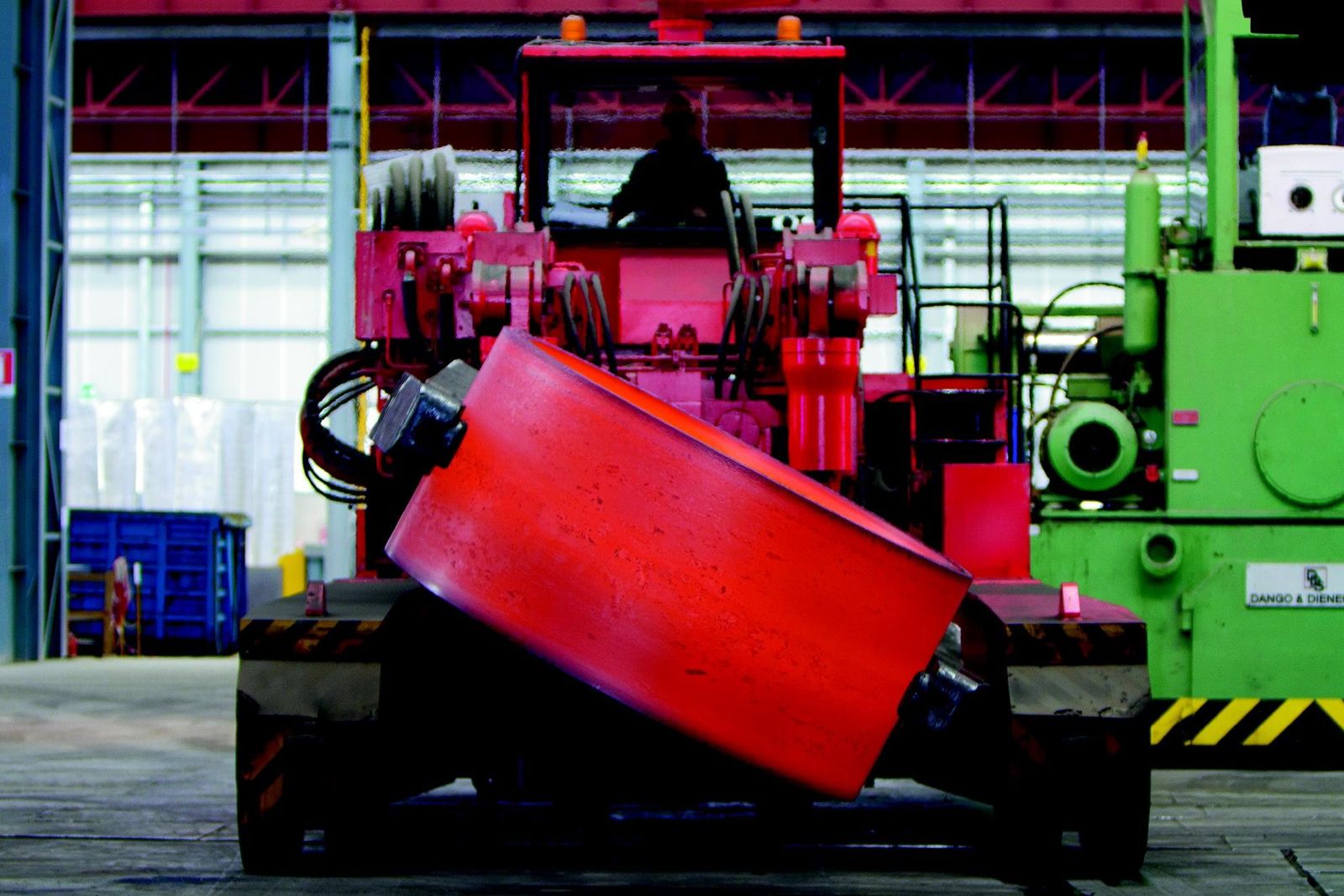
A block is sawn to weight, heated, and upset under the press. Then the center is pierced: this creates the 'donut'. On the ring mill, the wall of that preform is made increasingly thinner above the recrystallization temperature, while the diameter grows. Finally, heat treatment, rough machining, and ultrasonic testing follow.
Applications
For the most demanding industries
Bushings
Flanges, including profiled
Rings for valves and pumps
Rings for turbines and offshore installations
Gear rings
Piston rings
Our approach
Your partner in seamless rolled rings and bushings
Inquiry & Advice
Together, we evaluate whether rolling, forging on a mandrel, or a combination best suits your ring size, wall thickness, and quantity.
Specification & Selection
Final dimensions, rectangular or profiled, grade, and inspections are agreed upon with you. We then verify whether your diameter and height fall within the rolling capacity.
Quotation & Alignment
The quotation includes the input weight, execution, and delivery time. For profile rolling, we discuss the tooling and series size in advance.
Order & Delivery
We closely monitor upsetting, rolling, heat treatment, and inspection, and ship the ring to you after approval with the certificate and test reports.
Material Grades
Seamless rolled in virtually any grade
Ring rolling works for carbon steel, alloy steel, stainless steel, duplex, and nickel alloys. Every rolled ring is inspected separately and is 100% traceable. Frequently requested grades:
Frequently asked questions
Everything about seamless rolling
How is a seamless rolled ring made?
A seamless rolled ring gets its dimensions on a radial-axial ring mill, which works in two directions simultaneously. Radially, the mandrel roll presses the pierced preform against the driven main roll, thinning the wall. Axially, two conical rolls press on the top and bottom, so the height also decreases in a controlled manner. Because the volume remains constant, the diameter grows to the desired size.
What sizes are possible with seamless rolling?
Seamless rolled rings are possible from Ø 150 mm to 10 meters, with a height up to 2.8 meters and a piece weight from 20 kg to 65 tons. Not every combination is feasible in every grade: wall thickness, height, and rolling capacity together determine the limit. If your ring falls outside the range of the mill, we will work with you to find another route, such as a combination of forging and machining.
Which grades can be seamless rolled?
Virtually any forgeable grade can be seamless rolled, from A105N and 42CrMo4 to duplex, super duplex, and Alloy 718 (Inconel® 718). High-alloy materials such as nickel alloys do place stricter demands on rolling temperature and deformation per step. We determine those limits in advance. Composition, equivalents, and delivery forms per material can be found on the grade pages, for example duplex or A350 LF2.
What is the difference between seamless rolled and open-die forged?
The difference lies in the final forming. In open-die forging, a press shapes the workpiece stroke by stroke with open tools; in ring rolling, the ring gets its final dimensions in a continuously rotating mill. Ring rolling does begin with open-die forging, as upsetting and piercing take place under the press. The rolling itself provides uniform quality and tight tolerances.
Do you deliver rolled rings rough, rough machined, or fully machined?
Yes, all three, although most rings leave our facility rough machined. In this state, ultrasonic testing is possible, and you know before the final machining whether the ring is free of internal defects. Rough rolled is useful if your own lathe performs the entire machining process. You receive the ring fully machined according to the drawing, for example as a flange or bearing bushing, with a dimensional report.
When is profile rolling cost-effective?
Profile rolling is cost-effective if you need multiple rings of the same size with a collar, step, or groove. The ring is then rolled closer to the final shape, which saves material and machining time. On the other hand, the mill must be set up with profile tooling. For a single ring, a rectangular cross-section with more machining is therefore often more economical.
Is a seamless rolled ring suitable for critical applications?
Yes, and what matters most there is that the ring has no weld seam. In a welded ring, a bent strip is welded together at the ends; that weld is a zone with a different structure where cracks can occur. A seamless ring does not have that weak point. That is why rolled rings are used for rotating and pressure-loaded parts, such as in turbines, valves, and offshore installations.
How is the quality of a rolled ring demonstrated?
Quality is demonstrated with a material certificate EN 10204 3.1 or 3.2, which lists the analysis, mechanical values, and inspections of your ring. For a 3.2 certificate, an independent inspector, for example from Lloyd's Register, DNV, or RINA, also signs. We deliver under ISO 9001 and according to PED, ASME, ASTM, and EN.
How much time does it take from rolling a ring to delivery?
The rolling itself is fast; the lead time is mainly in planning, heat treatment, inspection, and machining. Some of the rough machined rings are ready for shipment within 6 working weeks. For a fully machined ring, the standard term is 8 to 10 working weeks; heavy and large rings are at the upper end. In case of urgency, it is worth asking if your grade is available from stock.
Why is a ring heat treated after rolling?
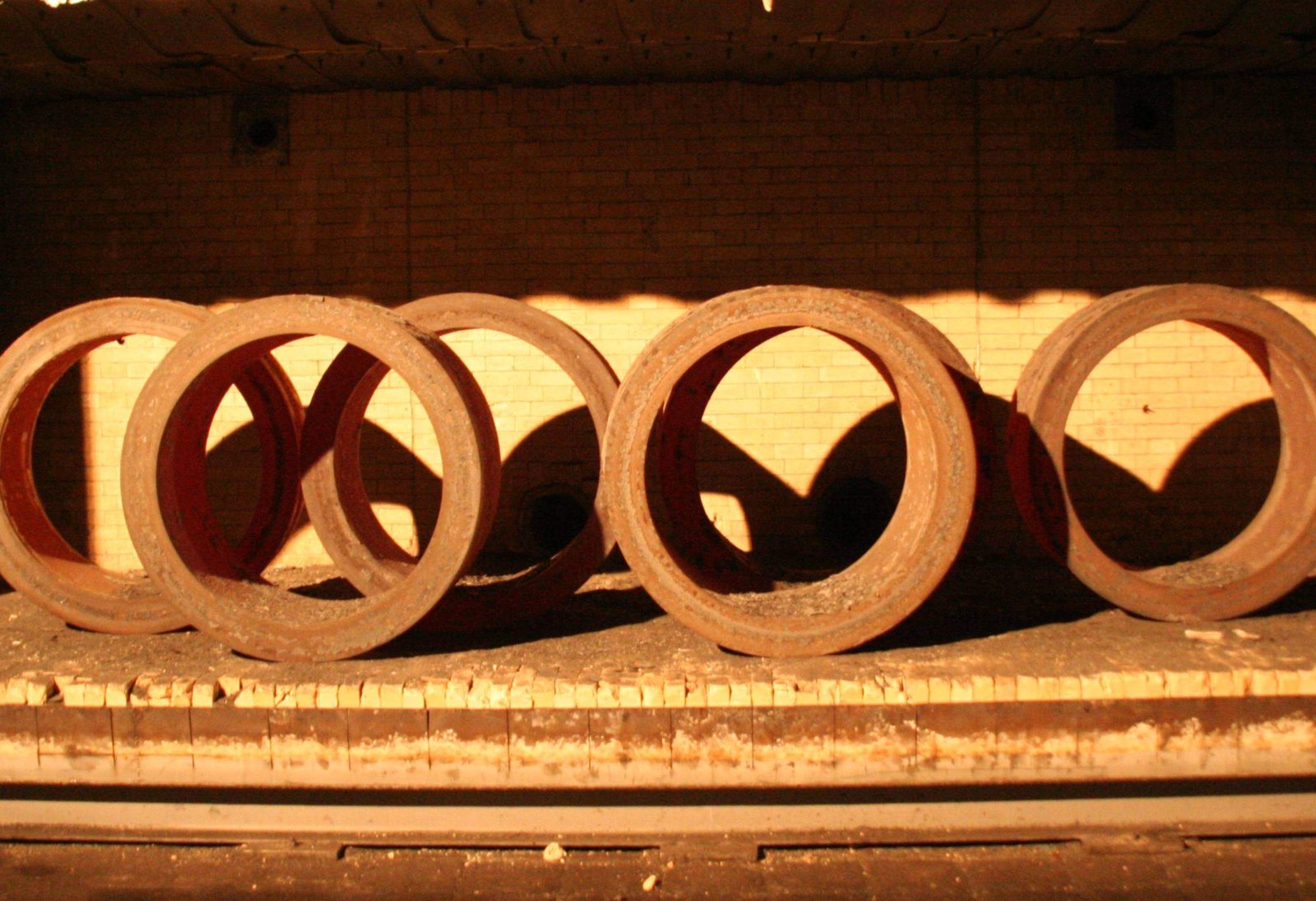
Immediately after rolling, the ring does not yet have the required mechanical values and may contain internal stresses. A heat treatment, such as normalizing, quenching and tempering, or solution annealing, brings the structure and properties to the level prescribed by the standard. At a minimum, we follow the standard for the grade.
Request your quote without obligation
Are you unsure whether your ring should be rolled, forged, or made in profile? Send us the drawing, and we will advise on the route and send you a quote.
Always with certificate
Rings without weld seam
Also profiled rings
Diameters up to 10 meters