
Forgings
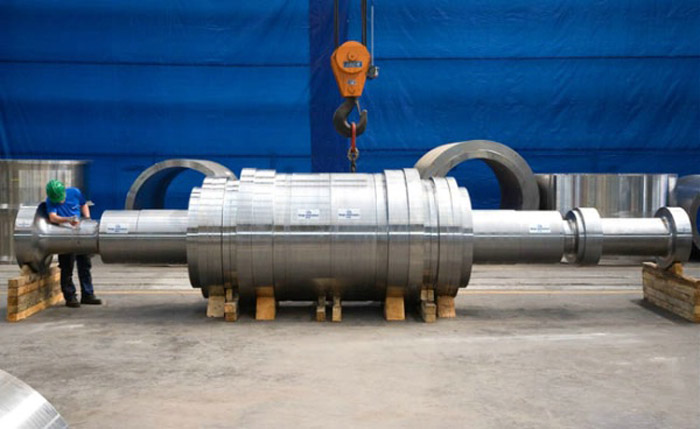
Forgings are industrial components hot-formed under a press, such as shafts, rings, disks, and flanges. From 20 kg to 200 tons, diameters 50 to 10,000 mm, with certification.
Forgings
The right forging, in the right grade
Forgings from Metal Service Europe are industrial semi-finished and finished products for machine, equipment, and plant construction. We supply every forging according to drawing or specification, as a single piece or in small series, rough or machined.
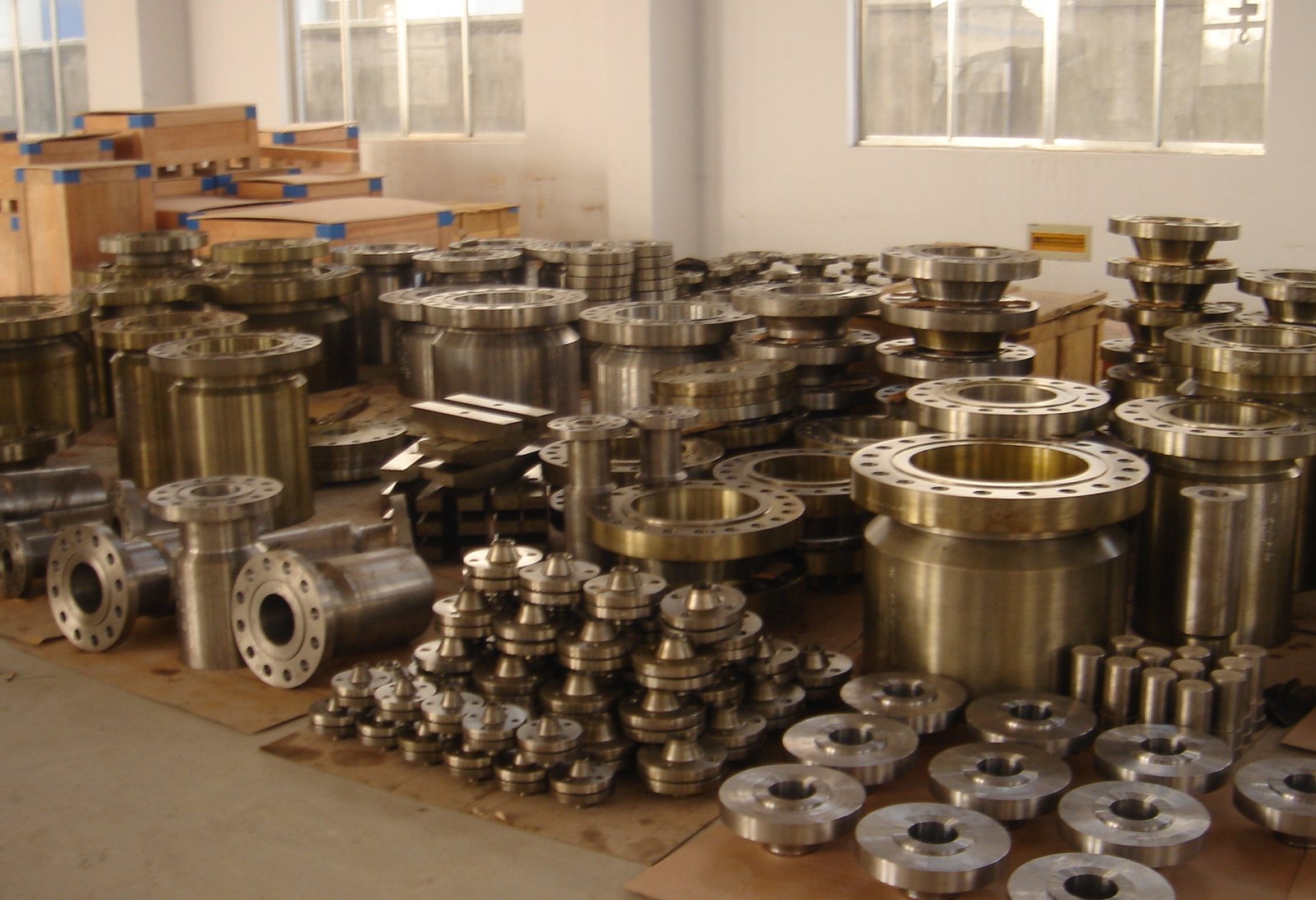
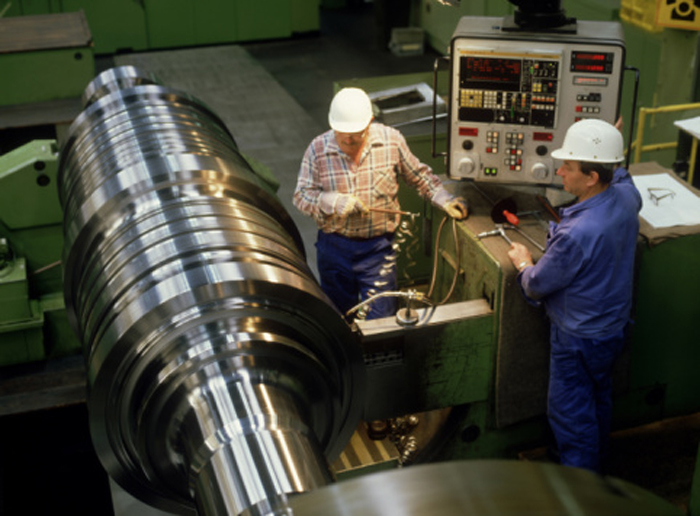
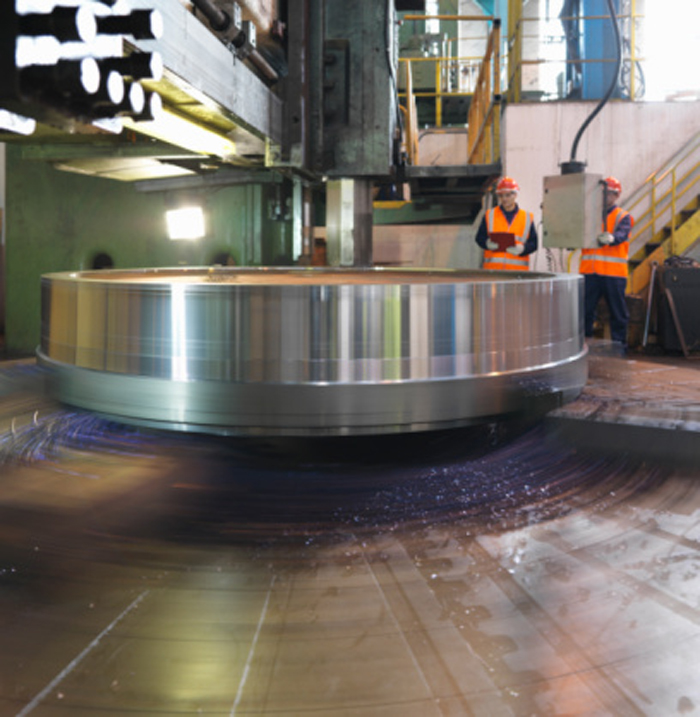
The range includes forged shafts, rings, disks, flanges, blocks, and parts according to drawing. For every shape, we tailor the forging process to the required quality and dimensions.
Execution
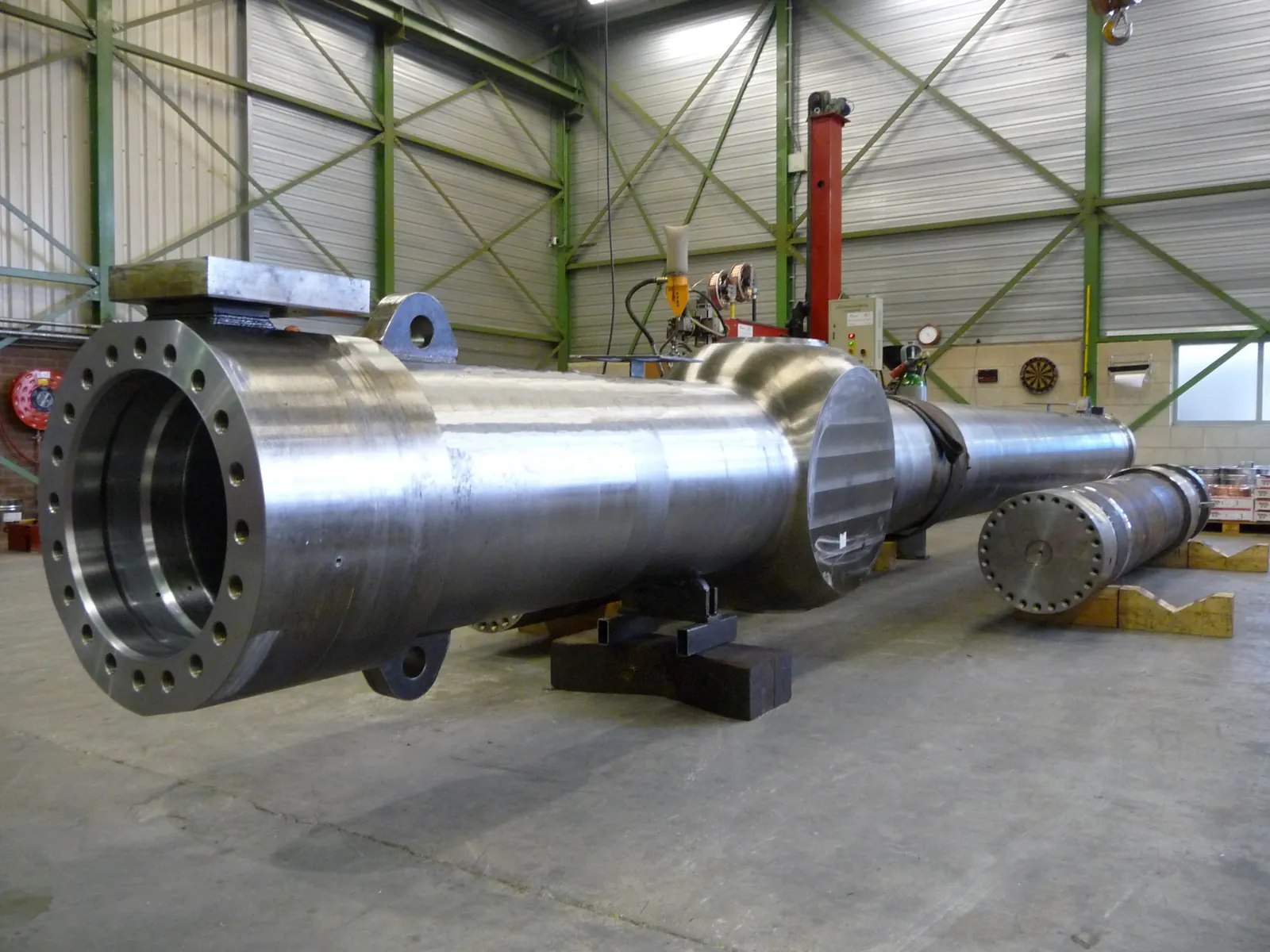
From rough forged to completely machined
Rough forged
The forging is delivered to you after forging and heat treatment with a machining allowance. This is logical when your own workshop performs the full machining and you determine the clamping yourself.
Rough turned
Rough turned to a shape that allows for ultrasonic testing. You know in advance that the material contains no internal defects and you only handle the final machining yourself.
Completely machined
The forging is fully machined according to your drawing, including tolerances, surface requirements, and, if desired, a 3D dimensional check. The component arrives ready for assembly and with the corresponding certificate.
Process
How an industrial forging is created
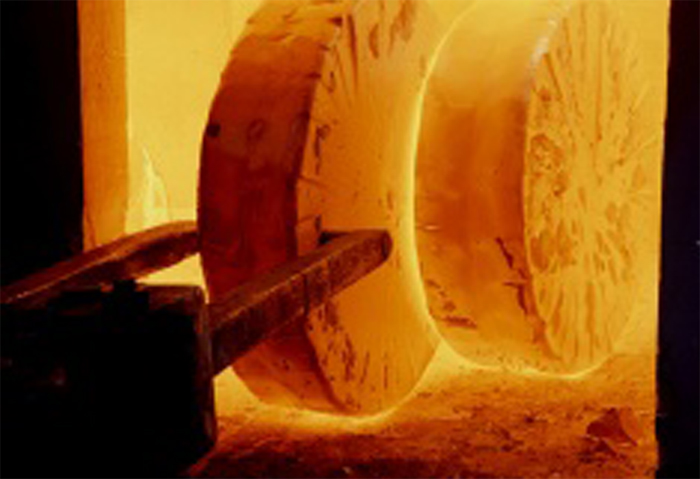
Every forging starts with your drawing. We determine the forging shape with machining allowance and the required input weight. The material is heated and open-die forged under the press, or rolled into a ring. This is followed by heat treatment, taking test pieces, rough turning, and inspection. The piece is only machined or shipped after approval.
Applications
For the most demanding industries
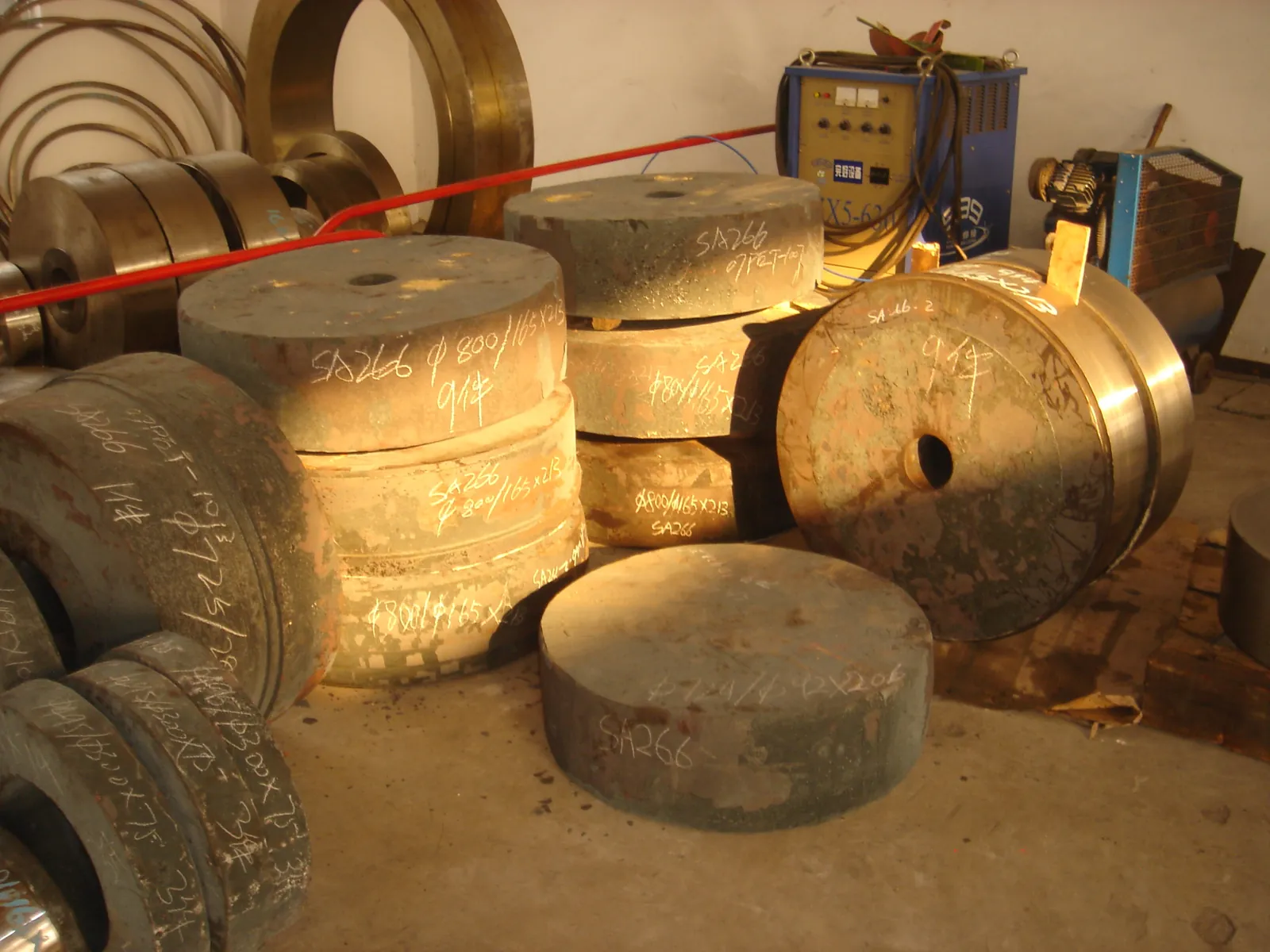
Drive, pump, and turbine shafts
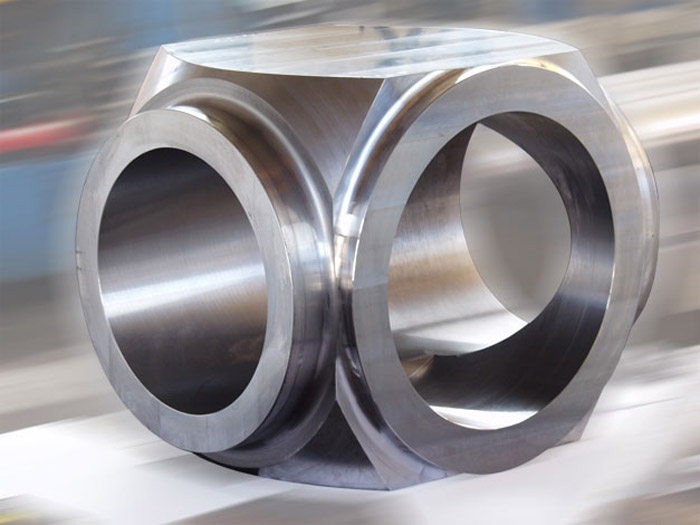
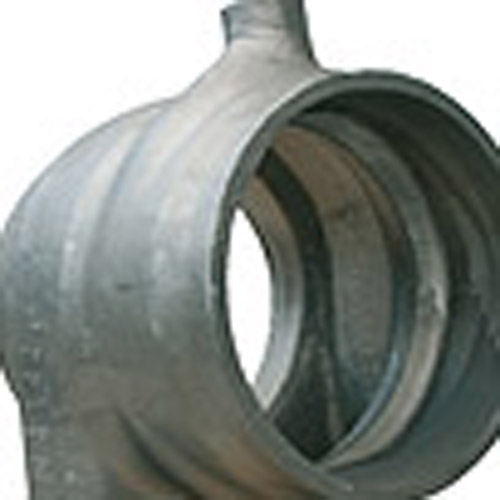
Parts according to drawing for pumps, valves, and faucets
Forged blocks for mold and machine construction
Bearing rings and gear rings
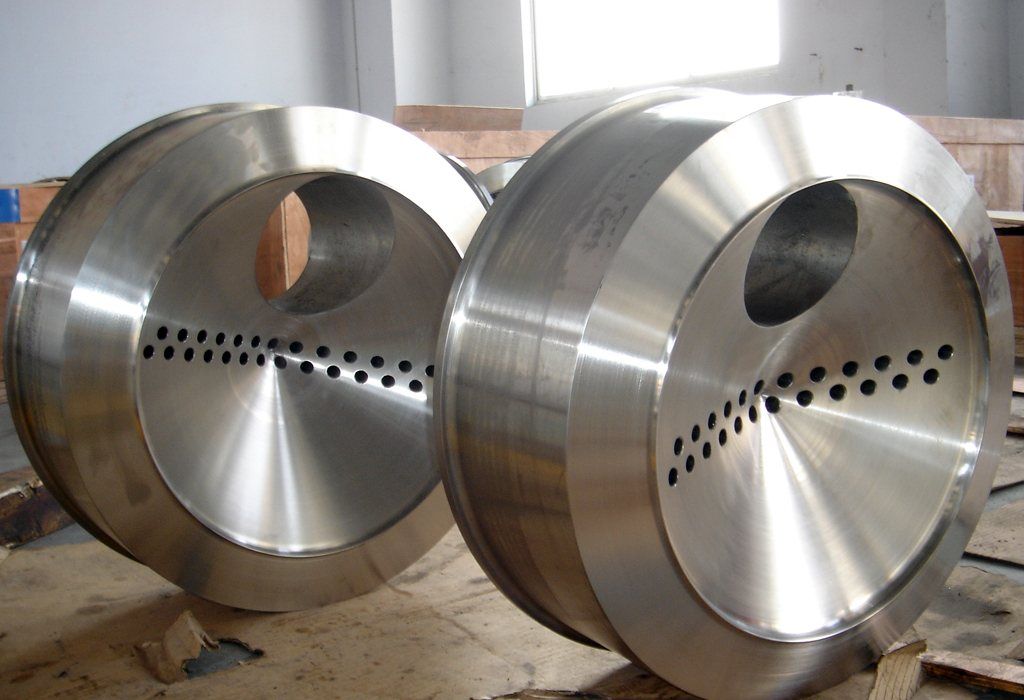
Tubesheets and turbine disks
Custom weld neck and blind flanges
Our Approach
Your partner in forgings
Inquiry & Advice
You send a drawing, sketch, or specification. We determine which forging shape results in the least machining and which material grade fits the application.
Specification & Selection
Together we determine quality, dimensions, execution, inspections, and certificate type. Then we plan the production.
Quotation & Alignment
You receive a quote clearly stating price, delivery time, and scope of inspection. We will present any technical questions to you in advance.
Order & Delivery
We monitor production, plan any inspections by an inspection body, and deliver the forging with a certificate to the agreed location.
Material Grades
Forgings in almost any grade
From unalloyed carbon steel to nickel alloys: the choice of material partly determines how your piece is forged and heat-treated. Below is a selection of the grades we supply as forgings. The full overview can be found under material grades.
Aluminum Alloys
Frequently Asked Questions
Everything about forgings
What is an industrial forging?
An industrial forging is a metal component formed hot under a press or hammer and then delivered inspected and certified. The difference with ornamental ironwork lies in the purpose: strength, internal quality, and demonstrable material values according to a standard such as EN 10250 or an ASTM standard.
What are the maximum dimensions and weights of forgings?
The weight per forging is between 20 kg and 200 tons, with diameters from 50 to 10,000 mm and lengths up to 26 meters in one piece. These extremes do not apply to every shape. For example, forged disks go up to 180 tons and 4,500 mm in diameter, and seamlessly rolled rings up to 65 tons and a height of 2.8 meters. Send your dimensions, and we will check the feasibility per shape.
What is the difference between a forging and a casting?
A forging has a finer, oriented grain structure and virtually no internal porosity compared to the same alloy in a casting. A casting retains its coarser solidification structure and may contain shrinkage cavities or gas pores. Forged material therefore scores higher and more consistently on toughness and fatigue strength. Casting wins on freedom of shape, for example with hollow parts or complex contours. That is why we supply both: forgings for heavy-duty parts and sand casting or centrifugal casting where the shape requires it.
In which materials are forgings available?
We supply forgings in almost any forgeable grade: unalloyed and alloyed steel, stainless steel, duplex and super duplex, nickel alloys such as Alloy 625 and Alloy 718 (Inconel® 718), titanium, and aluminum. Many buyers search by material number, for example 1.7225 for 42CrMo4 or 1.4462 for duplex. On our pages per grade, you will find composition, equivalents, and the shapes in which we supply the material.
Do you supply forgings rough, rough turned, or completely machined?
All three, and always according to your own drawing or specification. We translate your final dimensions into a forging shape with a machining allowance, which comes to you rough, rough turned for ultrasonic testing, or completely machined. Parts according to drawing are supplied within the same limits: from 20 kg to 200 tons and up to 26,000 mm long. We also fully incorporate your end customer's specification.
Is the heat treatment of a forging included?
Yes, heat treatment is standard for every forging and at minimum follows the standard of the ordered grade. Which treatment that is depends on the material: unalloyed steel is often normalized, quenched and tempered steel such as 42CrMo4 is hardened and tempered, and stainless steel and duplex are solution annealed. If your specification prescribes something else, such as a specific tempering temperature or additional stress-relief annealing, we will include that in the order.
Are forgings suitable for critical applications?
Yes, forgings are specifically chosen where the material is heavily loaded, such as in turbines, pressure equipment, and offshore installations. Therefore, each piece is individually tested: rough turned pieces at least ultrasonically, supplemented by, for example, MPI, penetrant testing, PMI, tensile testing, Charpy impact testing, or microscopic examination. For stainless steel, an intergranular corrosion test or Huey test is also possible. This ensures that each piece meets the ordered requirements.
With which certificate are forgings delivered?
Forgings are always accompanied by a material certificate according to EN 10204, choice of type 3.1, 3.2, or 2.2. With 3.1, an inspector independent of production confirms the test results of your batch; with 3.2, an external party or your own inspector also signs. Inspections by, among others, TÜV, Lloyd's Register, DNV, BV, ABS, or RINA are possible, also for delivery under PED or ASME.
How long does the delivery of a forging take?
Weight, dimensions, and execution determine the delivery time most. We deliver certain rough turned pieces within 6 working weeks; completely machined forgings usually require 8 to 10 working weeks. Very heavy pieces or special heat treatment may require more time, which you will see in the quote beforehand. Common grades and diameters are sometimes directly available from our stock program.
Can I also order a single forging?
Yes, one piece is a normal order for us. Think of a replacement shaft for an existing installation, a prototype for a new design, or a spare part that is no longer available. A single piece receives the same inspections, the same certificate, and the same traceability as a series. You can read why that is economically feasible on our page about open-die forging.
Request your quote without obligation
Send your drawing or material specification with quantities and desired execution. We will determine the forging shape and send you a clear quote.
Certificate EN 10204 2.2, 3.1, or 3.2
From 20 kg to 200 tons
Single pieces and small series
Rough, pre-turned, or machined